

Google is still asking Fold buyers to compromise as its competitors are better than ever
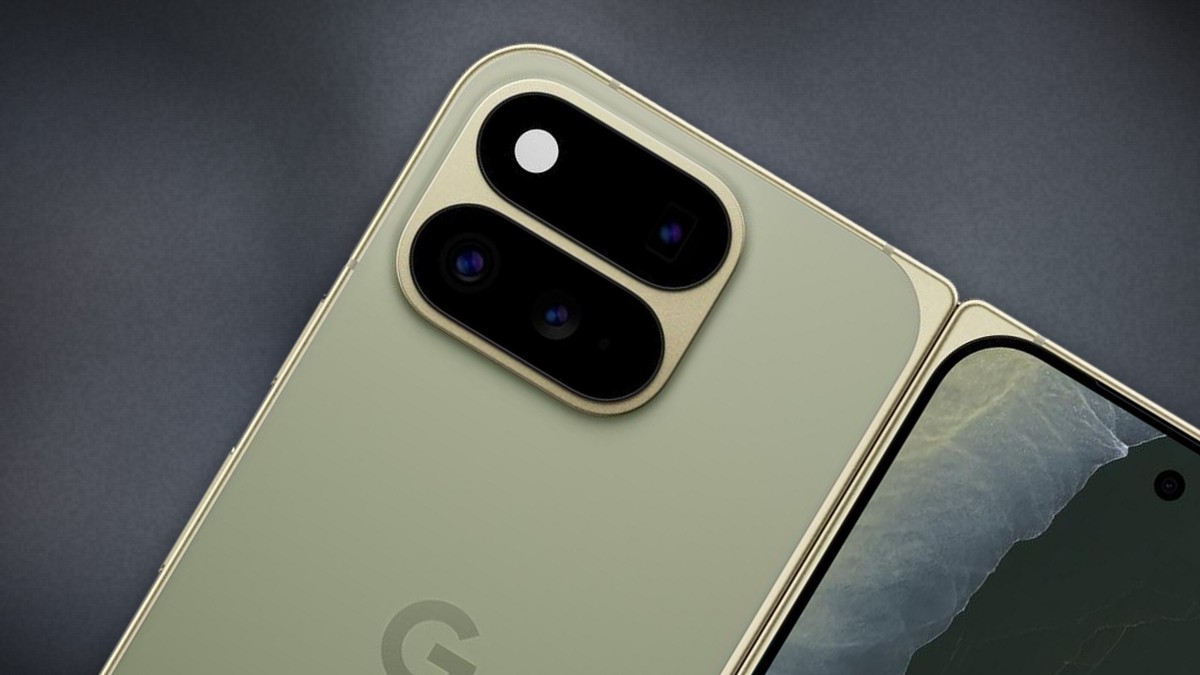
The Pixel 11 Pro Fold has better cameras than its predecessor, but its system isn’t even on par with a phone that’s $1000 cheaper
 Google
Earlier this week, Google announced the Pixel 11 Pro Fold, the latest entry in its lineup of folding phones. While it includes some meaningful improvements over its predecessor, Google is still asking people to pay $1900 for a phone that makes a lot of compromises, at a time when its competitors have offerings that don’t ask you to give up much.
The issue is most evident when it comes to cameras. Despite its “Pro” branding, the Pixel 11 Pro Fold’s camera setup is more similar to that of the standard Pixel 11 – a phone that costs $1000 less – than the Pixel 11 Pro. It has the same Type 1/1.56 (48mm²) main sensor and the same Type 1/3.2 (15.5mm²) telephoto camera as the Pixel 11, and its ultrawide camera is actually fractionally smaller. So yes, even compared to the Pixel 11, the Fold’s cameras are technically worse, while the Pro’s array beats it in every way.
Compare this with Samsung’s latest Galaxy Z Fold 8 Ultra. Sure, it costs $200 more than Google’s foldable (though at these prices, that only amounts to an 11% premium), and its three cameras are the same as you’d find on the top-of-the-line Galaxy S26 Ultra. Now, the Z Fold 8 Ultra lacks the periscope camera you’d get on the candybar ultra, but for most shooting situations, its cameras are comparable to those on standard flagships like the iPhone 17 Pro or Google Pixel 11 Pro.
| Google Pixel 11 Pro Fold | Pixel 11 Pro XL | Samsung Galaxy Z Fold 8 Ultra | Samsung Galaxy Z Fold 8 | |
| Main camera | 24mm equiv. F1.7 Type 1/1.56 (48mm²) 48MP | 24mm equiv. F1.68 Type 1/1.3 (72mm²) 50MP | 24mm equiv. F1.7 Type 1/1.3 (72mm²) 200MP | 23mm equiv. F1.8 Type 1/1.57 (50mm²) 50MP |
| Ultrawide camera | 9mm equiv. F2.2 Type 1/3.4 (13mm²) 10.5 MP | 13mm equiv. F1.7 Type 1/2.51 (23.5mm²) 48MP | 10mm equiv. F1.9 Type 1/2.5 (25mm²) 50MP | 10mm equiv. F1.9 Type 1/2.5 (25mm²) 50MP |
| Telephoto camera | 110mm equiv. F3.1 Type 1/3.2 (15.5mm²) 10.8MP | 106mm equiv. F2.8 Type 1/1.95 (32mm²) 48MP | 67mm equiv. F2.4 Type 1/3.94 (10mm²) 10MP | N/A |
| Inner / Outer screen size | 6.5″ / 8″ | – / 6.8″ | 6.5″ / 8″ | 5.5″ / 7.6″ |
| Peak screen brightness | 3600 nit inner/outer | 3600 nit | 3000 nit inner/outer | 3000 nit inner/outer |
| Battery size | 4806mAh | 5115mAh | 5000mAh | 4800mAh |
| Thickness (folded / unfolded) | 10.1mm / 5mm | 8.4mm | 8.9mm / 4.1mm | 9.7mm / 4.5mm |
| Weight | 239g (8.4oz) | 226g (8oz) | 215g (7.6oz) | 201g (7.1oz) |
| Price | $1900 | $1299 | $2100 | $1900 |
In fairness to Google, if you’re just comparing the cameras, the Pixel 11 Pro Fold comes out a bit ahead of Samsung’s price-competitive Galaxy Z Fold 8. That phone has a better ultrawide, but omits a telephoto option completely. However, it’s also a passport-style phone, adopting a form-factor that looks like it may be the future of foldables, if early reviews are any indication. When Samsung compromises on the cameras, you get something in return.
Still, you could potentially argue that Google is competing with Samsung on the camera front, as long as you ignore that the latter offers another model if you don’t prefer to compromise. But while cameras are obviously our primary concern here at DPReview, we recognize that most people’s phone purchasing decisions won’t hinge on the minutiae of sensor sizes (though if you’re spending almost $2000 on a phone, odds are you’re an enthusiast who wants the best whether you’ll use it to its fullest or not). Unfortunately for Google, the 11 Pro Fold is falling behind in other ways, too.
 This year, Samsung innovated on what form factors it offered for foldables, while Google continued with its single offering.Samsung
The Pixel 11 Pro Fold has a few physical changes that are genuine improvements. It has slimmer bezels, is a touch thinner and lighter and is more durable. But when you open up that interior screen, you’ll still be greeted with a noticeable crease down the middle, something Samsung has all but eliminated in its latest foldables thanks to some clever engineering. The Korean giant is also starting to adopt silicon-carbon battery tech, letting it pack more energy density into the same space. I suspect these two factors will be big points in Samsung’s favor to the typical foldable buyer – the big screen you’re paying so dearly for will be nicer to look at and your phone will likely last longer on a charge – even if they don’t care about cameras.
There’s even more competition on the horizon
As if Samsung’s foldables weren’t enough of a threat to Google’s foldable ambitions, there’s even more competition on the horizon. Apple is expected to release its first foray into the form factor soon, likely with a passport-style phone. While I’d bet that its cameras won’t be anything special (if the iPhone Air is anything to go by), Apple undoubtedly has a way of exciting consumers about technologies that its competitors have long since adopted*. Google has brought a mild refresh with compromised cameras to a hype cycle fight.
What’s more, it’s really only Americans who will be choosing between the Pixel, Galaxy and iPhone. Outside of the US, there are even more options from companies like Oppo or Huawei, and while neither company has made one that uses the massive image sensors found in their main phones, that feels more like a matter of when, not if.
None of this is to say that I think the Pixel 11 Pro Fold will be bad. This is Google’s fourth folding phone, and it’s pretty good at making them by now. I’m sure the pictures it takes will be fine for most people, and that it’ll be good enough that the Google faithful will be happy to have it as an option. But with prices for foldables being higher than ever, and such fierce competition that promises to only get more intense in the coming months, I just don’t buy that good enough is good enough.
* – I’ll own up to the fact that this works on me, too. In 2024, I wrote an opinion piece about the Pixel 9 Pro Fold entitled “I don’t want to pay $1799 for worse photos.” And yet, hypocrite that I am, there’s a very high chance that I’ll buy the foldable iPhone, which may very well have worse cameras than my current iPhone 15 Pro. At the very least, it’ll almost certainly have fewer of them. The only thing saving me from being a complete liar is the fact that there’s no way Apple will charge $1800 for its foldable. I’ll consider myself lucky if it’s under $2000.
Want to stay up to date on the latest product news and releases? Add DPReview as a preferred source to ensure our independent journalism makes it to the top of your Google search results.

What's Your Reaction?
 Like
0
Like
0
 Dislike
0
Dislike
0
 Love
0
Love
0
 Funny
0
Funny
0
 Wow
0
Wow
0
 Sad
0
Sad
0
 Angry
0
Angry
0












Comments (0)