

Homelander's Best Line Is the Most Misunderstood Quote in The Boys History
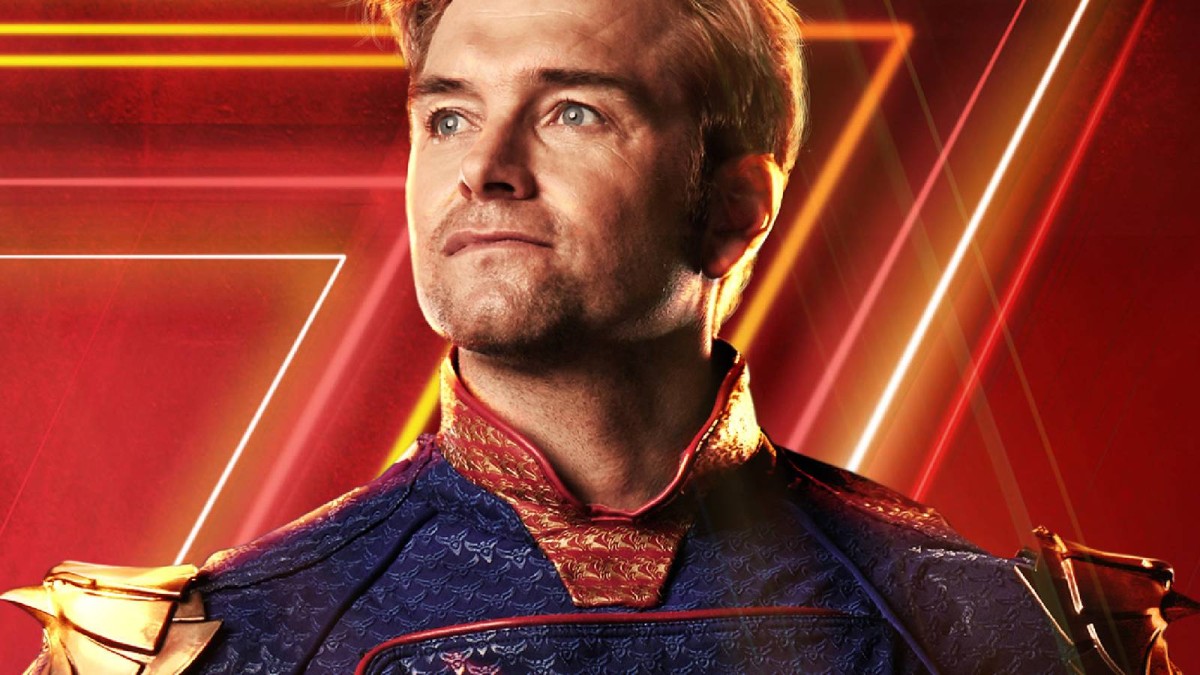

Published Jul 19, 2026, 6:00 PM EDT
Robert Wood is a writer and editor based out of Cheshire, England. He is the author of 'The False Elephant: and 99 Other Unreasonably Short Stories' - 100 stories, each told in exactly 100 words.
Rob got into comics via Bendis' Ultimate Spider-Man and the UK anthology 'The Mighty World of Marvel,' which was running Frank Miller's Daredevil, Classic Hulk and Contest of Champions II.
Prior to journalism, he worked in copywriting and copyedited for Oxford University Press. He is on X as @PinchTwigs and Instagram as roobwoodjourno.
Content warning: Includes brief discussion of suicide.
Famous for its foul-mouthed wit, The Boys is packed with some of the best lines in superhero fiction. However, Homelander's greatest line is also his most misunderstood, with two compelling readings that arguably exist in direct opposition.
An evil Superman filled with immature rage and brutal narcissism, Homelander is the overarching villain of The Boys, spending much of the story under the thumb of Vought International. When he finally breaks away from their control, it's with an agenda of superhuman supremacy, seeing himself as superior to normal humans.
That supremacist perspective is encapsulated in Homelander's most iconic quote, however it's just one layer of a surprisingly complex statement about god, power and politics.
Homelander's "No Man in the Sky" Line Explained

There are two versions of Homelander's most iconic line, and it's important to understand how they differ. In season 3, episode 2 of the Amazon series, Homelander menaces a woman who was about to jump to her death (a reference to the iconic All-Star Superman #10,) changing his mind about saving her following the death of fellow Supe Stormfront. When the woman gasps, "Oh god," Homelander gloats, "No god. The only man in the sky is me," before forcing the woman to jump to her death.
The TV scene is an adaptation of The Boys #47, from Garth Ennis and Russ Braun (created by Ennis and Darick Robertson.) In the issue, Homelander is a contributor to the Believe expo, where a family wins a flight with him thanks to their donation to the religious organization.

Homelander flies their car into the air higher and higher until they're freezing, then mocks their faith before dropping them to their deaths, saying:
You may as well have burned your money. The only man in the sky is me.
What Homelander's Iconic Line Means in the Show

In the Amazon adaptation, Homelander's "no man in the sky" quote represents the villain deifying himself. He later goes on to establish the Democratic Church of America, turning his fanbase into a religious and political organization. What Homelander means here is very clearly 'I am god.'
This is part of The Boys' commentary on how authoritarian movements grow around a charismatic 'strongman' leader. Homelander starts out as a celebrity, but as his mania and narcissism are fed, he becomes first a de facto political leader and then an object of worship, fully accepting his superiority to all those around him while also craving love and validation from those he considers his peers.

Every time Homelander commits an atrocity, his fanbase grow more extreme in their reverence for him, driving him to become worse and worse. Ultimately, the TV adaptation pops the bubble by having Butcher kill Homelander on TV while he humiliatingly begs for his life - the cult surrounding Homelander worshiped a maniac, and they finally see him exposed and laid low.
What Homelander's Iconic Line Means in the Comics

In the comics, Homelander's "no man in the sky" isn't about his own divinity, but the lack of a true moral core to the universe. He's not saying 'I am god,' but rather 'There is no god, so I can do anything I like.'
In the TV show, Homelander's victim isn't actually praying, blunting the anti-theist sentiment of the original moment. In the comic, he kills the family after attending a religious event, and lectures them on the pointlessness of faith first:
It's all ****, you know. ... It's just a scam designed to separate halfwits like you from your money. It's the same scam that's been running for thousands of years. Since one ape-****** turned to another and pointed to the Sun, and said 'give me your share and I'll see that he gets it.' Since some bigmouth got nailed to a couple of planks, and they knew they were onto a winner.
The big difference between TV Homelander and comic Homelander is that the latter isn't special. Talking to Newsarama in 2008, Ennis said:
Homelander to me is an almost entirely negative character. He is really just a series of unpleasant urges kept in check by his own intelligence, which is enough to understand that he can have anything he wants so long as he doesn’t push his luck too far. ... It might help to think of the Homelander as having all the self control of let’s say a fourteen year old.
In the TV show, Homelander is a true 'supervillain' - the show focuses on Vought's experimentation on him as a child, and his obsession with breast milk, making him feel like the unique product of specific experiences. In the comics, he's depicted as a garden variety bully who happens to have an immense amount of power.
The Boys Is Always About Fascism, But in Surprisingly Different Ways
 Custom image by Yeider Chacon
A lot of Garth Ennis' comic work is about fascism and authoritarianism, from War Stories and Partisan to A Walk Through Hell and even The Crossed. The Boys is no exception, and it's clear to any longtime fan of Ennis' that Homelander exemplifies fascist psychology.
Homelander is Ennis' damning portrait of fascist leaders across history - complemented by his actual depictions of figures like Hitler and Stalin in work like Johnny Red and Preacher. Indeed, Homelander's Supe coup is a metaphor for racial supremacy, with comic covers drawing direct parallels to the Holocaust.

In that context, Homelander is a critique of how bullies become dictators, with selfishness, petulance and rage paving the way from petty cruelty to outright atrocities. Homelander doesn't have a cause or conviction - he's a solipsistic bully who disdains those he has power over. As Butcher explains in tie-in origin story Butcher, Baker, Candlestickmaker: "When you know you scare someone, you start to think they're ****."
Amazon's Homelander is a more unique, unusual villain, and thus a less potent critique of a personality type. While he still enables anti-authoritarian commentary, it's in the sense of representing a 'strongman' leader whose bad behavior galvanizes an extremist movement. It's that movement and its willingness to deify a monster that recieves the show's focus.
Butcher's Relationship to Homelander Shows How Drastically He Changed in Adaptation

Both the comic and Amazon versions of The Boys are works of anti-authoritarian criticism, but the comics focus more on the psychology of fascist leaders, while the show focuses more on the concept of a cult of personality.
This dichotomy is captured in Homelander's iconic line, "the only man in the sky is me." In the show, it's Homelander sincerely declaring himself a god. In the original comics, it's Homelander stating that the universe has no moral arc, and the powerful can abuse the powerless without any natural consequence.

In both cases, it's Butcher who provides the counterpoint. Crucially, however, in the TV show he disagrees with Homelander, and in the comics he agrees. In the show, Butcher knows Homelander isn't a god, and he proves it. In the comics, Butcher agrees that there's no natural justice, so it's up to people like him to bring down people like Homelander: "You need blokes like me, Hughie."
Both versions of The Boys are about how authoritarianism develops, but with just thirteen years between them, they find very different reference points for that discussion, as exemplified by Homelander's seeming claim to godhood, and the different ways it can be read.
Latest TV Show Gen V
Upcoming TV Shows The Boys, Gen V
What's Your Reaction?
 Like
0
Like
0
 Dislike
0
Dislike
0
 Love
0
Love
0
 Funny
0
Funny
0
 Wow
0
Wow
0
 Sad
0
Sad
0
 Angry
0
Angry
0





Comments (0)