

How to Capture More Meaningful Candid Wedding Photos
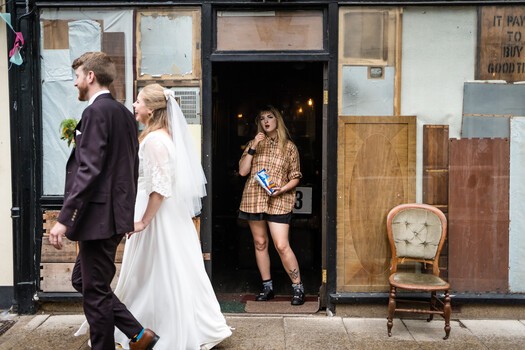
Ask a couple to choose their favorite photographs from their wedding gallery, and they'll rarely start with the formal group shots.
More often, they'll point to something unexpected. A grandparent wiping away a tear during the ceremony. A flower girl causing complete chaos during the speeches. A quiet moment between the couple when they thought nobody was paying attention. These are the photographs that transport people back to how the day actually felt.
That's what makes candid wedding photography so rewarding. It's also what makes it so difficult.
Unlike portraits, candid moments can't be directed. You can't ask somebody to laugh naturally a second time, repeat an emotional reaction, or recreate a fleeting interaction that lasted only a few seconds. You either recognize the moment as it's happening, or you miss it.
After photographing weddings for more than a decade, I've come to believe that meaningful candid photography has very little to do with camera settings and almost everything to do with understanding people. Technical skill is important, of course, but the strongest candid photographs usually come from observation, anticipation, and trust.
Here are some of the lessons that have had the biggest impact on my own candid wedding photography.
Stop Trying to Act Like a Photographer
When I first started photographing weddings, I thought professionalism meant keeping my distance and acting a certain way. I felt like I needed to put on airs and graces, as though being a wedding photographer required some sort of polished persona rather than simply being myself.
I imagined wedding photographers were supposed to stand quietly at the edge of events, blending into the background and observing everything from afar. I worried about saying the wrong thing, getting too involved, or somehow influencing what was happening around me.
Over time, I realized weddings simply don't work like that.
Weddings are emotional, social occasions. Guests spend the day talking, laughing, celebrating, and reconnecting with people they may not have seen for years. If you spend 10 hours acting like an outsider, people will continue to treat you like one.
The more comfortable people feel around you, the more naturally they behave.
My couples quickly discover that I'm not particularly interested in creating some mysterious photographer persona. I'll happily chat about my cats, make terrible jokes, or get dragged into a discussion about favorite chips. I'm there to do a job, but I'm also there as a person.
People respond to authenticity. When guests stop seeing a photographer and start seeing a human being, they tend to relax. I've found that when you show up as 100% yourself, it gives other people permission to do the same. Once that happens, the camera becomes far less important and genuine moments become much easier to photograph.
Build Relationships Throughout the Day
One of the most common pieces of wedding photography advice is to become a fly on the wall. While there are certainly moments where stepping back is important, I've never found complete invisibility particularly useful. Some of my favorite photographs only exist because somebody came to find me.
A bridesmaid notices something ridiculous happening in another room and pulls me away from what I'm doing. A family member quietly points out an emotional interaction that's unfolding across the venue. A groomsman tells me a surprise is about to happen before anyone else knows about it.
Those opportunities don't appear because I'm invisible. They happen because I've spent time building relationships with the people around me.
It can be surprisingly easy to spend an entire wedding rushing from one task to the next without properly connecting with anyone. Timelines, family groups, details, travel, and logistics all demand attention. Before you know it, you've spent hours working around people rather than with them.
Taking a few minutes to chat with guests can make a huge difference. Learn a few names, ask questions, and show genuine interest in what's happening. Trust opens doors, and those doors often lead to photographs that would never have happened otherwise.
The Best Moments Happen Between the Big Moments
Every wedding photographer knows when they need to be ready: the processional, the first kiss, confetti, speeches, and the first dance. The mistake many photographers make is assuming those are the only moments that matter.
In reality, some of the most meaningful photographs happen immediately before or after those events. Often, it's the immediate aftermath that matters most. The couple share their first kiss and then, for a brief second, forget everyone else is there as they lean into each other. A parent exhales after holding back tears throughout the ceremony. Guests turn to one another to process what they've just witnessed. The big moment gets everyone's attention, but what happens next is often more revealing. Once the spotlight passes, people relax and their real emotions tend to show.
Speeches provide another perfect example. Most photographers are fully engaged while the speeches are happening, but some mentally switch off as soon as the microphone is put down. That's often when things become really interesting. Guests gather around family members, people discuss stories they've just heard, emotional conversations unfold, and laughter continues long after the room has stopped listening formally.
I've found that the emotional ripple effect of a moment can often be more powerful than the moment itself. Stay alert and assume the next photograph is about to happen.
Learn to Anticipate
One of the biggest misconceptions about candid photography is that it's all about reacting quickly. While fast reactions certainly help, I've found that anticipation is often far more important.
The longer you photograph weddings, the more you begin to notice patterns. People frequently give away what's about to happen before it actually happens. A best man pauses and glances toward a friend before delivering a punchline during a speech. A parent takes a deep breath and starts blinking a little more than usual as the ceremony begins. Two guests exchange a look before bursting into laughter.
These moments aren't completely unpredictable. The clues are often there if you're paying attention.
Experience helps develop this skill, but it can also be practiced deliberately. Instead of focusing solely on what's happening right now, try asking yourself what might happen next. Who is likely to react? Where is the emotion building? Who is looking at whom?
Many of the photographs people describe as "lucky" are actually the result of anticipation. The photographer recognized the signs, positioned themselves accordingly, and was ready when the moment arrived.
The goal isn't to have the fastest reflexes in the room. It's to recognize a moment before everyone else realizes it's about to happen.
Don't Be Afraid to Photograph Emotion
Most photographers remember the first time they pointed a camera toward somebody who was crying. It feels uncomfortable.
If you're a decent human being, your instinct is usually to give people space. Nobody wants to appear insensitive or intrusive. The challenge is that weddings are emotional by their very nature. Tears, laughter, nerves, joy, relief, and overwhelm are all part of the story.
Years ago, I probably backed away from moments like these more often than I should have. I worried too much about my presence and not enough about the importance of what was happening in front of me. Eventually, I realized something: the couple hired me to document their wedding honestly, not just the smiles but the full range of emotions that made the day unique.
That doesn't mean shoving a camera into somebody's face. It means approaching emotional moments with empathy and confidence. Some of the photographs couples treasure most are the ones that capture genuine feeling, so don't be afraid to make those photographs.
Look Beyond Facial Expressions
When photographers talk about emotion, the conversation usually revolves around facial expressions. Expressions matter, but they're only part of the story.
I've become increasingly drawn to photographing hands at weddings. They often reveal far more than people realize. A groom turning his wedding ring around his finger while waiting for the ceremony to begin. A parent squeezing their partner's hand during an emotional speech. A couple instinctively reaching for each other while nobody is paying attention. Even something as simple as a hand resting on a shoulder can communicate reassurance, affection, or familiarity.
Because these gestures happen unconsciously, they tend to be completely genuine. Nobody performs them for a camera. They're small details, but they often say something meaningful about the relationships between the people in the photograph.
Years later, these images can be surprisingly powerful. They remind people not just of how the day looked, but of how it felt to be there.
Context Tells the Story
One of the easiest ways to strengthen a candid photograph is to include contextual photos alongside the tighter, more intimate moments. While it's important to capture the little interactions and subtle details, it's equally valuable to show where those moments are taking place and how they fit into the wider story of the day. A mix of close-up candid images and wider contextual photographs helps create a more complete narrative, giving viewers a better sense of the atmosphere, relationships, and environment that surrounded those moments.
I recently saw an Instagram carousel from a photographer describing a bride getting ready in a room filled with around twenty relatives who all loved and supported her. It sounded like an incredible atmosphere, but at no point did she actually show a photograph that captured the scale of the room or the people within it. A close-up portrait can be beautiful, but without context, part of the story is lost. Sometimes stepping back and showing the wider scene helps viewers understand why a moment mattered in the first place.
Whenever you're photographing candid moments, ask yourself whether you're showing enough of the scene to explain why the moment matters.
Keep Your Gear Simple
Wedding days move quickly and attention is a finite resource. Every decision you make takes up mental energy, and those small decisions add up surprisingly fast over the course of a 10-hour wedding. Lens choices, camera settings, equipment changes, and technical considerations all require attention that could otherwise be spent observing people and anticipating moments.
Over the years, I've become a huge believer in keeping things simple. I spend most of my time working with a 35mm lens because I've used it so much that I know it inside out. I know exactly how it sees a scene, how close I need to stand, and what sort of images I can create with it. That familiarity removes a huge amount of unnecessary decision-making and allows me to react instinctively when something interesting starts to unfold.
That said, I also regularly shoot with an 85mm lens, particularly when I want a little more separation from a scene or when I don't want to physically insert myself into a moment. The 85mm allows me to capture genuine interactions from a comfortable distance, which can be especially useful during emotional moments in ceremonies, speeches, or quiet exchanges between guests. It gives me a different perspective without changing my overall approach.
The key isn't limiting yourself to a single lens. It's knowing your tools well enough that using them becomes second nature. Whether I'm shooting with a 35mm or an 85mm, I'm not thinking about the lens itself. I'm thinking about the people in front of me and the story that's unfolding around them.
The less time I spend thinking about equipment, the more time I spend paying attention to what's happening around me. Candid photography rewards awareness far more than it rewards complexity, and I've found that simplifying my gear and workflow gives me the mental space to focus on the people rather than the camera.
Follow the Sound
Photography is visual, but weddings often tell you where to look before you see anything. A burst of laughter from another room, a sudden round of applause, the sound of glasses clinking together, or a collective "aww" from a group of guests are all clues that something worth photographing may be happening nearby.
Some of my favorite photographs happened because I followed noise rather than sight. Weddings are full of overlapping stories unfolding simultaneously and your ears can often guide you toward them faster than your eyes.
If you're unsure where to go next, stop and listen. Quite often, the answer is already announcing itself.
Stay Curious
One of the most valuable habits a candid photographer can develop is curiosity. Pay attention not only to what's happening but also to what isn't. Where have the bridesmaids disappeared to? Why is the groom suddenly nowhere to be seen? When did the couple last have a moment alone together?
Questions like these often lead to photographs that other people miss. Some of the best moments at weddings happen away from the center of attention, in quiet corridors, outside venues, in kitchens, on balconies, or during brief pauses between events.
Curiosity encourages you to keep exploring when other photographers have stopped looking. More often than not, that's where the interesting photographs are waiting.
Final Thoughts
Meaningful candid wedding photography isn't about luck. It's about paying attention, building trust, understanding people, and recognizing that the moments couples remember most are often the ones nobody planned.
Technical skill will always matter, but cameras don't create meaningful photographs on their own. People do. The more time you spend observing the interactions, emotions, and small details that make every wedding unique, the more likely you are to create photographs that genuinely resonate with your couples.
Years from now, those are the images they'll still be talking about.
What's Your Reaction?
 Like
0
Like
0
 Dislike
0
Dislike
0
 Love
0
Love
0
 Funny
0
Funny
0
 Wow
0
Wow
0
 Sad
0
Sad
0
 Angry
0
Angry
0






Comments (0)