

Kioxia and Sandisk demonstrate the world's highest-density 3D NAND flash — 332 active layers and up to 4,800 MT/s interface
 (Image credit: Kioxia)
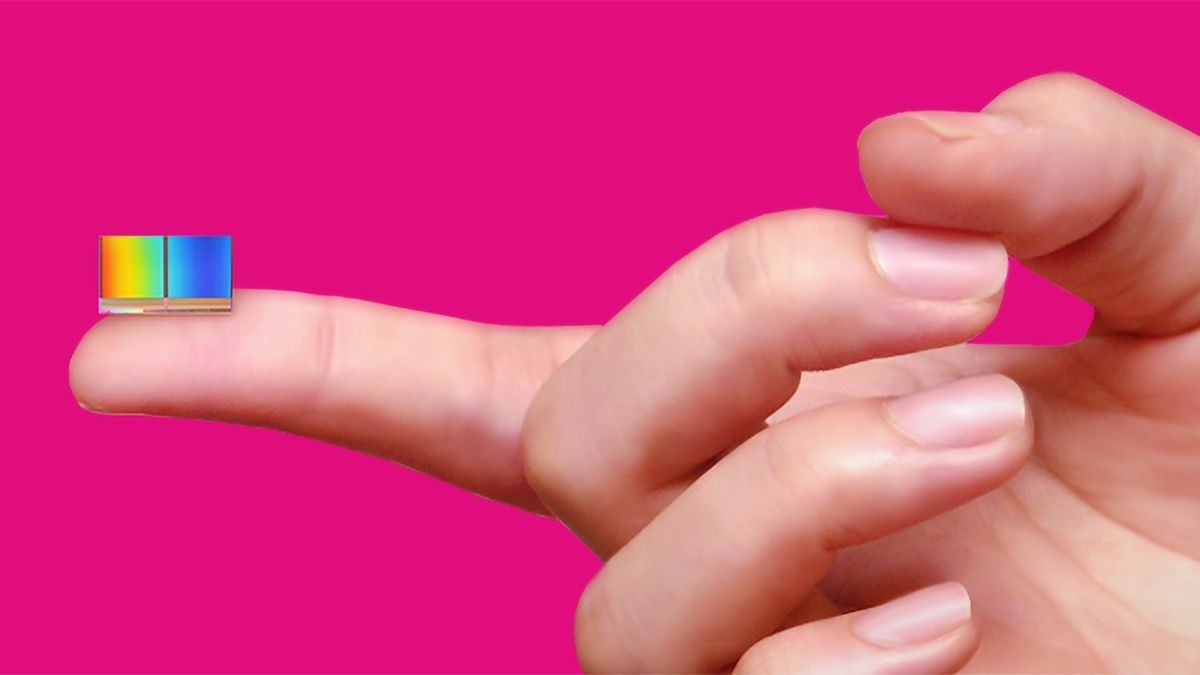
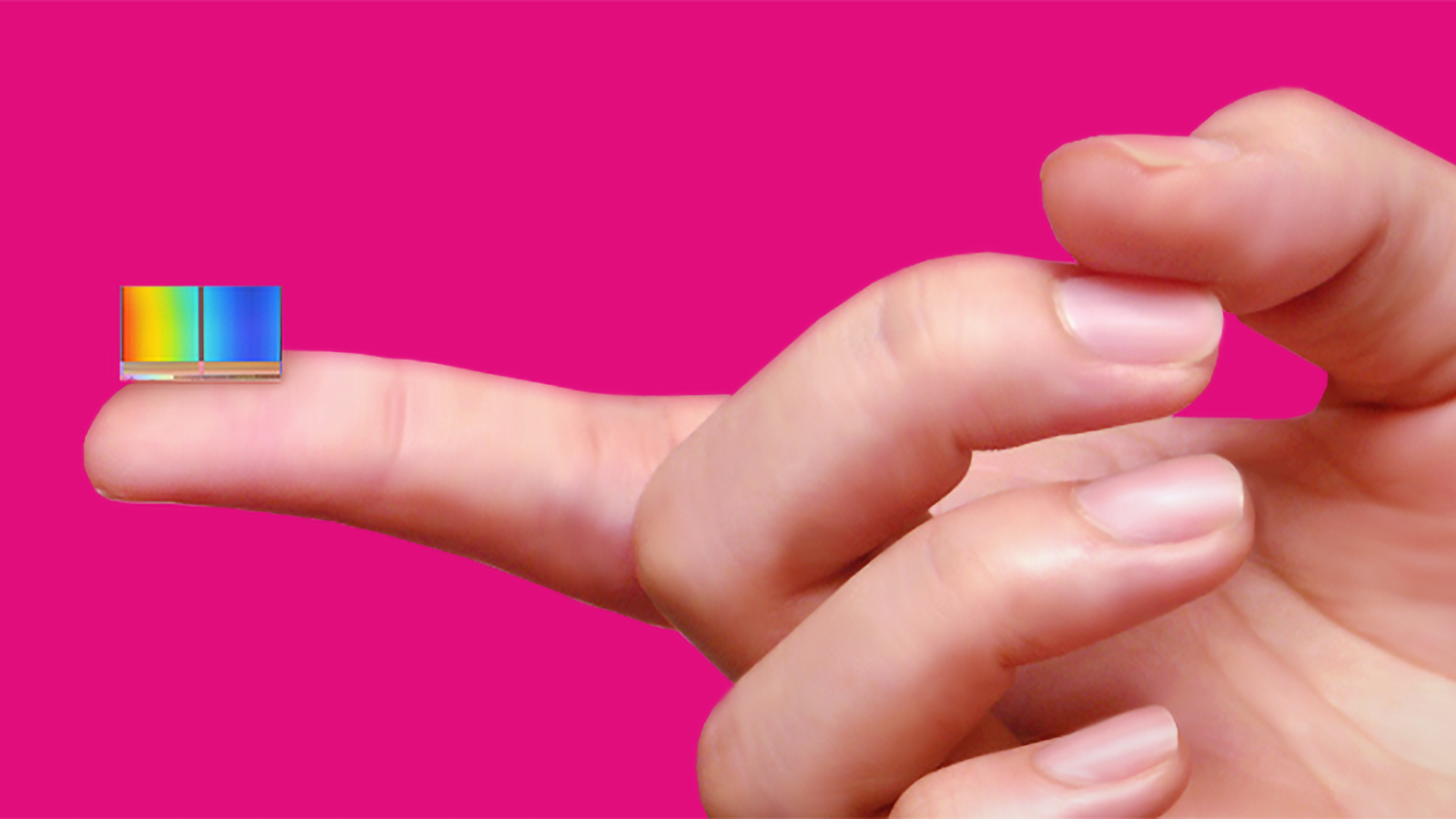
Kioxia and Sandisk used the ongoing Future of Memory and Storage Conference to formally introduce their latest BiCS10 3D QLC NAND device, which features the world's highest areal density and is aimed at high-capacity data center-grade solid-state drives that are meant to maximize storage density in data centers. The new IC comes at the step of Kioxia's and Sandisk's BiCS 3D TLC NAND device that offers an areal density of over 29 Gb/mm2.
Kioxia's and Sandisk's BiCS10 3D QLC NAND device introduced at FMS features an areal density of 37 Gb/mm2, which makes it the world's densest 3D NAND storage device formally introduced to date. The device features 332 active layers as well as an up to 4,800 MT/s interface with a separate command address (SCA) capability, but the manufacturers do not disclose the actual capacity of the IC. Typically, assuming the same number of memory cells and roughly the same die size as the 1Tb BiCS10 3D TLC NAND chip introduced last month, the new memory device should have a capacity of 1.33 Tb, though we are speculating.
Swipe to scroll horizontally
Generation |
BiCS10 |
BiCS10 |
BiCS 8 |
V10 |
V9 |
Gen 9 (G9) |
Gen 9 |
? |
Xtacking 3.0/Gen 4 |
Layers |
332-Layer |
332-Layer |
218-Layer |
4xx-Layer |
290-Layer (?) |
276-Layer |
321-Layer |
232-Layer |
232-Layer |
Density |
>37 Gb/mm^2 |
>29 Gb/mm^2 |
22.9 Gb mm^2 (?) |
28 Gb mm^2 |
17 Gb mm^2 |
21.0 Gb mm^2 |
20 mm^2 |
>20 Gb mm^2 |
19.8 Gb mm^2 |
Architecture |
QLC |
TLC |
QLC |
TLC |
TLC |
TLC |
TLC |
TLC |
QLC |
Die Capacity |
? |
1 Tb |
2 Tb |
1 Tb |
1 Tb |
1 Tb |
1 Tb |
1 Tb |
1 Tb |
I/O Speed |
Up to 4800 MT/s |
Up to 4800 MT/s |
Up to 3600 MT/s |
Up to 5600 MT/s |
Up to 3200 MT/s |
Up to 3600 MT/s |
? |
? |
? |
The new BiCS10 3D QLC NAND flash IC with record storage density is aimed at data center-grade SSDs that must offer both high-capacity and decent performance enabled by high-speed I/O of flash memory. Since such applications also strive to reduce power consumption, Kioxia and Sandisk also implemented their power-isolated low-tapped termination (PI-LTT) technique designed to reduce the power consumed by high-speed output drivers without sacrificing signal integrity.
Since Kioxia and Sandisk produce their BiCS10 3D QLC NAND device using their latest BiCS10 process technology, they not only achieve the record bit density, but also lower costs compared to competing high-density 3D QLC NAND ICs once their yields reach target levels. As a result, the two companies will be able to offer ultra-high-capacity SSDs at prices that are lower compared to those of rivals, or get higher margins while selling at similar prices.
"By redefining the performance and efficiency envelope of QLC NAND, our 10th Generation BiCS QLC 3D flash memory delivers simultaneous gains in density, bandwidth, and energy efficiency and establishes a new paradigm for high‑capacity flash storage to provide a scalable foundation for next‑generation infrastructure applications," said Alper Ilkbahar, chief technology officer at Sandisk.
Kioxia and Sandisk intend to use their BiCS10 3D NAND devices primarily for data center-grade storage (read: AI-oriented SSDs that need capacity and performance), so it remains to be seen whether we are going to see such ICs on client SSDs any time soon.

Follow Tom's Hardware on Google News, or add us as a preferred source, to get our latest news, analysis, & reviews in your feeds.
Get Tom's Hardware's best news and in-depth reviews, straight to your inbox.
Anton Shilov is a contributing writer at Tom’s Hardware. Over the past couple of decades, he has covered everything from CPUs and GPUs to supercomputers and from modern process technologies and latest fab tools to high-tech industry trends.
What's Your Reaction?
 Like
0
Like
0
 Dislike
0
Dislike
0
 Love
0
Love
0
 Funny
0
Funny
0
 Wow
0
Wow
0
 Sad
0
Sad
0
 Angry
0
Angry
0






Comments (0)