

Lee Chang-dong On His Eight-Year Hiatus & Confident Return With Venice Competition Title ‘Possible Love’
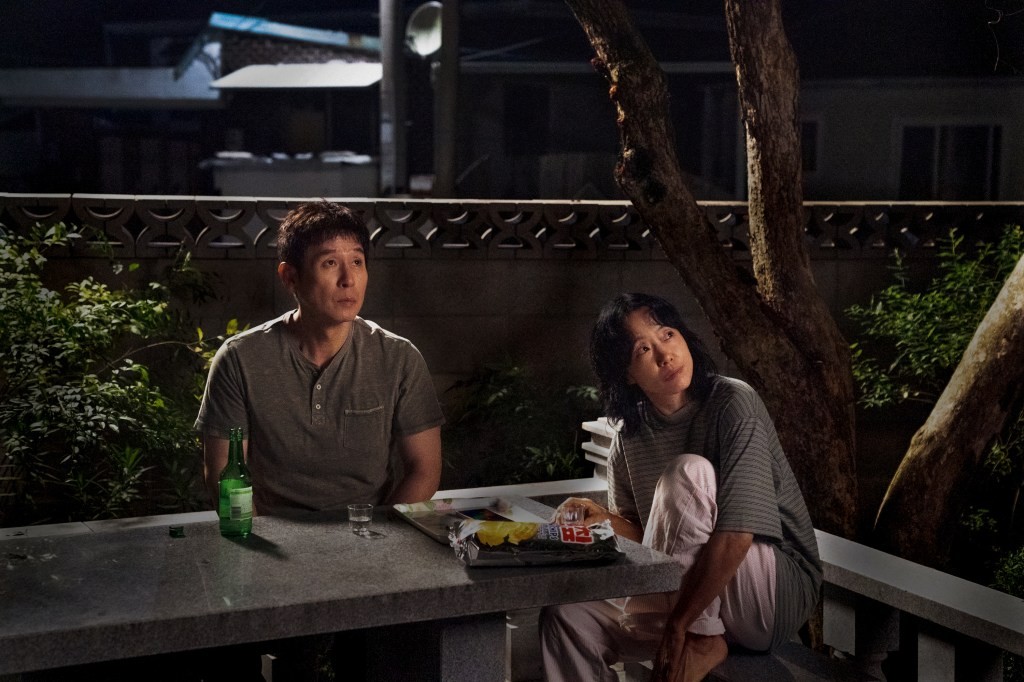
Lee Chang-dong has finally returned to feature filmmaking.
The Korean filmmaker has been on an extended eight-year hiatus, which he blames on his “pathological timidity.”
“Unless I have that conviction, I cannot make myself begin the work, no matter the external circumstances or what others around me say,” he tells Deadline via Zoom from his office in Korea, ahead of his trip to Venice, where, this weekend, his latest film Possible Love, a title full of conviction but also comedy and sharp social critique, debuts in Competition.
Director Lee helmed the film from a screenplay he co-wrote with Oh Jung-mi. The pair previously worked together on Chang-dong’s last film, the excellent Burning (2018). The story follows two married couples whose lives become uniquely intertwined. There is Mi-ok (Jeon Do-yeon), who lives a quiet life with her husband, Ho-seok (Sul Kyung-gu), and their young son Cheol.
Ho-seok has been laid off from his job following an incident that has stunted his life and his ability to communicate with his family. We only learn what that incident was after the family meets Ye-ji (Cho Yeo-jeong), a documentary filmmaker engaged in a project about the lives of laid-off workers, and her ultra-wealthy husband Sang-woo (Zo In-sung). When Mi-ok agrees to be filmed, she grows close to Ye-ji, creating an uncomfortable friction that shakes both of their households.
Running just short of three hours, Possible Love is a masterful return by Chang-dong. Below, the filmmaker, joined by one of his leading men, Sul Kyung-gu, discusses why it has taken him almost a decade to make Possible Love. The filmmaker says he initially shelved the project, fearing he wasn’t the most suitable messenger for a film about labor rights. Chang-dong also explains why there is a tribute to Krzysztof Kieślowski’s Dekalog at the end of Possible Love, and why he believes so many contemporary Korean filmmakers have been so successful at interrogating the relationship or, as the Marxists would say, struggle between labor and capital in their work.
Netflix will release Possible Love in cinemas on October 23. The film hits the streamer on November 6.
DEADLINE: Director Lee, where did this idea come from?
LEE CHANG-DONG: Some years ago in Korea, a Korean conglomerate went through mass layoffs. That was met with an all-or-nothing strike from the labor side. There was also a merciless crackdown by the authorities. At the time, I remember thinking it would be a transformative event in the Korean labor market. I also knew it probably meant the beginning of a normalization of such restructuring of conglomerates that would greatly change the lives of these laborers. I wrote a screenplay, but at the last minute, I started to ask myself: Am I worthy of telling a story like this? I mean, do I have the right? Documentaries had already been filmed about the subject. Could I really justify turning this into a dramatic film? I couldn’t get a clear answer to that question, so I shelved the project. A lot of time passed, and then my co-writer, Oh Jung-mi, came up with the idea of telling this story alongside the tale of a documentary filmmaker. That got me thinking I could do this project. And that led me to revisit the project.

DEADLINE: I went in blind, so the documentary element really surprised me. What do you want people to take away from that aspect of this story?
CHANG-DONG: This is the story of all people who make films, no matter what kind of film it is. It could be a genre film or a dramatic film. As filmmakers, we deal with and portray people’s lives, and therefore, we are bound to be strongly connected to social issues. And as we deal with the pain of others, we must think: are we really making sure to treat them as we would our own, candidly and honestly? Or are we just consuming it to make our films? This question is inseparable from the work for those of us who create films. That’s why I wanted to take that question and expand it, not only in relation to creators but also to audiences. I hope they can think about their relationship with themselves and others.
DEADLINE: Sul, you’ve worked with Director Lee before. When did you first hear about this project?
SUL KYUNG-GU: I first heard about Possible Love last March. Director Lee and I met about two years ago, at the end of 2024, and he didn’t mention a new project. In fact, when we’re together, we still often meet with fans of our previous film, Peppermint Candy. A few months after that meeting, he reached out to me and told me about Possible Love. At the time, I was perplexed because I was already attached to a different project, but I knew I had to make this work. I spoke with the other director and begged him. Finally, they made it work for me.
The actual story and meaning of Possible Love wasn’t even important to me. What was important to me was working with director Lee Chang-dong again. I didn’t even ask to see the screenplay. Director Lee actually asked me, “Hey, you’re not even interested in reading the screenplay at all?” When I first read it, it just felt like a Lee Chang-dong script. It quite literally smelled of him. It had his fragrance. When you get something that Director Lee writes, it concerns you in the sense that you really want to make it work and do it well.
DEADLINE: Director Lee, people have been anticipating your next film for some time now. It has been almost a decade since Burning. Do you ever feel anxiety about that anticipation?
CHANG-DONG: I remember promising people after Burning that my next film would not take as long. But regretfully, I wasn’t able to keep that promise. I did have many people reach out to me asking when I would make my next film. I think that you could almost say it’s an obsessive side of me, almost a pathological timidity or whatnot. But unless I have that conviction, I cannot make myself begin the work, no matter the external circumstances or what others around me say.
DEADLINE: The music in this film is wonderful. Jung Jaeil, who has previously worked with Director Bong and Kore-eda, worked on the score. How did you two work together?
CHANG-DONG: I have never been a fan of using a lot of music in my films. This is just something that I carry as a filmmaker. I feel like the music tends to emphasize emotions outside the film, and I believe the musicality of the films should lie within the film itself. And so I shared these thoughts with Jung Jaeil. I told him that I would like the music to be limited to a minimum yet still convey the film’s structure and emotions to the audience. He understood me completely, and I really think that the results he came up with were just right.
DEADLINE: There’s a tribute to Kieślowski’s Dekalog at the end of this movie. This isn’t an adaptation from that film series. What is the connection?
CHANG-DONG: When I was writing this script, Kieślowski’s Dekalog was being adapted into a new project, with different feature films being assigned to each of the series. I was offered the chance to take part in the project. This film is unrelated to the Dekalog one, but I thought I could integrate the commandment they were dealing with in that film into this story: the 10th commandment, “Thou shalt not covet”. All the other nine commandments are about human action. However, the 10th commandment is all about human desire, so I thought that in today’s capitalist world, we could really deal with the question: can we truly live without coveting others’ lives?
DEADLINE: You mention today’s capitalist world. Can you both tell me: Why are so many Korean filmmakers able to so skilfully and powerfully deal with our relationship to labor and capital in their films?
CHANG-DONG: That’s something I’m personally curious about as well. But what I can say is that it goes to show just how rapid an economic change and development the Korean society has experienced over the past decades. Just a few decades ago, Korea experienced a tremendous war. We were one of the poorest countries in the world, and within a few decades we achieved very rapid economic development. However, as a result, we had to pay a grave social cost, and I believe the aftermath of that change is deeply rooted in our society. Within that process, we also experienced a political change, which led to conflict about academia and intellectuals. This has all been engraved in the Korean people, and I believe it is why we deal with these issues in such a serious manner. We carry it all with us in our everyday lives.
KYUNG-GU: I agree. It is a result of the rapid change our society went through and the intense conflict that led to it. And I think we are going to have a lot more stories to come going forward as well.
What's Your Reaction?
 Like
0
Like
0
 Dislike
0
Dislike
0
 Love
0
Love
0
 Funny
0
Funny
0
 Wow
0
Wow
0
 Sad
0
Sad
0
 Angry
0
Angry
0






Comments (0)