

Leica Was Never Really About Cameras
Before anything else gets misread, I want to make one thing clear.
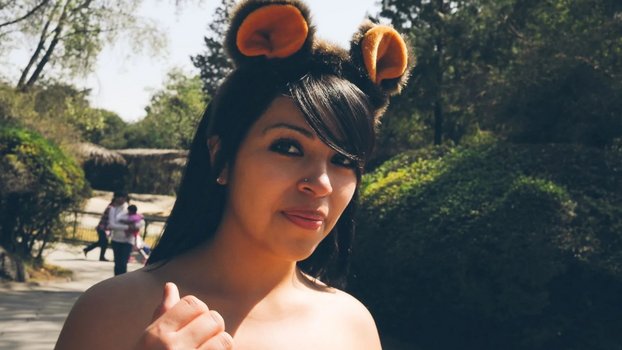
Years ago, Leica Camera AG hired me for an assignment worth roughly $10,000: the photos in this article are from that assignment that made the Leica X catalog in 2013. Today I have no working relationship with them, and I don't own any Leica cameras. I currently shoot Canon. I mention this only because Leica discussions tend to turn strangely ideological online, as if any nuance automatically comes from sponsorship or resentment. It doesn't. Sometimes it just comes from having been close enough to see how the myth behaves from the inside.
And Leica is very much a myth.
Not just a brand.
A myth behaves differently from a product. You can argue specs, compare systems, debate value. But none of that really touches what Leica represents in photographic culture. People don't talk about Leica the same way they talk about cameras. They talk about it the way they talk about ideas that have accumulated emotional weight over time.
That's why conversations around it get irrational so quickly.
One side treats it like a sacred object. The other treats it like a social provocation. Very few people manage to stay in the middle, because Leica is not designed to stay in the middle. It pulls interpretation toward extremes.
And that alone is already interesting.
Because it suggests the conversation is not really about photography hardware.
So what is it all about? I believe it's about meaning.
And at the center of that meaning, historically, there has always been something very human.
If you trace Leica's history back far enough, you don't just find engineering or design decisions. You find a persistent humanist necessity: the desire to be close to people, to observe life as it unfolds, to remain present in the world without interrupting it. The camera becomes secondary. The encounter becomes primary.
People are the core of it.
Not sensors. Not specifications. Not even aesthetics in the modern, polished sense.
I am talking about something more important here: I am talking about human presence.
In that sense, Leica's mythology is not built on technology alone, but on a philosophy of attention. A belief that photography is fundamentally about proximity to life, and responsibility toward what is seen.
That is what makes it culturally persistent. Not technological superiority, even if the cameras are excellent. It is the continuity of that idea across decades: that the camera should serve observation, not dominate it.
In a world where cameras have become almost absurdly capable, where autofocus anticipates human intent and sensors see in conditions that would once have been considered unusable, photography has gradually shifted into a technical arms race. Everything is measurable. Everything is comparable. Everything is optimized.
Except meaning.
Leica never fully entered that race the same way others did. Not because it couldn't, but because it didn't fully need to. And that refusal became part of its identity.
Over time, that created a strange effect: the camera stopped being perceived as a tool and started functioning as a symbol.
And symbols behave differently.
They attract projection. They absorb contradiction. They accumulate stories that often have very little to do with the object itself.
Yes, it is right now also a status symbol. Like a Porsche.
Yes, it is expensive too. Not for everyone. Not even for me, because I am not that rich to buy a Leica and a lens to put on a Leica.
Yes, I purchased a Leica in the past, the [Leica X2](https://www.bhphotovideo.com/c/search?q=Leica%20X2&sts=ma), the one I used for the assignment, and I obtained a special discount to keep the camera. But I can't be considered a Leica guy for sure.
People see in Leica what they want to see. For some, it represents authenticity. For others, pretension. For some, history. For others, status performance. All of these readings coexist, sometimes in the same room, sometimes in the same person.
That tension is not a flaw in the brand.
It is the brand.
What makes Leica culturally persistent is not technological superiority, even if the cameras are excellent. It is the way it sits slightly outside the logic of constant upgrade culture. It doesn't fully behave like a disposable tool in a cycle of yearly replacement. It carries a sense of continuity that feels increasingly rare.
And continuity, in photography, has psychological weight.
Photography is not only about capturing images. It is also about how those images feel at the moment of capture. The distance between intention and result. The friction between seeing and recording. The awareness of process.
Leica, in its most traditional form, keeps that friction visible.
And friction changes behavior. That is why we immediately associate Leica cameras with Henri Cartier-Bresson, and all the masters of documentary photography. Leica is documentary even when used for fashion shots.
It slows things down. It removes certain safety nets. It forces a different kind of attention. Not necessarily better, not necessarily worse, just different. And difference is often enough to create strong emotional narratives around a tool.
This is where the mythology begins to grow.
Because once a tool changes behavior, people start attributing outcomes to the tool itself, rather than to the shift in attention it produces.
That's how legend replaced description.
Leica has been living inside that space for a long time now.
Some photographers respond to that with admiration. Others with hostility. Both reactions say more about how people relate to photography today than about the cameras themselves.
Because underneath it all, Leica exposes a quiet discomfort in modern photographic culture: the suspicion that maybe photography is not primarily a technical problem to be solved, but a perceptual and emotional one to be experienced.
And that idea resists simplification.
Which is probably why Leica still refuses to disappear into the background noise of perfectly optimized machines.
It remains visible not only as an object, but as a question.
And in today's photography landscape, questions are rarer than specifications.
What's Your Reaction?
 Like
0
Like
0
 Dislike
0
Dislike
0
 Love
0
Love
0
 Funny
0
Funny
0
 Wow
0
Wow
0
 Sad
0
Sad
0
 Angry
0
Angry
0






Comments (0)