

New Horizons Pluto probe just woke itself up after 321 days of hibernation
Science
Good luck getting your PC to do that after lunch
NASA’s New Horizons probe has woken itself up after 321 days of hibernation.
The aerospace agency sent commands to the probe last July, instructing it to commence hibernation on August 7 and then resume activity in July 2026.
On July 23, NASA checked to see if New Horizons had obeyed the instruction to wake up and was pleased to find it was online again.
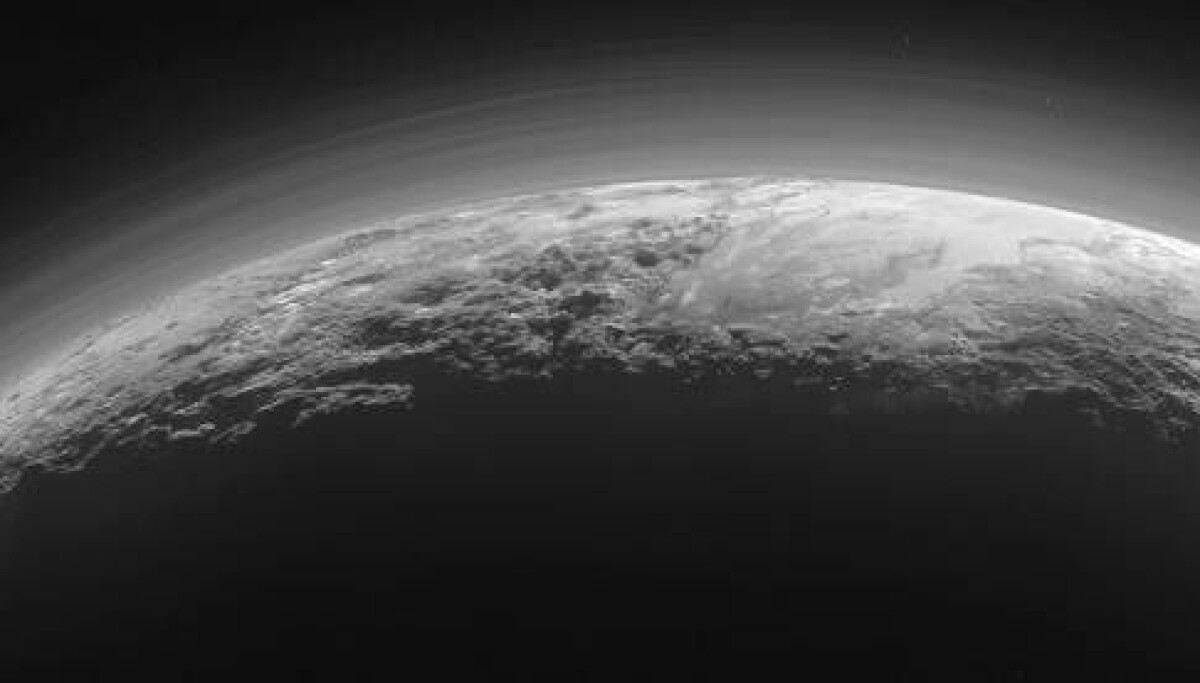
New Horizons’ main job was to make our first ever visit to Pluto, which it accomplished in 2015, before zipping off to visit a Kuiper Belt object named Arrokoth in 2019.
At the time of writing, NASA says the probe is 64.04 astronomical units (AU) from Earth, or 9.5 billion km/5.9 billion miles. A quick reminder: A single AU is 93 million miles/150 million kilometers, which we mention because New Horizons has travelled 23.0 AU beyond Arrokoth since its 2019 visit. That’s a greater distance than the 19 AU between the Sun and Uranus.
NASA says it puts New Horizons into hibernation mode to save resources when it’s cruising and doesn’t bother sending it any commands or downloading data while the craft is dozing.
The agency is content with that arrangement because scientists have observed no other Kuiper Belt object the craft can visit.
NASA therefore devised an extended mission plan that calls for New Horizons to gather data about the Sun’s interactions with the outer reaches of the solar system – but to do so passively and hoard resources in case observers find an object the probe is capable of visiting for a closer look.
If no interesting rock can be found, New Horizons will exit the Kuiper Belt sometime in 2028 or 2029, then sail out of the solar system.
Humanity has built just two working spacecraft – the Voyagers – that achieved that feat.
Both passed through the heliosheath, a distant region where the solar wind starts to run out of puff as interstellar gases push into the solar system. The heliosheath ends at the heliopause, a boundary at which the pressure of the solar wind and the interstellar medium are equal. Astroboffins think the heliopause is at about 130 AU. Voyager 2 is at about 140 AU and Voyager 1 has travelled 170 AU. ®
What's Your Reaction?
 Like
0
Like
0
 Dislike
0
Dislike
0
 Love
0
Love
0
 Funny
0
Funny
0
 Wow
0
Wow
0
 Sad
0
Sad
0
 Angry
0
Angry
0












Comments (0)