

Pipes Don’t Make Water, and Distribution Doesn’t Guarantee an Audience
Editor’s note: This is the ninth chapter of “A Producer’s Path,” an ongoing column for IndieWire’s Future of Filmmaking from independent producer Daren Smith. Read previous chapters here.
On our last two independent theatrical releases, we put our movies on nearly 400 screens. We thought we had it figured out — a distributor partner ready to work, minimum guarantees from downstream buyers, a real theatrical footprint. Then opening weekend came, and most of those seats stayed empty. That mistake cost us six figures.
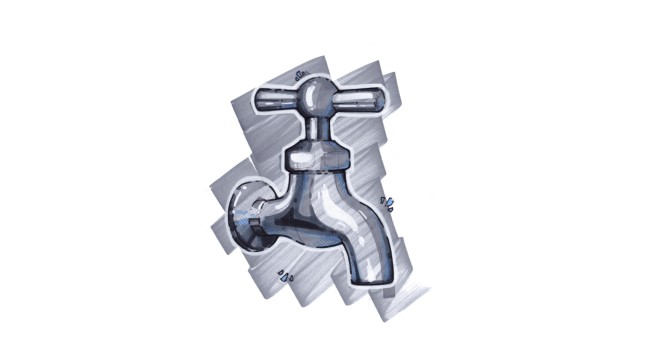
Systems are merely plumbing: they don’t create the outcomes you want, they make it easier for those outcomes to emerge naturally.


Pipes don’t create thirst, and they do not create water. Build a vast network of pipes and switches and pumps with only a trickle of demand, and most of that effort is wasted. The water, instead of flowing, runs dry.
In the Implement Systems phase of the MOVIE framework, you want to right-size the system to the demand, never the demand to the system. Once you’ve chosen the Outcome you want, you then build the system that delivers it. Once you know the destination, you can then use that outcome to inform the system that most optimally gets you there. That is the work in front of us in today’s column.
Distribution doesn’t help you find an audience. Distribution exists to supply the demand that already exists in the marketplace. Just because you have a firehose of supply doesn’t make anyone thirsty. We’ve got it backwards – we keep thinking that getting distribution is equal to a successful outcome. No, not if the outcome is “people paying money to see the movie in theaters”. Many distribution deals skip the theatrical window entirely, which would fail to achieve that stated outcome. And just because you have distribution doesn’t mean you have demand. Recent examples are aplenty – just look at the box office and see which theaters are full ($5,000+ per-screen average) and which are not (<$1,500 per-screen average).
Distribution does not create demand. It merely services the demand that already exists.
The distributor is not an audience. The theaters booking you is not an audience – they don’t pay you unless someone pays them for a ticket first. The audience is where you measure demand – anything before that and you risk building a system that never gets you the outcome you want. A screen is just an empty pipe until someone shows up thirsty.
There are many outcomes that stroke our ego — a distribution deal, a theater count, a Rotten Tomatoes score, impressions or even followers on social media. None of these are demand signals. The ONLY demand signal is tickets purchased. That’s what you build the system for.
I have the benefit of hindsight to know exactly how much demand there was in the marketplace for our last two movies, taking into account how much we spent on marketing and how many people actually knew our movies existed. “The Carpenter” did $247,568, and “Faith of Angels” did $570,027 according to Box Office Mojo. Given the average ticket price in 2024 of $11.31, we had 21,889 people and 50,400 people respectively purchase tickets. Not bad, right?
Depends on what you need, outcome-wise, from your distribution. If these movies cost $100,000 to produce, that would be pretty close to break even on the first, and profitable on the second. But if you 10x or 20x the budget, now you’re seeing why I have spent so much time thinking about and writing about this principle.
The reality hurts: we spent money to put the movie in nearly 400 screens, but only had demand for a fraction of that. 50 screens would have been plenty, and we would have saved the ~$300 or so it cost us to be in those other 350 screens, or $105,000. Ouch.
We over-engineered the system — too many pipes, not enough demand. An over-supplied release isn’t just inefficient, it’s self-deflating. Empty seats opening weekend means we’re gone the next, leaving zero chance for word of mouth to spread and get people to show up on week two and beyond. A theater at 20 percent capacity is a “flop.” Fewer theaters at 80 percent capacity is remarkable and newsworthy.
If you’re a nerd about this stuff like I am, run the math:
400 screens × $300 per screen = -$120,000
Assumptions: 150 seats per screen, 4 percent capacity, 12 showtimes in a weekend, $12 ticket
6 tickets × 12 showtimes × $12 = $864 per-screen average
72 tickets × 400 screens = 28,800 tickets
28,800 × $12 = $345,600 box office
That’s essentially what we did on the two movies we released in 2024. Not bad, but barely enough to hang on for week two in an 8- or 10-plex theater. You have to subtract the cost, the theater split of ~55 percent, subtract the distributor fee, and you likely walk away with…
$345,600 × 45 percent = $155,520 revenue
-15% distributor fee = $132,192 producer gross -$120,000 screen cost = $12,192 producer net
That’s not accounting for any marketing spend to get those 28,800 people to buy a ticket.
Now, if we “right-size” the system:
50 screens × $300 per screen = -$15,000
Same 28,800 tickets. Not one new customer.
28,800 ÷ 50 screens = 576 tickets per screen
576 ÷ 12 showtimes = 48 seats filled
32 percent capacity (vs. 4 percent) 576 × $12 = $6,912 per-screen average (vs. $864)
28,800 × $12 = $345,600 — the exact same gross
$345,600 × 45% = $155,520 revenue
-15% distributor fee = $132,192 producer gross
-$15,000 screen cost = $117,192 producer net
$117,192 vs. $12,192 — nearly 10x the profit from the identical 28,800 tickets, and well above our $5,000 per-screen threshold at $6,912.
Week two expansion is earned because more theaters want a piece of that action, word of mouth spreads, and the movie has a long theatrical run.
Alright, end of nerding-out over numbers… for today, at least.
A few principles about systems building, specific to this distribution system we’ve been building for the last few columns.
The central principle: spend as close to the buying decision as possible. An ad on a Meta platform is like dropping a water balloon in a desert. It’s way too far away from the buying decision, and will evaporate before even the most motivated (thirsty) fan gets there.
Alternatively, every major circuit has its own ticketing platform and phone app. You can spend money directly to put an ad for your movie in front of someone who is actively looking to buy a movie ticket today. That’s what “spending close to the buying decision” looks like. The 7-11-4 principle we touched on in a previous column applies here. Independent filmmakers don’t have enough money to create thirst from ads. They have to go where people are already thirsty. Think of every marketing dollar as a drop of water – do you want to drop it in the desert or into the outstretched cup of a thirsty movie-goer?
The second principle is that you have to know whose pipes you’re renting and what the rent costs. The details of a distribution deal including licensing fees, terms, rights, how and when who gets paid and in what order. We recently did an entire podcast episode on this very topic so you can go down that rabbit hole.
The distributor(s) you work with take a slice of the “rights” pie — domestic theatrical, streaming, international, etc — for a “window” in exchange for a guarantee (sometimes) and marketing spend (also sometimes) that they will recoup first. If you’re selling a slice, you need to know what that slice is worth before you sell it. A service provider is a vendor, not an owner. A theatrical booker works in-house at a theater or circuit, and will rarely take a phone call or email from a filmmaker they’ve never worked with, which is the whole reason why distributors and service providers exist. You get to “tap in” to their existing network of pipes and pumps.
The third principle is that the gatekeepers built a system that is optimized for their outcomes, not yours. A big studio summer release will take over an entire cineplex — multiple screens that it owns completely. It doesn’t share the screens with other movies. Oh, and it uses its leverage to guarantee a certain number of screens for a certain number of weeks, or the studio withholds the next release from the theaters that don’t play ball. That’s a small part of why independent distribution is so hard — even if the theaters want to book your movie, there are many situations where they can’t.
The system you build has to abide by these principles. It’s not just math, it’s a mindset shift. You have to think about distribution differently than the studios we read and hear so much about. Theatrical distribution may not make the most sense, since you’re giving up so much of the revenue to the theaters and the distributor.
Building your own distribution system is an act of ownership in the deepest sense.
Oversupplying the marketplace isn’t generous, it’s often ego-driven and draining. Right-sizing your system to the existing demand in the marketplace is the way for independents to get profitable outcomes from their distribution system.
The pipes don’t create the water. But build them right, point them at those who are thirsty, and you’ll never need to ask for anyone’s permission to get your film to the people who already want it.
Daren Smith is the founder of Craftsman Films and managing member of Producer Fund I. His latest film, “Brotherhood: A Cinematic Musical,” opens in theaters October 2. All artwork for the Producer’s Path series is created by Steven de Groot.
What's Your Reaction?
 Like
0
Like
0
 Dislike
0
Dislike
0
 Love
0
Love
0
 Funny
0
Funny
0
 Wow
0
Wow
0
 Sad
0
Sad
0
 Angry
0
Angry
0












Comments (0)