

Russell Brand Was Sentenced for Rape and Sexual Assault on Monday. By Friday, Netflix Had a Sleazy Doc Ready to Go
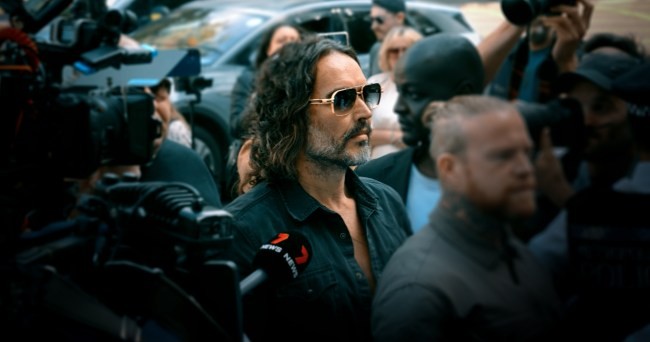
The term that comes to mind most is “ambulance-chasing.” Earlier this week, just one week after Russell Brand was convicted of rape and sexual assault and two days after he was sentenced to 10 years and six months in prison for his crimes, word spread that Netflix was prepping a documentary on the comedian-turned-criminal.
Olivia Isaacs’ documentary has been in the works for a while. Deadline’s initial story on the project even noted that it “was referenced during the trial” and that while “giving evidence at London’s Southwark Crown Court, Mark Pinheiro, a former friend of Brand, said he had been approached by a producer about the Netflix show.”


But that the project — “Russell Brand: Open Secret,” a slim and unfocused documentary feature that clocks in at just under 90 minutes — was being dropped on the streamer to ride the wave of interest after Brand’s conviction and sentencing felt distasteful. How essential, after all, could this be? And what could it tell us about Brand’s actual trial, sentencing, and conviction?
Turns out, not much. Isaacs’ film doesn’t get into the trial until its final five minutes (counting its end credits to boot), when it uses title cards to share the conviction news, note that all of the allegations contained in the film itself “pre-date” those that led to the conviction, and make clear that Brand’s legal team was contacted after the Monday conviction and chose not to respond. That’s perhaps the most interesting part of the film’s literally tacked-on final moments: a desire to show its work when it comes to the journalism and attendant standards behind Brand’s long-simmering takedown.
Other elements are far less successful, as Isaacs’ film leans hard on tired tropes and cloying conventions. Captions frequently mention “[unsettling music playing]” or “[dramatic music playing]” during the most benign moments. Old footage of Brand, from home video to early stand-up gigs, is played slowly, all the better to maximize the sense that something is wrong with this man. Far more effective are interviews with those who were allegedly victimized by Brand, but those are often drowned out by played-out techniques.
The film opens with a typical “rise and fall” style montage, charting Brand’s humble beginnings, meteoric rise to fame, profound injection into the cultural consciousness (he met the queen! and also Tom Cruise!), stumble into right-wing ideology, and eventual criminal convictions for horrific acts the film posits everyone knew about forever.
It is, after all, called “Russell Brand: Open Secret.”
Isaacs’ film lacks a thesis beyond the general idea that everyone knew Brand was a creep from the jump. She assembles a hodgepodge of talking heads to hammer that home, including fellow comedians, some genuinely freaked out ex-girlfriends, a handful of accusers (including one who, reticent to appear on camera, is replaced with an actress, one of the film’s most thoughtful choices), and some bizarrely starry-eyed commentators (journalist George Monbiot comes across particularly badly here, zipping from talking about his early delight in Brand and his now-held belief that Brand’s far-right switch is the most horrifying aspect of all of this, oof).
Most compelling are Times journalists Rosamund Urwin and Charlotte Wace, who worked tirelessly to investigate myriad accusations against Brand for years (Urwin first began to look into Brand in January of 2019). Even smushed up against a herky-jerky timeline and a loose sense of purpose, the way that Urwin and Wace talk about the precise nature of their work, what they can and cannot report, the women they spoke to, and the ways in which they were nearly shut down (and, in fact, many other investigations of its ilk were allegedly turned off) is both gripping and necessary.
With more time and better access, the film could have focused more on the police and legal minds that helped build the case against Brand, but in the rush to get this out in the world, that was surely not a major aim.
By its midpoint, Isaacs’ film turns its lens on the culture that helped give rise to Brand, the wild “noughties” when “ladette culture” ruled and being overtly sexy and crude was de rigueur. Women were into Brand! Being ruthlessly unfunny and breathlessly boorish was hot! Also, his dad was mean to him! Diddy and David Walliams jump scares! These are some of the insights on offer in “Open Secret,” and the only thing truly revealing about them is how huge of a mistake it was to let someone as outwardly disgusting and deeply unwitty as Brand get into a place where he could pick and choose his “damsels” or his “whores,” depending on who is talking about them.
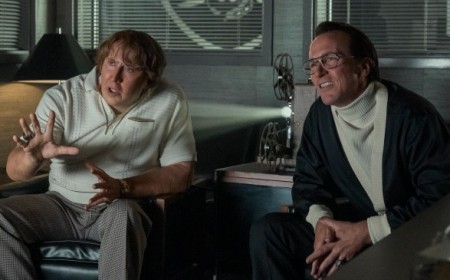
 ‘Russell Brand: Open Secret’Courtesy of Netflix
The film speed-runs through the last few years of Brand’s life and career, as he pivots into far-right shock politics and Christianity just as the walls are starting to close in on him. Brand may have alleged that his former cadre of famous friends and stalwarts won’t “touch him with a barge pole” these days, but the film’s distinct lack of bigger talking heads stands out. That could stand some further interrogation, too, but there’s simply no time for that. (Well, there is, but not if you want to be a part of this news cycle.)
The four-day gap between Brand’s conviction and the film’s release is zippy, even for Netflix, which has gotten progressively speedier with its true crime joints. In July of 2024, it was announced that Netflix would release a multi-part Karen Read documentary, just days after her first murder trial ended in a mistrial due to a hung jury on July 1, 2024. Three episodes dropped earlier this month.
In January of 2026, the streamer announced a Lucy Letby project with “unprecedented access” after the Crown Prosecution Service (CPS) announced it would bring no further criminal charges against the former nurse, who was sentenced to life imprisonment for a slew of charges of murder and attempted murder of infants in her care following a review of additional allegations. “The Truth and Tragedy of Moriah Wilson” was first publicly announced in February of 2026, almost three years after Kaitlin Armstrong was convicted of first-degree murder of the cyclist in November of 2023.
“Russell Brand: Open Secret” will surely capture lots of eyeballs as this part of the news cycle winds down, but what the film trades for immediacy, it more than loses in actual insight. Part two can’t be far behind. Let’s just hope it takes far more time to make and far more consideration to craft.
“Russell Brand: Open Secret” is now streaming on Netflix.
What's Your Reaction?
 Like
0
 Dislike
0
 Love
0
 Funny
0
 Wow
0
 Sad
0
 Angry
0





Comments (0)