Sandisk NAS 800 1.92TB SSD Review: Endurance at a premium
Oct 11, 2026 - 19:07
01
The Sandisk NAS 800 is the premier NVMe SSD for NAS, with high endurance, high sustained write performance, and excellent 4KB random latencies, only held back by its price.
Reasons to buy
+
High TBW endurance rating
+
Exceptional sustained write performance
+
Excellent 4KB random QD1 latencies
+
Good all-around performance
Reasons to avoid
-
High price
-
Below-average power efficiency
Why you can trust Tom's Hardware
Our expert reviewers spend hours testing and comparing products and services so you can choose the best for you. Find out more about how we test.
Sandisk is back with another welcome SSD, the NAS 800. As the name implies, this drive is designed for NAS appliances, but could also be a good choice for high-end desktop and enthusiast workstations. We recently reviewed the Optimus GX Pro 850P, a consumer drive for the PS5, so SanDisk is on a roll. The company has made it clear it wants to support the broader consumer market, as it’s even bringing back SATA SSDs in the form of the 320 and 520 series. The NAS 800 is closer in theme to the WD Red series of drives, like the WD Red SN700, which are optimized for home and small-business servers.
At its heart, the NAS 800 is a specialized, optimized Sandisk Optimus GX Pro 8100 (formerly the WD Black SN8100). That progenitor is one of the best drives on the market. It has a stellar controller and excellent all-around flash with good power efficiency and low latency. This makes a great base for a NAS drive, although some changes are necessary. The bones are good, though, and this drive could be used in any system. The only real issue is that you’re paying a premium for the NAS optimizations, and that’s where our focus is.
The Sandisk NAS 800 has some strange capacities, at least compared to consumer offerings, because the drives reserve more spare flash as overprovisioning, which improves endurance. The drive comes in 960GB, 1.92TB, 3.84TB, and 7.68TB flavors. The final one is the most welcome, as it’s been difficult to find larger drives outside of enterprise. Performance is excellent, at up to 14,900 / 13,200 MB/s for sequential reads and writes and up to 2,300K / 2,100K random read and write IOPS. Peak overall performance should be achieved at 3.84TB.
Latest Videos FromTom's Hardware
Write endurance is where this drive really stands out. It’s rated for up to 14PBW at its maximum capacity. Proportional to size, this puts it at almost three times the normal for consumer drives. The drive also supports TCG Opal self-encryption for data at rest, as would be expected for a drive in this class. Things are capped off with a standard five-year warranty.
You pay for this performance and endurance. At the time of writing,SanDisk’ss store lists the four capacities at $387.99, $699.99, $1,374.99, and $2,749.99. That’s roughly 45% to 65% more than the WD Black SN8100’s current street prices. Against the same drive under its new Optimus GX Pro 8100 name, the premium is between 27% and 29% at the time of review. The extra cost comes partly from the drive’s optimization but mostly from its TBW rating. You’re getting about one drive write per day over the five-year warranty, which is all but required for a drive of this type, and worthy of the price tag if you’re focused on endurance.
Sandisk NAS 800 Software and Accessories
If you own a Sandisk drive, or a WD drive for that matter, then you should be no stranger to the NAS 800’s software offerings. Sandisk has its own dashboard, aptly named Sandisk Dashboard, which follows the popular WD Dashboard. This SSD toolbox has all the information you need for your drive, including important SMART and health information. It also lets you enable optional features, find firmware updates, and more. Sandisk also provides a download for its OEM version of Acronis True Image, useful for backing up your files or cloning your drive.
Sandisk NAS 800: A Closer Look
Image 1 of 2
(Image credit: Tom's Hardware)
(Image credit: Tom's Hardware)
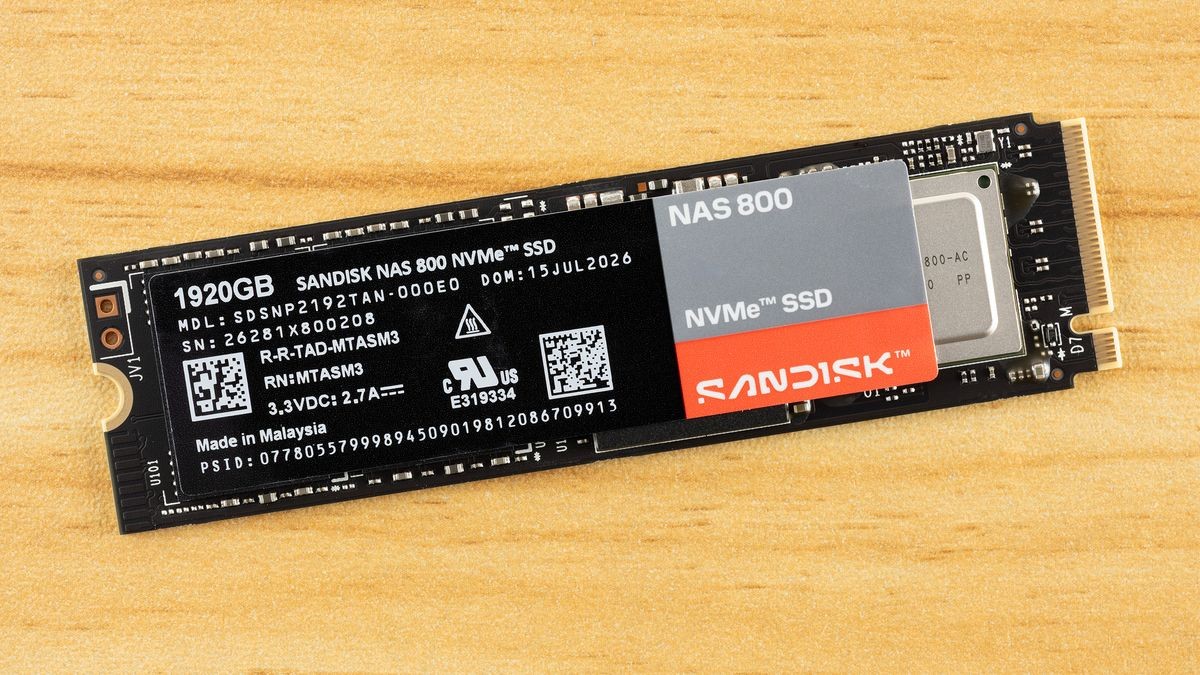
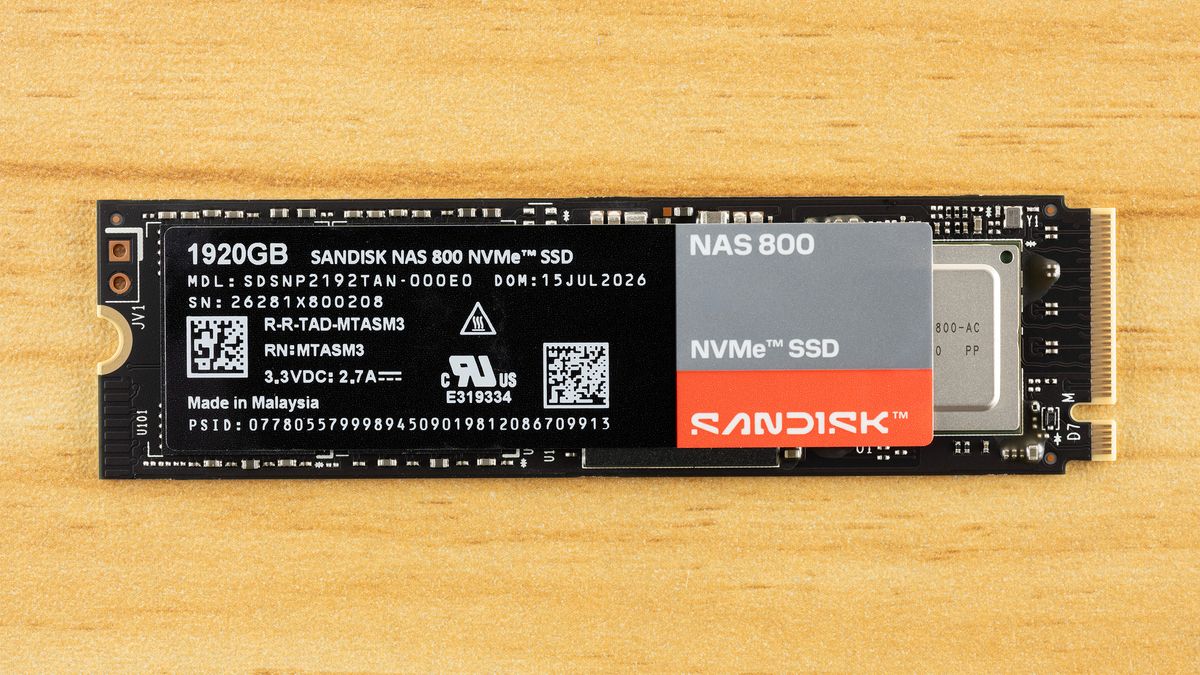
The 1,920GB, or 1.92TB, version of the NAS 800 is single-sided. That also applies to the 960GB and 3.84TB versions. Only the 7.68TB version is double-sided, although that shouldn’t generally preclude you from using it in devices that would benefit from the drive. It could make a difference for certain cooling arrangements. The drive’s rating of 3.3V / 2.7A puts it at around 9W, which is between the drive’s maximum power state of 9.50W and its 6.5W / 6.4W average draw for this capacity. The reported active draw of 7.52W is higher than this average, but given that this drive is NAS-optimized with a small pseudo-SLC (pSLC) cache, it will likely be lower in practice. The drive should run cooler as a result.
Stay On the Cutting Edge: Get the Tom's Hardware Newsletter
Get Tom's Hardware's best news and in-depth reviews, straight to your inbox.
Image 1 of 2
(Image credit: Tom's Hardware)
(Image credit: Tom's Hardware)
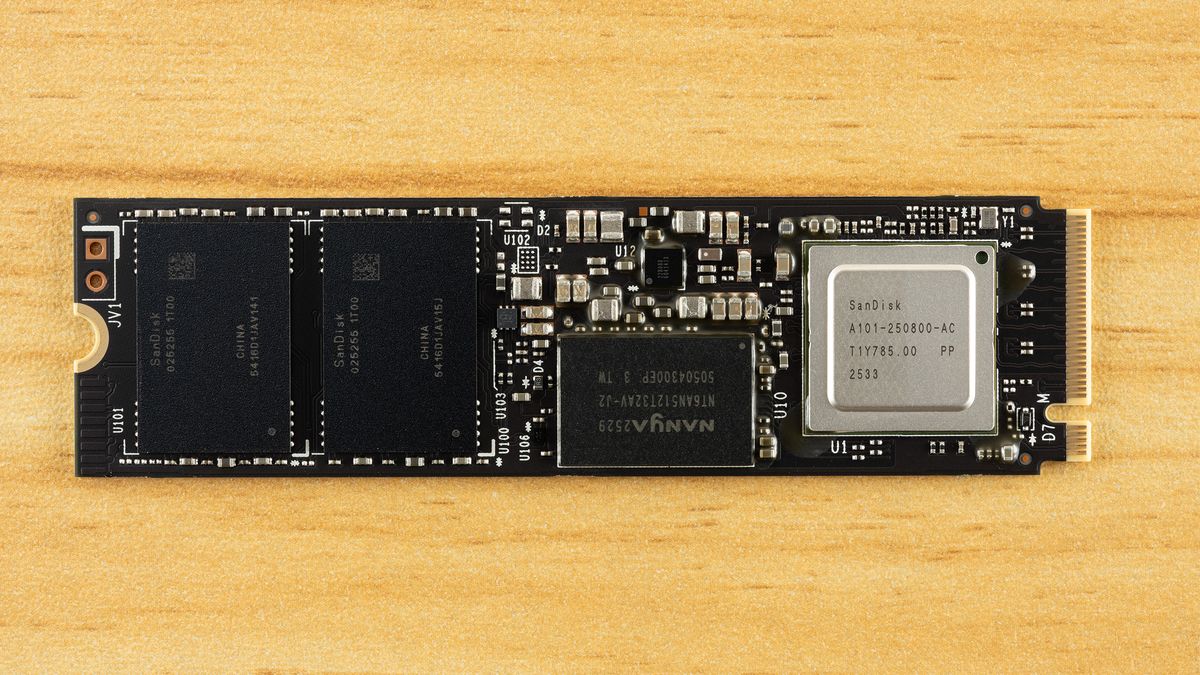
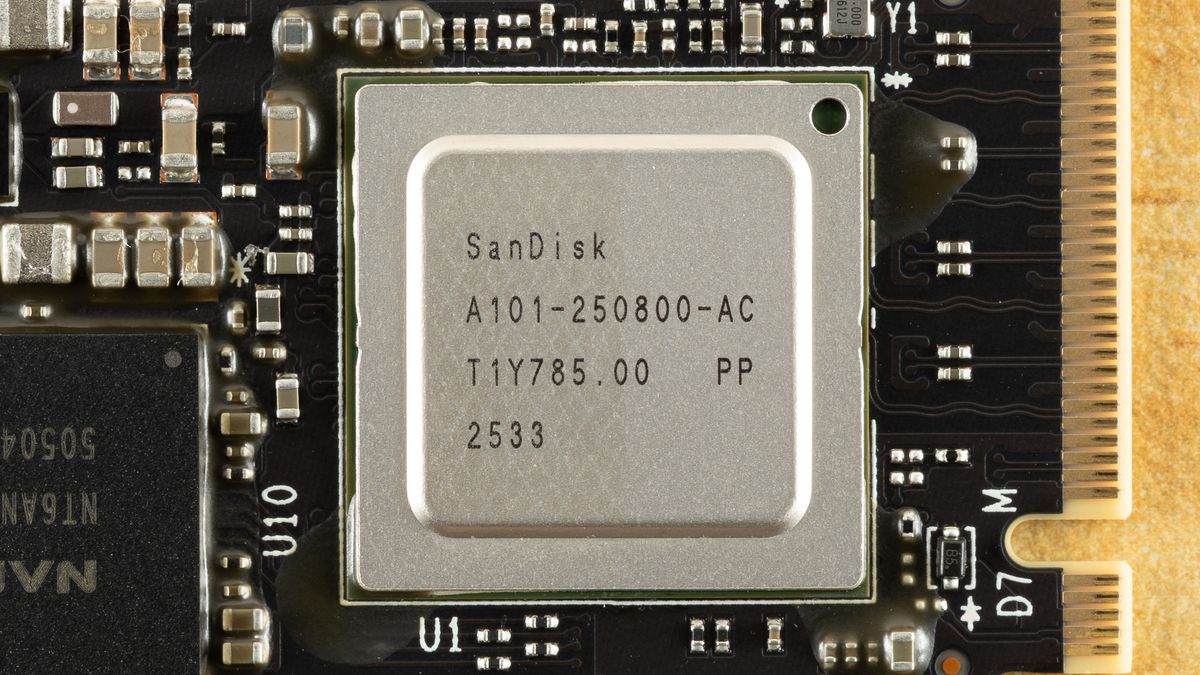
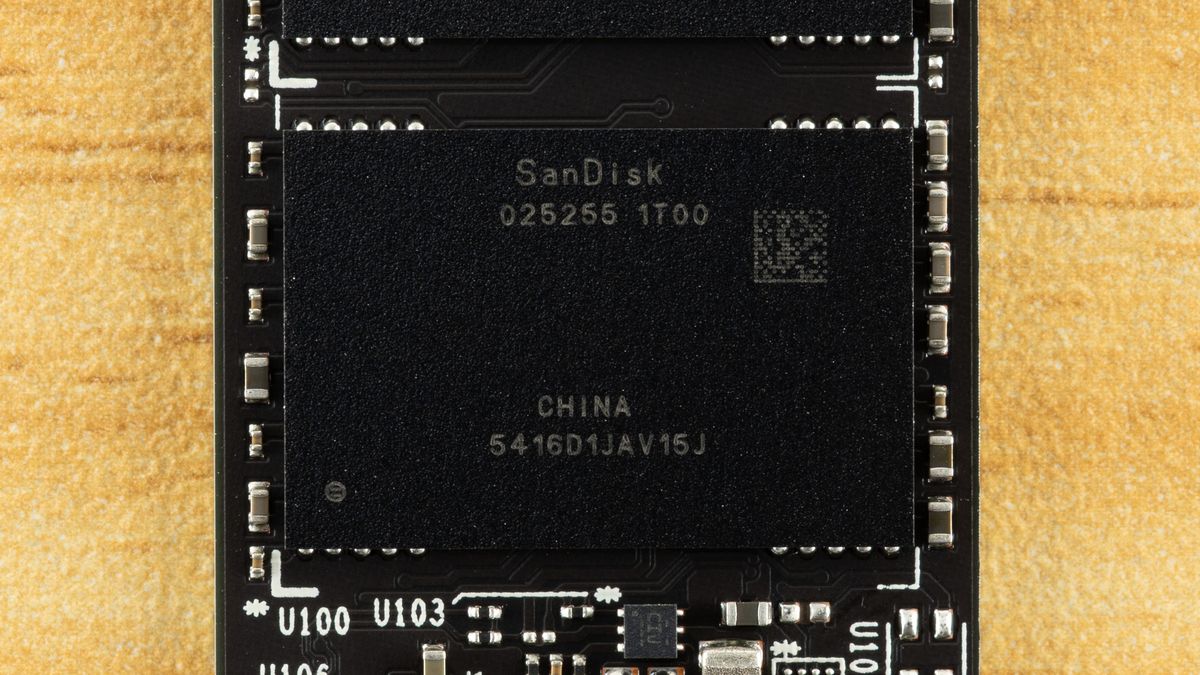
The drive layout includes the SSD controller, a DRAM package, and two NAND flash packages. The 7.68TB version will need more packages on the rear, for a total of four flash packages. The controller is labeled in a way similar to SanDisk’s proprietary parts, but the “250800” spells out that this is a Silicon Motion, or SMI, SM2508. This is an eight-channel, high-end PCIe 5.0 SSD controller with generally excellent performance and power efficiency.
The DRAM package is LPDDR4 and is therefore a more power-efficient choice. It’s also 2GB, which follows the normal 1:1,000 ratio of DRAM to NAND. Our recent Optimus GX Pro 850P review had a 2TB drive from Sandisk with only 1GB of RAM. That’s perfectly suitable for gaming use. For this NAS drive, 2GB is very much preferred. The controller and DRAM are paired with SanDisk’s 218-layer BiCS8 TLC flash. This is some of the best flash on the market, with good all-around performance, very good latency, and very good power efficiency. This is world-class hardware, and the price reflects that.



 Like
0
Like
0
 Dislike
0
Dislike
0
 Love
0
Love
0
 Funny
0
Funny
0
 Wow
0
Wow
0
 Sad
0
Sad
0
 Angry
0
Angry
0









Comments (0)