

Scientists Capture First Images of Mysterious New Monkey Species with Striking Orange Lips
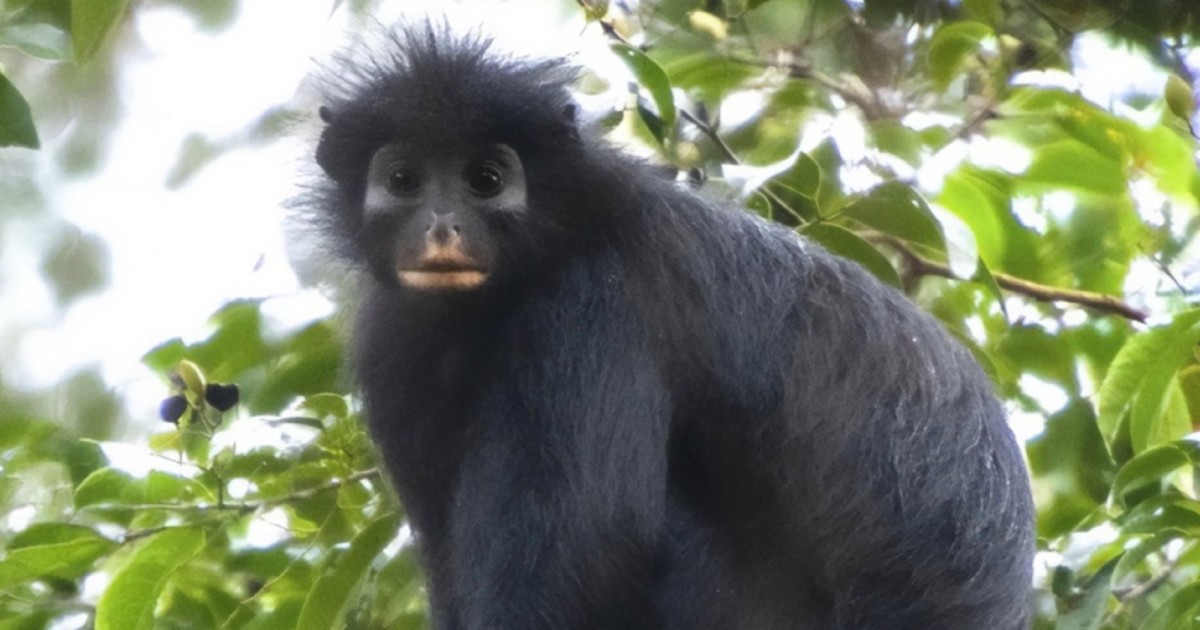
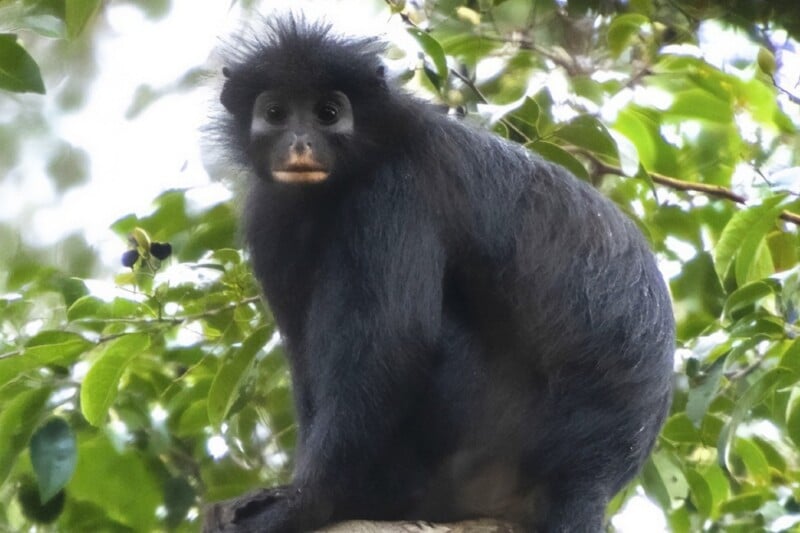 Meet the new monkey species ‘Colobus congoensis’ | Photo credit: Daniel Rosengren, Frankfurt Zoological Society
Scientists have identified a new species of monkey — with a striking mask-like face and distinctive pinkish-orange lips — after a decades-long search for the primate was sparked by a blurry photograph.
Researchers identified the previously unknown species of African monkey — one of the rarest discoveries in modern primatology — hidden in a remote region of the Congo Basin.
The mystery of this new species began with an unexpected sighting in 2008, when researchers captured a partially obscured photograph of the monkey. The unclear image led scientists to speculate that the animal could represent a previously unknown species.
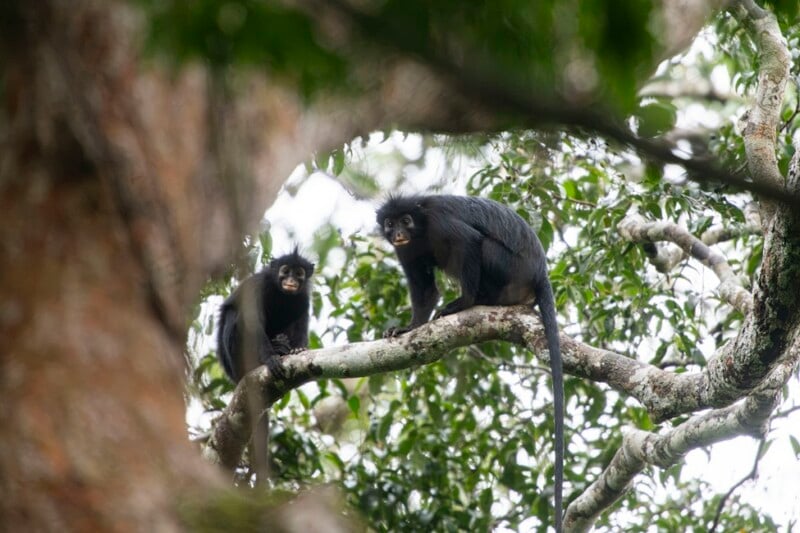 Photo credit: Daniel Rosengren, Frankfurt Zoological Society.
More than a decade later, field researcher Jean Pierre Kapale led an expedition to confirm the monkey’s existence. During the expedition, researchers encountered the animal again and captured the first clear photographs of the primate. In total, the team took seven additional photographs of the primate in different locations. The clearer images prompted further investigation into the animal and helped lead to its formal identification. The monkey, named Colobus congoensis, is only the fifth new monkey species identified in Africa in the last 75 years.
Although local communities had occasionally reported sightings of the animal and referred to it by the informal name “Likweli,” it had not been officially recognized as a distinct species until researchers published their findings in the scientific journal PLOS One on Thursday.
The species has glossy black fur, cape-like shoulders, a long tail, and a distinctive orange-cream patch around its mouth and nose that gives it a mask-like appearance. It weighs around 15 pounds. New genetic, anatomical, and acoustic analyses confirmed that the monkey represents a distinct evolutionary lineage that separated from its closest known relative between four million and five million years ago.
The newly identified monkey was found in the remote interfluve between the Lomami and Congo rivers in east-central Democratic Republic of the Congo, one of Central Africa’s most biologically significant regions. Despite decades of scientific exploration in the region, the species remained undocumented until now.
“We continue to be reminded that the Congo Basin remains one of the world’s last great frontiers for mammal discovery,” John A. Hart, first author and a conservation scientist with the Lukuru Wildlife Research Foundation, says in a statement. “Even in regions that have been scientifically explored, entirely new species are still coming to light. This discovery reinforces how much biodiversity remains undocumented in the Central Congo Basin and how this region continues to reshape our understanding of primate evolution and conservation.”
PetaPixel articles may include affiliate links; if you buy something through such a link, PetaPixel may earn a commission.
Love PetaPixel? Go Premium.
PetaPixel is the world’s largest independent photography publication and we’re only able to continue our work with your help. Become a PetaPixel Member now and support our mission to bring you regular, high-quality reviews, features, news, and more.
- Remove banner ads
- Gain access to full-resolution RAW and JPEG Sample Galleries
- Get 5% off orders from KEH.com
- Get a $15 coupon to spend at Moment
- Get 10% off lighting equipment from FJ Westcott
- Get 10% off film development, scanning, and printing from Blue Moon Camera and Machine
What's Your Reaction?
 Like
0
Like
0
 Dislike
0
Dislike
0
 Love
0
Love
0
 Funny
0
Funny
0
 Wow
0
Wow
0
 Sad
0
Sad
0
 Angry
0
Angry
0










Comments (0)