

Second Circuit Says You Have a First Amendment Right to Film Police in Public
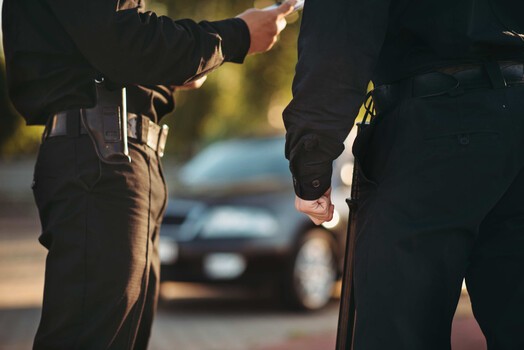
A federal appeals court has now made it clear that the First Amendment protects people who record publicly visible portions of a police station while standing on a public sidewalk. But the man whose arrest produced that ruling still cannot recover damages from the officers who arrested him.
The ruling came in Massimino v. Benoit, which a three-judge panel of the U.S. Court of Appeals for the Second Circuit decided on August 17. The Second Circuit hears federal appeals from New York, Connecticut, and Vermont.
The opinion puts the court in line with eight other federal appeals courts that have already recognized a constitutional right to record law enforcement in public. The panel stated the point directly: "We begin by joining a growing chorus of [eight of] our sister circuits that have recognized a First Amendment right to record law enforcement activity in public."
The dispute traces back to the evening of October 30, 2018. Keith Massimino was standing on a sidewalk along East Main Street in Waterbury, Connecticut, filming the exterior of the city's police station. For most of the recording, there were no officers in view. Massimino instead moved around the outside of the building, occasionally stopping or zooming toward features that could be seen from the street, including the main entrance, the entrance to the department's Youth Division, a rooftop security camera, and a partially open garage.
Sergeants Matthew Benoit and Frank Laone eventually approached him. They said filming the station presented a security concern and ordered him to identify himself. Massimino declined to provide identification and was arrested. Prosecutors later dropped the interfering-with-police charge, and Massimino responded by suing over the encounter.
The appeals court's constitutional holding focused on the difference between going somewhere the public is forbidden to enter and simply recording something that is visible from a place where the public has every right to stand. Massimino was not arguing that he could walk into restricted parts of the station. His claim was narrower: while remaining on a public sidewalk, he could record and later distribute images of portions of the building and activity that were plainly visible from there.
The court agreed with that distinction. It acknowledged that Massimino's camera may have captured portions of the station that members of the public could not physically enter, but that did not eliminate his right to record what could already be observed from outside.
The panel also took care not to extend its ruling beyond those facts. Nothing in the record indicated that Massimino had used technology to reveal information that a person standing in the same lawful location could not otherwise observe. So the decision protects recording of what is exposed to public view; it does not resolve questions involving drones, specialized surveillance equipment, or other technology used to see things that ordinary passersby could not.
That brings the case to its most consequential contradiction. The court found that Benoit and Laone violated Massimino's First Amendment right, but it still granted them qualified immunity.
Qualified immunity generally protects government officials from personal liability unless the legal rule they violated was clearly established when the incident happened. According to the panel, the Second Circuit had not clearly established this particular First Amendment protection in 2018. The officers therefore could not be held personally liable even though the court now says their conduct violated the Constitution.
The judges also sided with the officers on a separate part of the encounter. They concluded that Benoit and Laone had reasonable suspicion to detain Massimino and that his later refusal to comply with the demand for identification gave them probable cause to arrest him. That part of the opinion has drawn criticism from legal commentators who argue that the reasoning effectively allows constitutionally protected camera activity to initiate a stop that later becomes the basis for an arrest.
The result is a familiar feature of litigation over the right to record police. Courts increasingly say the First Amendment protects the public's ability to document law enforcement activity, but qualified immunity can mean that the person who spends years establishing that constitutional principle receives no damages for the violation that produced the precedent.
A Columbia Law Review analysis has described the problem as an artificial circuit split created in part by qualified immunity. When federal appeals courts squarely decide whether the First Amendment protects recording police, they have repeatedly recognized the right. But in circuits that have not yet issued controlling precedent, lower courts can conclude that the right was not "clearly established" and dismiss damages claims against the officers involved.
Massimino is a particularly clean example of that dynamic. Massimino spent roughly eight years pursuing a case that ultimately established the protection he said he had all along. Yet because the appellate court had not announced that rule before his arrest, the officers who violated it remain immune from damages.
The ruling nevertheless changes the legal landscape for future encounters. Officers in New York, Connecticut, and Vermont now have binding appellate precedent stating that the First Amendment protects recording publicly visible law-enforcement activity from a lawful public location. Future defendants in the Second Circuit will have a much harder time arguing that the existence of that right was unclear.
The decision also arrives while disputes over recording law enforcement remain active at the national level. In October 2025, Senators Tammy Duckworth and Dick Durbin wrote to Homeland Security Secretary Kristi Noem about arrests of people, including U.S. citizens, who had filmed law-enforcement officers in public. The senators argued that DHS should stop such arrests, which they characterized as potential First Amendment retaliation and violations of clearly established constitutional rights.
Their argument relied on the same expanding body of appellate precedent that the Second Circuit has now joined. For journalists, videographers, legal observers, and people who conduct so-called "First Amendment audits," the trend is increasingly consistent: courts are recognizing that a person does not lose the First Amendment simply because a camera is pointed at law enforcement from a public place.
The harder question remains accountability after that right is violated. The doctrine of qualified immunity continues to create cases in which courts recognize the constitutional protection while leaving the plaintiff who established it without a damages award.
Massimino's personal stake in the dispute is also notable. He is a professional videographer, and when his appeal was filed he described the toll of the litigation in stark terms. "It is hard to understand what I went through during the last eight years because of these sergeants," Massimino said, adding that he was "targeted for simply exercising my First Amendment right to record the outside of a public building from a public sidewalk."
He ultimately got a federal appellate ruling confirming that right. The officers who arrested him, however, still received immunity.
What's Your Reaction?
 Like
0
Like
0
 Dislike
0
Dislike
0
 Love
0
Love
0
 Funny
0
Funny
0
 Wow
0
Wow
0
 Sad
0
Sad
0
 Angry
0
Angry
0









Comments (0)