

Sony's a7 V Retakes Japan's No.1 Spot as Fujifilm's Supply Crunch Reshuffles the Top Ten

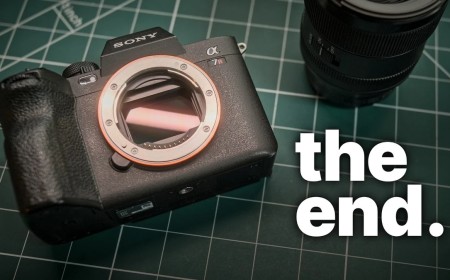
The Sony a7 V is back at the top of Japan's best-selling camera list for July 2026, extending a run that has kept it near or at No. 1 for most of its first seven months on sale. The bigger story sits below it, where a Nikon full-frame body has climbed into fourth and one of Canon's newest cameras is nowhere to be found.
The rankings come from Japanese retailer Map Camera. The top three read like the usual suspects: the full-frame a7 V, the still-viral Fujifilm X100VI, and the Sony a7C II, a compact full-frame body that blends the two trends buyers keep chasing. These retailer lists only cover one shop, and Japan doesn't dictate what sells in the US or Europe. But with most major camera makers based there, the numbers tend to hint at where the market is heading.
The a7 V launched in December 2025 and arrived at No. 1 immediately. It carries a 33 MP partially stacked full-frame sensor, 30 fps blackout-free bursts, and Sony's AI-driven autofocus, and it sells for around $2,898 body-only. It has traded the top spot back and forth with the X100VI over the year, briefly losing the crown in May before reclaiming it. Map Camera has consistently pointed to two things behind the streak: a deep E-mount lens lineup that makes upgrading easy, and steady supply. As the retailer put it earlier this year, "There's absolutely no sign of its momentum slowing down," Map Camera noted, adding, "It will be interesting to see how far this winning streak will continue."
The July surprise is the Nikon Z5 II landing in fourth. That camera hadn't shown up on Map Camera's monthly list in the previous four months, and before that it usually sat near the bottom when it appeared at all. It's an easy jump to understand once you look at the camera. The Z5 II is one of Nikon's most affordable full-frame bodies, pairing a 24.5 MP sensor with strong low-light autofocus at an entry-level price, so a climb this high reads as a value story more than a hype one. Whether it holds that position is another question, since a single half-month of discounting can swing these rankings quickly.
What's missing is just as telling. The Canon EOS R6 Mark III debuted in November 2025, one month before the a7 V, and instantly hit No. 1 at Map Camera before dropping off the following month and staying off. In the US, the R6 Mark III has been a regular on B&H's best-seller lists, which makes its Japanese absence odd. Fujifilm's situation is different again. Map Camera says the X100VI's on-and-off ranking reflects stock, not fading demand, with the company describing what it called a serious supply problem tied to shortages of memory and silver. When a camera sells out the moment orders open, it can't climb a units-sold chart no matter how many people want it.
For working photographers, the practical read is that these lists measure availability as much as desire. The a7 V's advantage has partly been that Sony could actually ship it while the X100VI and Ricoh's GR bodies vanished from shelves. If you're weighing a purchase, the Z5 II's sudden rise is worth a look precisely because it's a full-frame body you can buy at a lower price than most rivals, and the a7 V remains the safe pick if you want the deepest lens ecosystem.
What's Your Reaction?
 Like
0
Like
0
 Dislike
0
Dislike
0
 Love
0
Love
0
 Funny
0
Funny
0
 Wow
0
Wow
0
 Sad
0
Sad
0
 Angry
0
Angry
0









Comments (0)