

Seven Things You Can Do in 10 Days to Take Better Photos
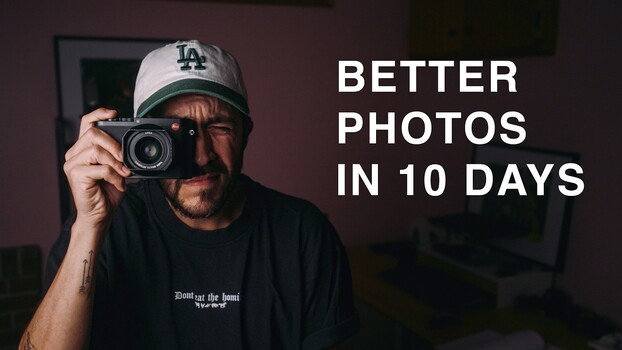
Getting better at photography rarely comes from one big leap. It comes from small, deliberate habits you can start this week, and most of them cost little or nothing.
That's the premise Chris Tellez works through in a rundown of seven things you can do over the next 10 days to sharpen your eye. Tellez is a portrait, event, and wedding photographer based in Ontario, Canada, and he leads with what he considers the single most effective tip: print your work. Looking at a photograph on paper strips away the clutter of Lightroom panels and screen brightness, and you start seeing composition and tonality you'd otherwise miss. He suggests printing the same image in black and white and in color, at different sizes, and even with a border to train your eye further. Then you tape those prints to your wall and live with them for a while.
His second tip runs against the usual advice about not chasing gear. Tellez says buy something new, but keep it cheap and strange. A diffusion filter, a prism to shoot through, or a $20 vintage lens you adapt onto your camera will change your routine and, in turn, your results. When you're wrestling with a hazy old manual-focus lens, you pay closer attention and stay more present. He even recommends borrowing the item if you can. The point is that a new tool sends you looking for subjects you'd normally walk past, whether that's cool lights for a filter or reflections for a prism.
The critique tip is where he draws a useful distinction that a lot of people get wrong. Tellez splits feedback into two camps: photographers and non-photographers. With non-photographers, skip the technical talk and ask emotional questions instead. Which image makes them want to visit that place? Which portrait would they use as their profile photo? Which one feels the warmest or the most uncomfortable? With photographers, get specific about composition, settings, and where you could have pushed or pulled the edit. He mentions a friend who cut his website down to his ten strongest images and told him the rest didn't matter, which reshaped how he thinks about his portfolio.
The idea of shooting something completely outside your lane is worth sitting with, because it reflects a broader truth about how skills transfer between genres. Tellez photographs cars a couple of times a year even though he isn't good at it, and he pulls lessons from the frames-within-frames a car offers: windows, mirrors, seats. Those micro-compositions then inform how he approaches a wedding day. This is the same principle behind cross-training in any discipline. When you force your eye to solve an unfamiliar problem, you build visual vocabulary that carries back into your main work. Street photographers who shoot landscapes start seeing light differently. Portrait shooters who try architecture come back with a stronger sense of line and shape. The discomfort is the mechanism, and the payoff shows up in the work you already care about.
Tellez rounds out the list with three more moves: book a shoot with a real plan behind it, study photo books from artists you've never heard of, and set hard constraints for yourself. On the shoot, he pushes you to write a shot list, a run of show, a gear list, and a delivery timeline, because planning and execution stretch different muscles. With photo books, he recommends trying to recreate the lighting and style of a portrait by someone like Annie Leibovitz to understand what it actually took. For constraints, he keeps it simple: shoot only green or purple things, only at f/8, or only people holding their hands behind their back. The narrower the rule, the more curious and present you become.
Watch the full breakdown in the video above to see how Tellez ties all seven together and which one he's planning to tackle himself.
What's Your Reaction?
 Like
0
Like
0
 Dislike
0
Dislike
0
 Love
0
Love
0
 Funny
0
Funny
0
 Wow
0
Wow
0
 Sad
0
Sad
0
 Angry
0
Angry
0









Comments (0)