

Sony MDR-7506 Headphones: The Standard to Which All Others Are Measured
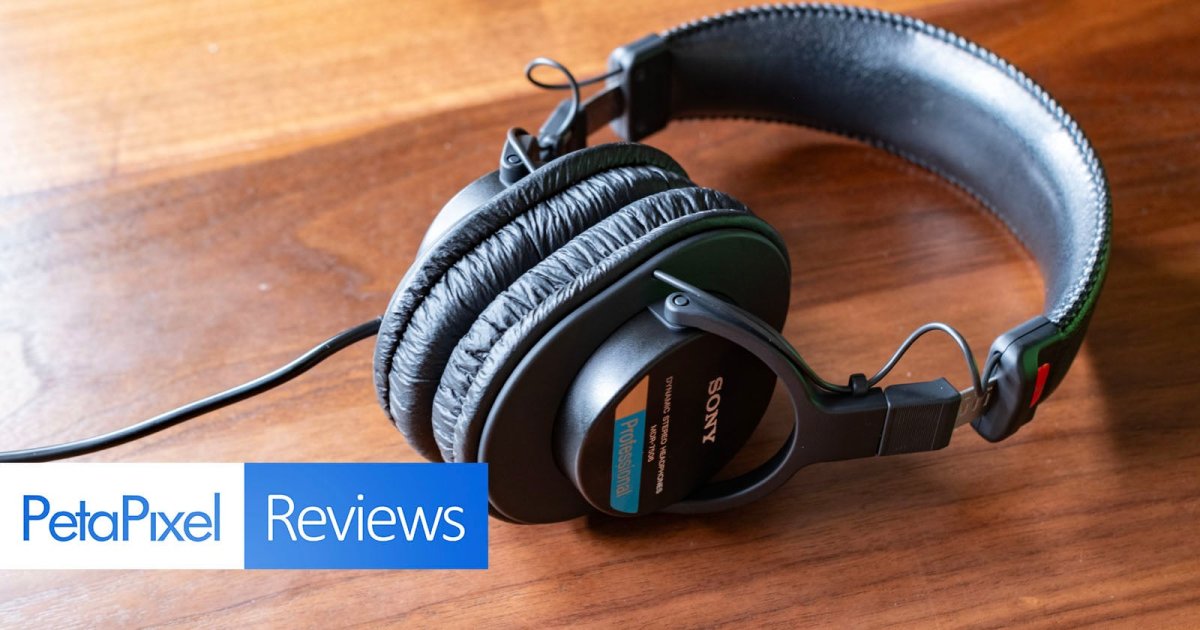
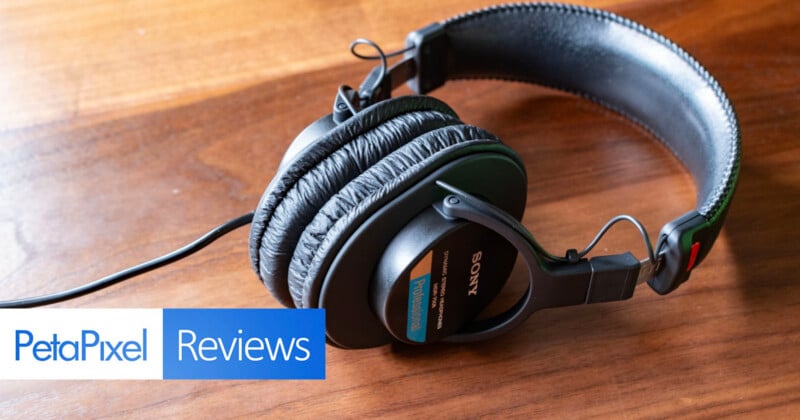
PetaPixel is expanding its coverage into headphones, but specifically their use through the lens of how a videographer would use them. In the field, at their desk, and while traveling, every videographer and editor has them, and the standard by which they all should be judged is the Sony MDR-7506.
This is less a review of the Sony MDR-7506 headphones and more of a statement about their importance and an explanation for why they are the baseline for what you, a potential headphone buyer, should be looking for. These are the bar and the headphones we will compare all others against, either explicitly or implicitly.
You have seen the Sony MDR-7506 headphones before, whether you know it or not. They are sitting on tables in the background of almost every scene ever shot in a sound studio for television and movies. They’re wrapped around the necks of camera operators the world over. They are ubiquitous and widely considered to be an industry standard.
Why? Because they do a few very important things very well.
Fantastic Build Quality
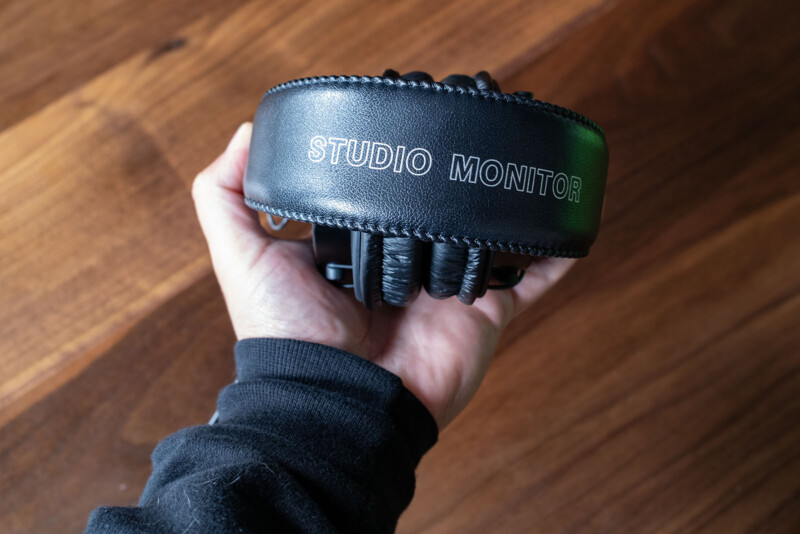
Firstly, Sony MDR-7506 headphones are nearly indestructible. Camera operators can be very hard on their gear, which means over-ear headphones regularly get quickly ripped off the head and stuffed into an overcrowded bag. While joints are made of plastic, the important parts like the band are made of a thin, flexible metal. The headband itself is a leatherette wrapped around that metal band and further reinforced with more metal parts. You would really have to try to get these headphones to break.
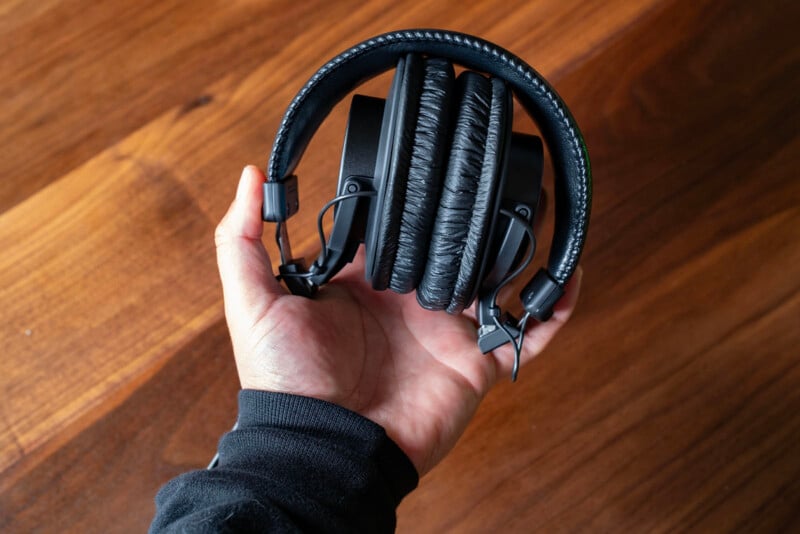
They also fold up incredibly small and do so nearly instantly. They compact into the size of a softball, which means they’re easy to pack into pretty much any storage medium.
The cable, which is integrated, is thick, long, sturdy, and coiled. The MDR-7506 also ship with a screw-on 3.5mm to 1/4-inch TRS adapter, which means it is immediately ready to work with a computer, camera, keyboard, or guitar amplifier. Right out of the box, it’s versatile and works across disciplines.
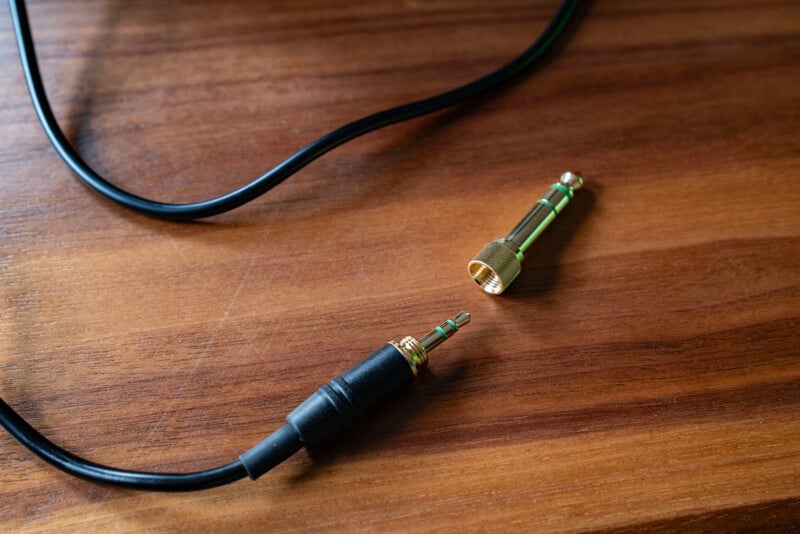
The fact that the cable is integrated is probably the only major knock against the build, since there are many who want the option to remove it either for easier storage and transport, or they appreciate a headphone whose lifespan isn’t determined by the sturdiness of the cable attachment point. To Sony’s credit, the point where the cable attaches to the left ear cup is quite flexible and difficult to break, but I imagine it is possible. It’s also a really long cable, and that isn’t necessary for every use case. I often find myself wishing there was a way for me to swap to and from a shorter option.
Great Sound Quality and Excellent to Use
Unlike consumer headphones, which tend to favor heavy bass (or at least more emphasized lows), the Sony MDR-7506 headphones are beautifully neutral. That means these cans aren’t meant to favor lows, mids, or highs but instead present them evenly. When a sound engineer is working on a track, they want to know what the music or vocals they’re hearing actually sound like, not what a pair of headphones or their designer thinks they should sound like.
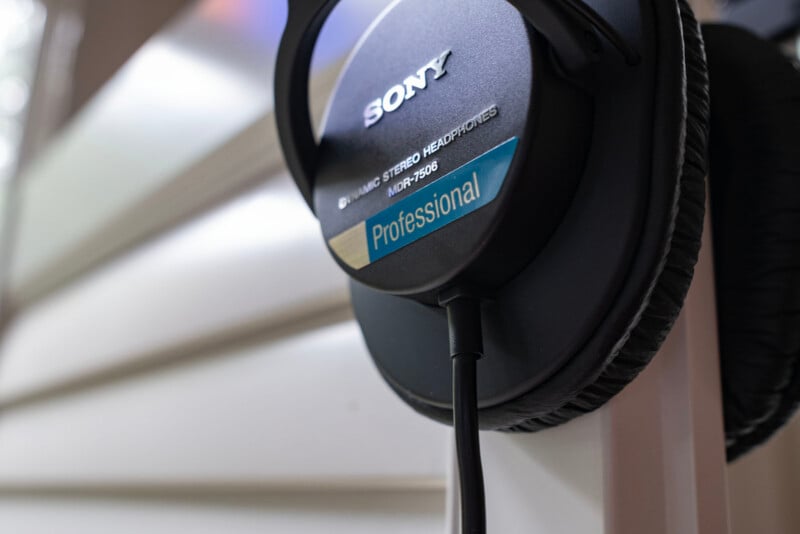
These are true studio monitors, meaning they only give the listener exactly what the track presents and don’t take any liberties with the sound profile. That neutrality is heavily favored by professionals across the board.
In addition to being neutral, the detail reproduction of the Sony MDR-7506 is well above average. Listeners can pick out every instrument, and it’s rare to miss out on a sound because the headphones aren’t transmitting it well, which does happen with other headphones.
These also can get quite loud — way louder than most listeners would ever want to push them. Even better, at both high and low volumes, the quality and detail of the audio stream remain consistent.
Another benefit is how nice the sound stage comes across. “Sound stage” refers to how big or small music sounds inside of the headphones. Think of being in a room with music. Big, impressive stadiums with wide stages sound very different from small, coffeehouse performances. When you listen to music, you should be able to imagine a room that matches the sound profile. The MDR-7506 sound like how I imagine a professional recording studio would sound if I were in there with the artist. Not too big, not too compressed. Just right.
The Sony MDR-7506 also have very good passive noise isolation. Active noise cancellation is all the rage with consumer earbuds and headphones, but including it in workhorse monitors like these would make them bigger, heavier, and more expensive. Instead, Sony relies on great ear-cup design that is very good at keeping sound inside and also rejecting external noise from interfering with the listening experience. Sony also somehow achieves this without making the headphones particularly hot to wear for long periods. It’s a really nice balance that few brands successfully walk.

I would say that these headphones are, out of the box, not particularly comfortable as they pinch a bit right above my cheek. Over time, the metal band will stretch a bit and adapt better to a head, though.
Low Cost
While they are more expensive than they were when I bought my first pair back in 2015 (I paid a paltry $75 back then), they cost just $113 today. Looking at the field, it sits firmly on the low end for neutral, over-ear monitors. As mentioned, keeping features to a bare minimum and foregoing any type of active noise cancellation and wireless connectivity has let Sony continue to sell these at a far lower price than most competitors can manage.
They won’t wow you with their looks, and they don’t have an impressive list of features, but they work and have continued to work for well over a decade.
The Sony MDR-7506 Are the Standard for a Reason
It’s easy to make fun of any product that puts the word “pro” on it, as recent tech products have really watered down the strength of that word, but seeing “Professional” emblazoned on the side of these headphones isn’t hyperbole — it’s just a fact.
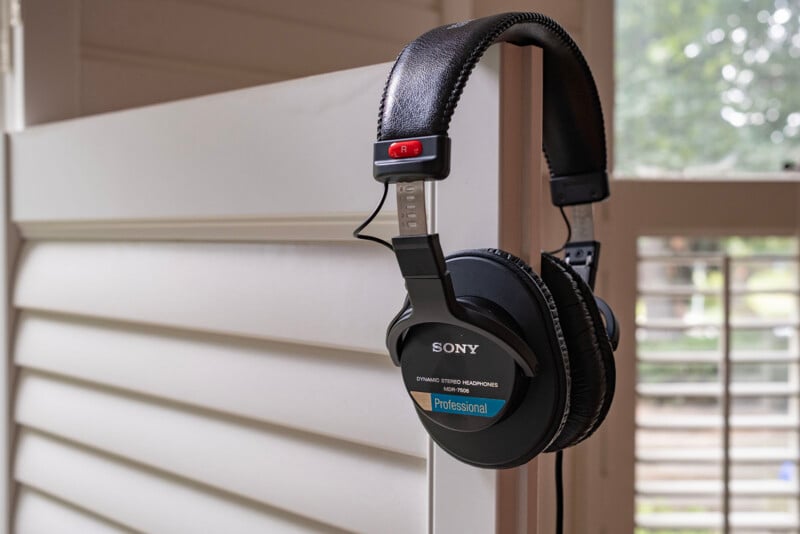
Sony’s MDR-7506 are the professional headphones across the film and sound industries. Now, that said, they aren’t perfect; hopefully, my notes in the above sections made it clear that there is room to improve. And to their credit, Sony’s competitors have, for years, done their best to see what the MDR-7506 don’t do well and lean into that with varying levels of success. There is a reason these headphones are still popular, after all.
As you read our headphone coverage, keep the Sony MDR-7506 in the back of your mind. We certainly will.
About PetaPixel Headphone Coverage: Wait, headphones? On PetaPixel? You bet. PetaPixel is expanding coverage into headphones specifically through the lens of what best serves video editors. Whether they work in a studio, on a plane, or at home on the couch, video editors all use headphones at some point. With our coverage, we intend to keep those editors informed of what’s new and, over time and as we test them ourselves, recommend the best options when your favorite cans finally need replacing.
What's Your Reaction?
 Like
0
Like
0
 Dislike
0
Dislike
0
 Love
0
Love
0
 Funny
0
Funny
0
 Wow
0
Wow
0
 Sad
0
Sad
0
 Angry
0
Angry
0









Comments (0)