

‘The Bend in the River’ Review: A Group of Onetime Nudists Get (Mostly) Better with Age
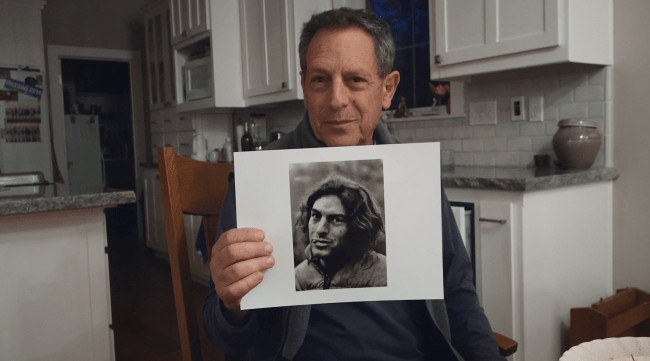

At the beginning of “The Bend in the River,” a simple title card lays out director Robb Moss‘ premise for anyone unfamiliar with his prior films. “We used to be river guides,” it reads. “For many years, my friends and I lived an unscheduled, communal, outdoor life.”
It’s an accurate statement, even if it inadequately describes the amount of genitals on display in the film‘s opening scenes. Moss has been filming the same group of five friends on and off for half a century, beginning with the 1978 film “Riverdogs,” which followed the free spirits as they took a nude trip down the Colorado River. The scenes radiate the joy of being young, attractive, and filled with infinite free time and minimal distractions except the open sky above you. Then in 2003, he caught up with everyone again in “The Same River Twice,” which saw how middle age, with all of its marriages, divorces, political campaigns, and cancer diagnoses, was treating the former hippies.


With his latest film, “The Bend in the River,” Moss is once again setting sail on those same metaphorical waters. His friends are now in their early seventies, and while many of them are full of energy and have the same youthful sparkle in their eyes, they all seem to be aware that they’re telling a story that’s already ended. If “Riverdogs” was about the infinite possibility of having your whole life ahead of you and “The Same River Twice” was about middle age’s difficult choices, “The Bend in the River” is about what life looks like when all of your choices have already been made.
That’s not to say that it’s tragic. Moss’ camera is deeply nonjudgemental towards the passage of time. The filmmaker and his subjects are lifelong environmentalists, and the film treats human aging and all of its mundanities with the same beauty and dignity that you might find in a nature documentary. But while it never condemns or mocks its subjects for being grayer and slower, it also has little interest in “age is just a number” style erasure of our inevitable physical declines. He makes no attempt to hide that everyone does less than they used to and have less to look forward to, but the stories their faces tell are far more interesting than their skinny dipping sequences from 1978.
While Moss clearly has fun with cuts that juxtapose their youthful hijinks with adults saying “I wonder if anybody ever uses up a box of business cards. Because it’s so economical to print 10,000” in their home offices, reducing the film to simply “hippies getting old” fails to capture its brilliance. The five subjects, and the different paths that life takes them down, offers a richly nuanced portrait of aging that contradicts many of the two-dimensional narratives about what it means to live a human life.
Moss certainly can’t take credit for the realization that many of us do wild things in our youth before mellowing with age and embracing conventional parts of life that we swore we’d always avoid. But conversations about hippies growing up to be corporate accountants often insist that once chapter of life has to be positive and the other has to be negative — they either “sell out” and abandon their values, or they “grow up” and realize that they were being childish idiots. But “The Bend in the River” looks past such binary thinking and elegantly presents both seasons as something worthwhile.
The film also illustrates how nature matters as much as nurture when it comes to our own aging processes. While societal pressures and adult realities certainly play a role in leading us to realize that we can’t operate naked river tours forever, Moss shows how his friends are still more or less themselves after seven decades on earth. Some of them still live in cabins and grow their own food and others spend their days staring at Microsoft Office screens, but versions of the spontaneous hippie archetype still live on within each of them.
Even if you haven’t seen the prior films in the trilogy, “The Bend in the River” is worth seeking out as an anthropological exercise. There’s enough footage from the prior films to get you up to speed quickly, and none of the individual story arcs matter nearly as much as the larger sense that each season of human life is worthy of its own naturalistic exploration.
Taken together, the three films in the “River” trilogy represent a large portion of Moss and his friends’ life’s work. Everyone seems acutely aware of this fact, as they both reflect on how the prior films briefly turned them into the minorest of celebrities and joke about a fourth installment in 20 years that they know they might not live long enough to make. But even if this is the last we ever see of the onetime river guides, it’s clear that their lives amounted to a story that’s worth telling and watching.
Grade: B+
“The Bend in the River” is now playing at Film Forum in New York City.
What's Your Reaction?
 Like
0
Like
0
 Dislike
0
Dislike
0
 Love
0
Love
0
 Funny
0
Funny
0
 Wow
0
Wow
0
 Sad
0
Sad
0
 Angry
0
Angry
0









Comments (0)