

The Best compact zoom cameras in 2026
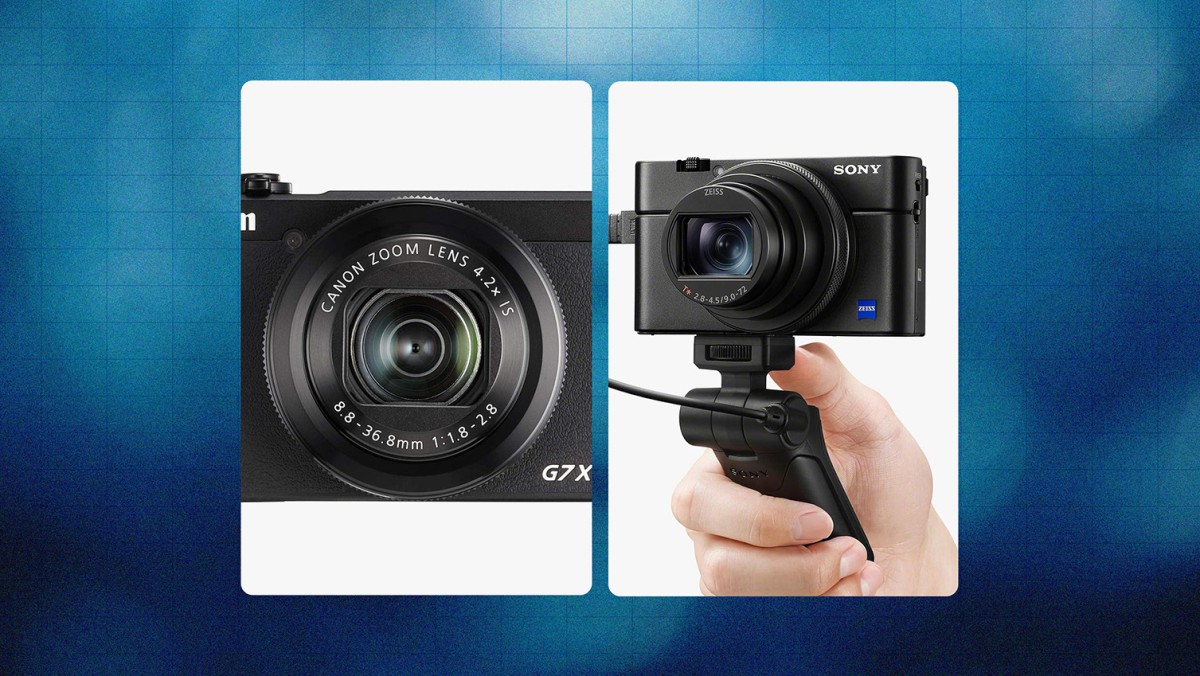
If you want a compact camera that produces great quality photos without the hassle of changing lenses, there are plenty of choices available for every budget. Read on to find out which portable enthusiast compacts are our favorites.

Updated August 1, 2026
Not long ago, it seemed like the market for new compact cameras with zoom lenses had mostly dried up, despite the demand from enthusiast photographers who like the form factor and people looking for a nostalgic photographic experience. This year, though, the market has picked up, and not just with subtle refreshes that remove as many features as they add.
You may still have to hunt to find certain models in stock, and if you haven’t bought a compact in a decade or two you’re almost certainly in for some sticker shock. But each category has at least one or two very capable options, and the cameras of today can still offer an experience, image quality or both that can’t be matched even by top-end phones.
Our recommendations:
Enthusiast compacts
The final niche in which it’s difficult for a smartphone to compete is for enthusiast photography. No matter how good smartphone image quality gets, it’s difficult for a phone to provide the feeling of connection to the process of taking photos that an enthusiast compact with lots of direct controls can offer.
We’ve picked cameras with large sensors that deliver good image quality, zoom lenses and direct controls. Some have built-in electronic viewfinders for shooting when it’s bright outside, again giving a more pleasant experience than a smartphone.
Best enthusiast compact: Panasonic L10
 Mitchell Clark
Pros
- Very good image quality and DR
- Autofocus mostly accurate and easy to use
- Ambitious zoom lens is versatile
- Extensive battery life
Cons
- Controls won’t match everyone’s tastes
- Not particularly pocketable
- Lens can be sluggish to zoom
The L10 combines an engaging control setup with modern connectivity and features and an ambitious lens with a focal range that’s standard for a reason. It’s not particularly pocketable, but is still small enough that you won’t have any reason not to take it with you on a trip, to an event or even just out on the town.
See the Panasonic L10 studio scene
Loading gallery…
Honorable Mentions
If you need something that’s more pocketable, the Canon G7 X III offers a similar focal range to the L10 in a much smaller package. It also has engaging controls, but its smaller sensor means there’s a bit of an image quality trade-off, and enthusiast photographers may not prefer its EVF-less design. Its biggest downside, though, is availability. Despite multiple assurances from Canon that it’s working on increasing production, it’s still quite hard to find. If you can get your hands on one, though, it offers a good experience at a great price.
The Sony RX100 VII is similarly pocketable, but features a pop-up EVF and a lens that reaches further, going out to 200mm equiv. Even at its widest, it’s not as bright as the one on the L10 and G7 X III, putting it at an image quality disadvantage, especially as light levels fall, and the camera is seriously expensive thanks in part to the stacked sensor that lets it achieve blistering burst rates. But if you need a little extra reach in something that’s pocketable, it’s still a very capable pick.
Best Long Zoom Compact: Sony RX10 V
 Richard ButlerRichard Butler
The Sony RX10 V is built around a Type 1 (116mm2) 20MP Stacked CMOS sensor, and features a far-reaching 24-600mm equiv. F2.4-4 lens.
It may be pretty much the only category left in this category that doesn’t use a minuscule sensor, but it’s not just on this list by default. Sony has equipped it with its latest autofocusing system, menus and battery, and has reworked the ergonomics and controls.
While we haven’t completed our full review of the camera yet, we’ve used it enough to know that it belongs on this list above other cameras that offer similar reach. It provides good image quality and, while not small, is much easier to carry around that most other setups with this kind of reach.
See the Sony RX10 V studio scene
Loading gallery…
Waterproof cameras
Waterproof cameras are another specialty that smartphones can’t necessarily displace. Many flagship phones are waterproof to a decent degree but you shouldn’t try to submerge them to any appreciable depth or use them in salt water. Waterproof cameras also tend to be pretty rugged, designed to withstand a lot more mistreatment than a phone will withstand, meaning you can carry them with you at all times, without ever having to worry about it. Great for bikers, climbers and custodians of small, inquisitive but not necessarily careful children.
Best waterproof camera: OM System Tough TG-7

Pros
- Bright, wideangle lens
- Built-in GPS, compass and manometer
- Raw image capture allowing creating edits
- Range of accessories
Cons
- 12MP is fairly low
- Lens isn't very bright at long end
- Limited battery life
- Relatively expensive
The OM System Tough TG-7 is a rugged, waterproof compact with a 25-100mm equivalent zoom lens. It is fully waterproof down to a depth of 15m (50 ft).
The OM System isn’t the only rugged waterproof still on the market, nor the cheapest, but it has several major factors in its favor. The first is that it lets you shoot Raw images, which gives you the ability to correct the white balance, which even the best cameras tend to get wrong when shooting underwater. Another factor is that there is a range of accessories for the TG-7, including a light guide that directs light from the built-in flash into a circle around the lens, letting you illuminate close-up objects.
Beyond this there are a few details that different users may find handy: it has an unusually wide-angle lens with a bright maximum aperture, helping the performance underwater and in low light. It also has a built-in GPS, compass and pressure sensor that lets you log your adventures. These all add up to a camera that’s worth the added expense, we feel.
Read our hands-on with the OM System TG-7 article
Loading gallery…
Vlogging cameras
Smartphones are great for vlogging, but a dedicated vlogging camera can shoot better quality video, have more sophisticated microphones (and provide options for connecting better mics), and can autofocus very reliably, dependably delivering YouTube-ready footage.
Best vlogging compact: Canon PowerShot V1

Pros
- Attractive output in stills and video
- Versatile wide-angle zoom
- Fan for extended video recording
Cons
- Relatively large body
- Full width video has appreciable rolling shutter
- Optimized for vlogging vs stills
It offers a competitive suite of vlogging features, a built-in ND filter and good stabilization options. It’s also comfortable to hold pointing towards you, and lets you access key settings from the touchscreen. It includes microphone and headphone jacks and a fan for extended recording sessions.
The V1 is a capable option with a useful zoom range, and while its slower sensor may not be the greatest for capturing fast action, it has all the features you’d need to start capturing the world around you.
Read our full PowerShot V1 review
Why you should trust us
This buying guide is based on cameras used and tested by DPReview’s editorial team. We don’t select a camera until we’ve used it enough to be confident in recommending it, usually after our extensive review process. The selections are purely a reflection of which cameras we believe to be best: there are no financial incentives for us to select one model or brand over another.
Want to stay up to date on the latest product news and releases? Add DPReview as a preferred source to ensure our independent journalism makes it to the top of your Google search results.

What's Your Reaction?
 Like
0
Like
0
 Dislike
0
Dislike
0
 Love
0
Love
0
 Funny
0
Funny
0
 Wow
0
Wow
0
 Sad
0
Sad
0
 Angry
0
Angry
0









Comments (0)