

The Best high-end cameras for 2026
 |
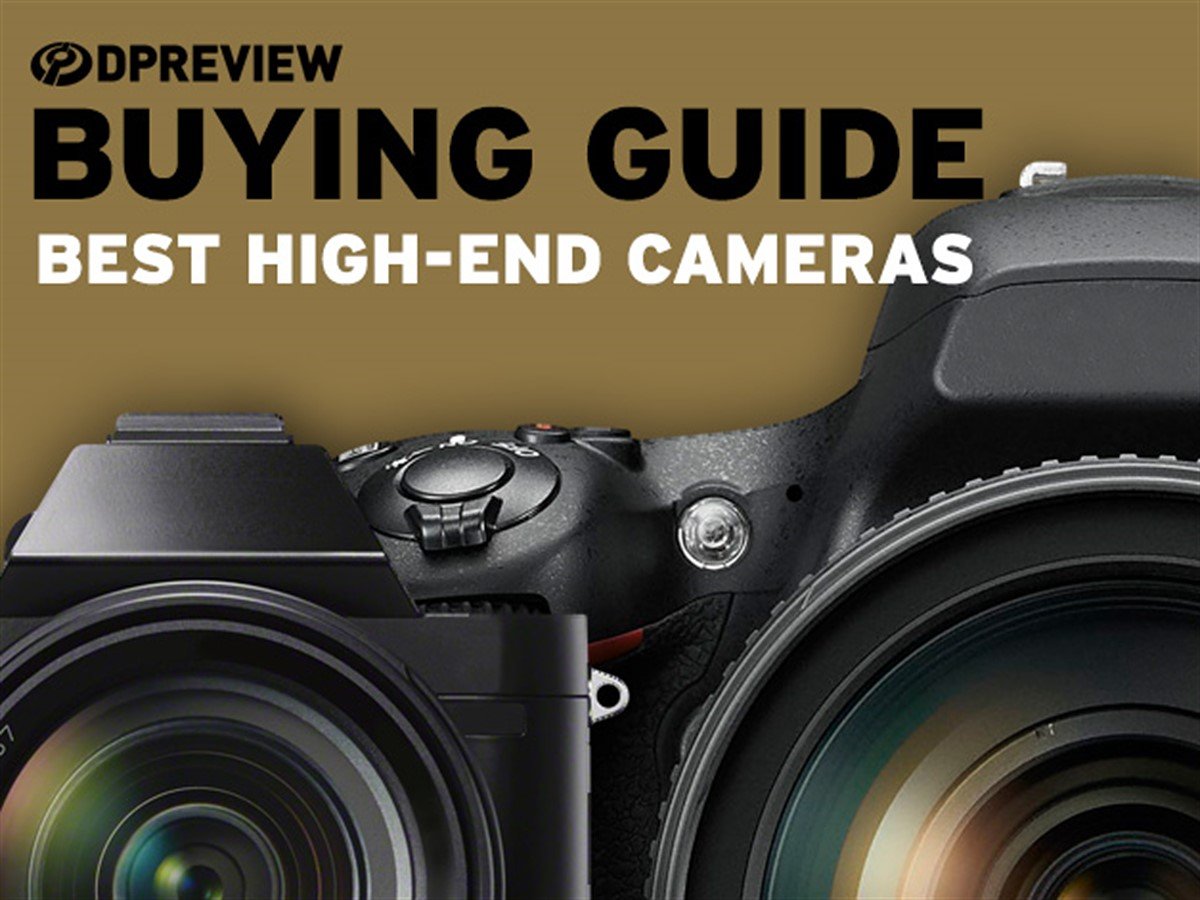
By the time you're spending over $3,000, you're looking at getting one of the best cameras around. You should expect it to deliver exceedingly detailed images and capture high-end video, all without having to compromise much on speed for when the action picks up.
For most applications, a camera around $3000 will be more than enough, but if you and your photography need the very highest image quality or some specialist capability, the cameras in this guide are among the best we've yet seen. There are a handful of dedicated sports/photojournalism cameras or luxury models above the $6000 upper limit we've set ourselves, but these are usually such singular offerings that we're assuming you don't need our help in choosing if you're seriously considering them.
At this level, there aren't really any bad picks, so if you have any investment at all in the lens system of one company, this should probably be the deciding factor for you. But we'll highlight the particular strengths we found in each camera, just in case you are planning to switch systems.
Our recommendations:
- Best high-end camera: Canon EOS R5 II
- Another great option: Nikon Z8
- High-spec high res: Sony a7R VI
- The compact option: Sony a7CR
- IQ above all else: Fujifilm GFX 100S II
Best high-end camera: Canon EOS R5 II
45MP Stacked CMOS sensor | Eye-controlled AF subject selection | Up to 30fps continuous shooting
 |
|
The EOS R5 II is one of the most all-around capable cameras we've tested. Photo: Richard Butler |
What we like:
- Excellent image quality
- Fast, dependable autofocus
- Good video support tools
What we don't:
- Slight reduction in dynamic range in extreme scenarios
- Temperamental eye control
- Temperature limits in heaviest video modes
See the EOS R5 II Studio Scene
Should I still buy the EOS R5?
Short answer: yes. It lacks some of the newer camera's features like eye-controlled subject selection, action priority modes and AI noise reduction, but if those don't matter to you – or aren't worth the $400 MSRP premium of the EOS R5 II – the EOS R5 is still plenty capable in 2026.
Another great option: Nikon Z8
46MP Stacked CMOS sensor | 20fps Raw, 30fps full-size JPEG shooting | 8K/60 and 4K/120 video
 |
|
The Nikon Z8 delivers just about everything: speed, AF, video and, most importantly of all, image quality. Photo: Richard Butler |
What we like:
- Superb autofocus
- Fast shooting
- Excellent video
What we don't:
- Large, heavy body
- Relatively low-res (though fast) viewfinder
- Not all subject detection modes equally good
The Nikon Z8 is a fast-shooting stills and video-capable mirrorless camera with a 46MP Stacked CMOS sensor. It's an extremely strong competitor compared to the EOS R5 II, but Canon's action sports settings and eye control push it over the edge.
If those things don’t matter much to you, you can pretty much base your decision on whether you prefer Nikon or Canon’s lens lineup. They’re broadly similar, and both brands tightly control which options third-party manufacturers can offer.
A cheaper option?
At $3300, the Panasonic Lumix S1RII retails for substantially less than the Z8 and EOS R5 II while offering similar resolution, speed and video features. But while we found it to be a quite capable camera, its autofocus UI and performance are a fair bit behind what Canon and Nikon offer, to the point where we'd recommend paying the extra if you think you'll be frequently shooting moving subjects. If you mostly shoot still subjects and/or videos, though, it may well be worth considering for the savings.
High-spec high res: Sony a7R VI
66MP Stacked CMOS sensor | >30fps with e-shutter, 10fps mech | >4K/120p video
 |
| Photo: Mitchell Clark |
What we like:
- Highest resolution full-frame camera
- Excellent dynamic range
- Big step forward for video and action, vs the MkV
What we don't:
- More rolling shutter than peers in e-shutter mode
- Need to use lossy Raw for best action performance
- Ergonomics and UI still not our favorites
It's a camera that focuses mainly on image quality – something it does better than any other full-frame options – but with a sensor fast enough to stretch to shooting action, wildlife and video if needed. Sony has also been less restrictive with what lenses can be made for its mount, meaning you have plenty of options.
See the Sony a7R VI studio scene
Should I still buy a Sony a7R V?
The Sony a7R V isn't as fast, but, unlike the a7R IV before it, has Sony's latest menu system. If you're only planning on shooting landscapes or other slow-moving subjects, and aren't that interested in video, it may be worth going with the older model and rolling the savings into a nice lens or two.
The compact option: Sony a7CR
61MP BSI CMOS sensor | 4K/60p video with 10-bit color | Dedicated ‘AI’ processor for AF system
 |
|
You can't do much to shrink the lenses, but the a7CR is both the smallest and least expensive camera here. Photo: Richard Butler |
What we like:
- Big camera features in a small body
- Outstanding AF performance
- Auto Framing video mode
What we don't:
- Small, low-res viewfinder
- No joystick control
- No fully mechanical shutter
The Sony a7CR is a compact, full-frame camera with a 61MP BSI CMOS sensor. Despite its small size, it packs in most of the features found in Sony’s larger bodies while still delivering stunning detail, without sacrificing much performance.
Read our in-depth Sony a7CR review
IQ above all else: Fujifilm GFX 100S II
102MP BSI medium format sensor | In-body image stabilization | 5.76M dot viewfinder
 |
| Photo: Mitchell Clark |
What we like:
- Excellent detail capture
- Very high tonal quality
- Ready-to-go JPEG or malleable Raws
What we don't:
- Autofocus not especially fast
- Video prone to rolling shutter
The Fujifilm GFX 100S II is a 100MP medium format mirrorless interchangeable lens camera with built-in image stabilization.
This camera is perhaps the most specialized pick on this list: it's not especially fast or versatile but in terms of image quality, it essentially offers the best levels of detail we've ever seen. It's a true step up over even the best of its full-frame rivals (some of which comes from its lenses - the GF primes often being particularly good).
Why you should trust us
This buying guide is based on cameras used and tested by DPReview's editorial team. We don't select a camera until we've used it enough to be confident in recommending it, usually after our extensive review process. The selections are purely a reflection of which cameras we believe to be best: there are no financial incentives for us to select one model or brand over another.
What's Your Reaction?
 Like
0
Like
0
 Dislike
0
Dislike
0
 Love
0
Love
0
 Funny
0
Funny
0
 Wow
0
Wow
0
 Sad
0
Sad
0
 Angry
0
Angry
0








Comments (0)