

‘The Death of Robin Hood’: What’s Historically Accurate in This Violent Revisionist Tale?
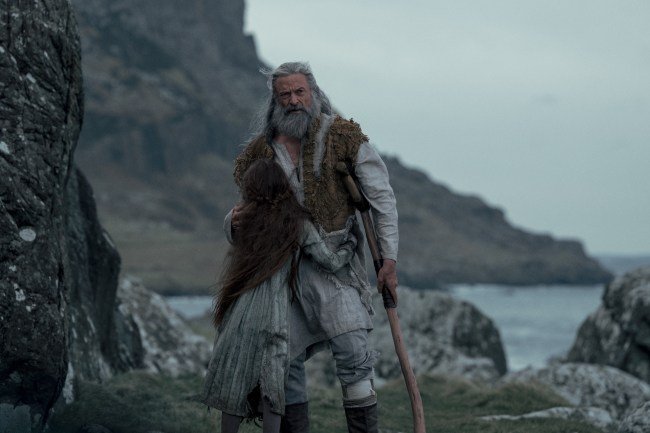
In A24’s trailer for its new film “The Death of Robin Hood,” the first thing we hear is Hugh Jackman’s grizzly voice say, “People speak of Robin Hood, tell his stories, they’re all lies.” Over Jackman’s narration, we see violent, murderous images that counter our idea of Robin Hood as a merry bandit who stole from the rich and gave to the poor.
The tag line pitch (“He was no hero”) is that the film will reveal the lie at the heart of the legend of Robin Hood, but does that mean this revisionist version is true, or historically accurate? On this week’s episode of the Filmmaker Toolkit podcast, we asked writer/director Michael Sarnoski what he based his story on, and if any version of Robin Hood has ever been based on a real person.


“[Robin Hood] is probably an amalgamation of a few different people,” said Sarnoski. “There isn’t really a real Robin Hood, he kind of became a bit of a folk thing, like, people would [say], “Oh, that guy’s a real Robin Hood.’ There were probably a few outlaws named Robin, that was a common name back then, and that just turned into the Robin Hood that we know over time.”
According to Sarnoski, the first written accounts of Robin Hood came two to three centuries after the 13th century, when he supposedly lived, and were based on oral stories that got passed down, and likely romanticized, through the years. Sarnoski’s film is grounded in a real time (1274 AD) and real place (the Celtic fringe, with principal photography taking place in Northern Ireland), and he did a great deal of research into what life was like during that time.
“Day-to-day survival was hard, and fighting back then was brutal,” said Sarnoski. “I was watching this series of lectures on English history, and the professor had a great quote that was basically, ‘We think of medieval battles as knights in shining armor riding around on horses, but most of the time it was just peasants beating each other to death with shovels.’”
The question Sarnoski asked himself: What would a bandit and outlaw look like in a world already steeped in extreme violence? Through this historical lens, even Robin Hood folklore played differently.
“The sorts of things that Robin would have done, even the sorts of things that he does in the original ballads, are pretty morbid and horrifying,” said Sarnoski. “They’re played for fun, but he’s going around chopping off people’s heads, wearing them on his shoulders, and pretending to be them. These are not the activities of a nice guy necessarily. There is a lot of morbidity and violence even in the early Robin Hood legends, so it wasn’t that much of a stretch to be like, ‘Well, if those are based on actual actions in any way, he probably did some iffy stuff.’ Maybe that turned into these kind of folk stories, but he definitely murdered some folks.”
 Michael Sarnoski and Hugh Jackman on ‘The Death of Robin Hood‘ setAidan Monaghan
Like most people, Sarnoski grew up with the light hearted stories of Robin Hood and his merry men. As a kid, he repeatedly watched the 1971 Disney animated “Robin Hood” with his father. Later, a neighbor, who became a mentor figure after Sarnoski’s father passed away, gave him a book from the 1940s that contains the canonical stories from the centuries old lore of Robin Hood, one of which is “The Death of Robin Hood.”
“It didn’t compute,” said Sarnoski about reading “The Death of Robin Hood.” “It was something I needed to figure out, like, ‘Wait a minute, these iconic folkloric figures can die?’ That became this fascination for me for a long time, and then that turned into this script.”
While the original story’s imagery and setting for Robin Hood’s death are something that moved Sarnoski — and he stays largely true to in his film — the circumstances leading up to his death never felt true to the filmmaker, and the role of the prioress (Jodie Comer) and Robin Hood (Jackman) would need reinvention.
“In the original ballads, the prioress was always portrayed as this evil nun, and Robin was kind of the goodly hero, and it felt a little black and white, and simple,” said Sarnoski, who looked for inspiration for more complex and human versions of these characters. In particular, he drew inspiration in researching Hildegard von Bingen, a polymath nun, who was a theologian, musician, and healer. “I turned the prioress sort of into this leader of almost a commune, she runs this priory where orphans and lepers and people would go, and she’s there to help them.”
In Sarnoski’s film, when the prioress takes in and heals a half-dead Robin Hood, the conflict becomes whether the prince of thieves, grappling with his murderous past, can find salvation, and if his healer will discover who he was before she showed him a new way of life.
“The Death of Robin Hood” is now playing in theaters.
To hear Sarnoski‘s full interview, subscribe to the Filmmaker Toolkit podcast on Apple, Spotify, or your favorite podcast platform.
What's Your Reaction?
 Like
0
Like
0
 Dislike
0
Dislike
0
 Love
0
Love
0
 Funny
0
Funny
0
 Wow
0
Wow
0
 Sad
0
Sad
0
 Angry
0
Angry
0




Comments (0)