

The most disturbing reality shows of all time as Netflix's Stanford Prison Experiment recreation is branded 'insulting, repellent and depraved'
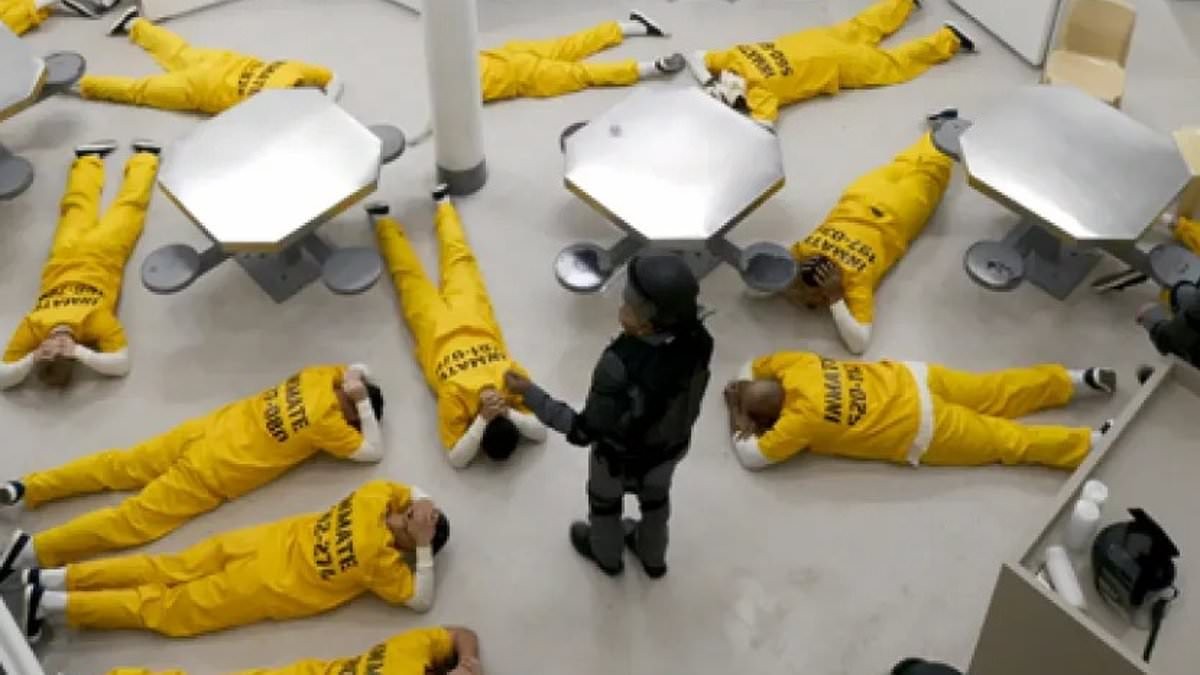
Netflix viewers have been left in shock by The New Stanford Prison Experiment, a recreation of the controversial 1971 psychological study.
The original experiment split 24 male American college students into two groups of 12 – inmates and guards – but the abuse handed out by the guards was so brutal that the study had to be terminated after just six days.
Netflix's six-part series re-stages the experiment with 30 participants – eight guards and 22 inmates – to answer the original’s central question: Does power corrupt?
The streamer has defended the show by insisting there were several guardrails in place to protect participants, but that hasn't stopped the outrage.
USA Today described the series as 'depraved', adding: 'Stanford pretends to be some kind of revolutionary experiment out to find some universal truth about humanity, but it is no different than The Traitors in prison jumpsuits.'
The Guardian branded the series 'insulting', stating: 'This rehash of the notorious study in which volunteers role-play as prisoners and guards pretends to be science. It isn’t – it’s patronising reality television.'
Meanwhile, the Sydney Morning Herald called it 'repellent', yet added 'It’s also one of the most thought-provoking shows I’ve seen.'
As The New Stanford Prison Experiment airs – we take a look at some of the wild and eyebrow-raising shows that would NEVER be made now...
As The New Stanford Prison Experiment (seen) airs - we take a look at some of the wild and eyebrow-raising shows that would NEVER be made now...
Susunu! Denpa Shonen
The 1998 Japanese show Susunu! Denpa Shonen, or Do Not Proceed, Crazy Youth, saw a contestant stripped naked, starved and locked up alone for a year.
Aspiring comedian Tomoaki Hamatsu, then 22, was stripped of all his belongings and clothes and left alone with nothing but stacks of magazines, postcards, water, electricity and heating – while being tasked with entering mail-in magazine competitions until he won one million yen (around £6,000).
Tomoaki - who never signed a contract - was told he could leave at any time, but he decided to persist to complete the challenge, staying for a total of 15 months.
He thought the footage would be aired on TV at a later date – but what he did not know was it was actually being broadcast live to around 17 million people per week.
Not only did he have to accrue prize money from the magazine competitions, he had to win everything he needed to survive too – including food, clothing and toilet roll.
He ate undignified meals such as 5kg of uncooked rice, before he was forced to resort to eating wet dog food on day 80.
Tomoaki's mental state got to the point that he admitted he wished for death – but he tried to stay sane by writing diaries, dancing and playing games.
The 1998 Japanese show Susunu! Denpa Shonen, or Do Not Proceed, Crazy Youth, saw a contestant stripped naked, starved and locked up alone for a year
Aspiring comedian Tomoaki Hamatsu, then 22, was stripped of all his belongings while being tasked with entering mail-in magazine competitions until he won one million yen (around £6k)
The live stream of his endeavours was one segment, dubbed A Life In Prizes, of the larger programme, which saw lots of ordinary people take on crazy tasks.
In an interview with The Sun, he said: 'The loneliness affected me much more than not being able to eat or not having clothes.
'There were so many moments where I thought it probably would be better to die now than keep going.
'The toughest moment was when the rice ran out and I needed to face up to eating dog food. I didn't want to eat it but there was no alternative.'
Tomoaki admitted that he was in 'such emotional turmoil that I couldn't sleep' and at points even hallucinated to the extent he believed he had been 'abducted by aliens'.
In his diaries, he wrote: 'I don't have enough nutrition going to my brain. Being driven to the edge has brought out a madness in me.'
When he finally reached the number of winnings needed, Nasubi was eventually freed – but producers soon conned him into returning to the hellish experience.
He was flown to what he thought was a celebratory trip to Korea – where the producers worked for three hours to convince him to go through the process again.
Tomoaki pleaded: 'I thought my life was over. So many times I wanted to die.'
He ended up competing for several more weeks, taking him to 434 days in isolation.
The contestant then returned to Japan, where he entered another apartment and stripped naked, thinking he was about to be subjected to the same turmoil again.
But the walls then collapsed to reveal a TV studio with a live audience of fans, with him becoming aware for the first time that his ordeal had been seen by millions.
He had become an icon during his long ordeal, with the Truman Show-esque programme poking fun at him with slapstick noises and suggestive censoring.
'Without his knowledge or consent', as the BBC iPlayer synopsis explains, 'Nasubi became the most famous television personality in Japan.'
As well as the record-breaking viewing figures, his diaries from inside also became a best-seller.
There's Something About Miriam
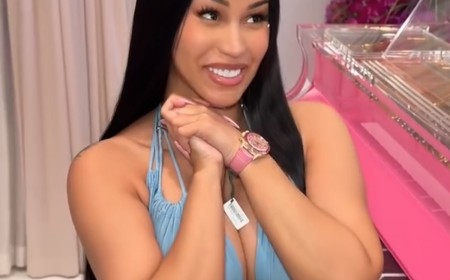
There's Something About Miriam saw six 'typical lads' - Tom Rooke, Toby Green, Scott Gibson, Aron Lane, Dominic Conway and Mark Dimino - compete to woo Mexican model Miriam Rivera
However, the cruel twist of the show was that the contestants weren't told that Miriam (pictured) was transgender and hadn't undergone gender-affirming surgery
There's Something About Miriam was one of the most controversial reality TV shows of the early 2000s.
The 2004 Sky One show saw six 'typical lads' enter a dating contest to woo Mexican model Miriam Rivera for a £10,000 prize and romantic yacht trip.
However, the cruel twist of the show was that the contestants weren't told that Miriam was transgender and hadn't undergone gender-affirming surgery until after the winner was announced – and after the men had flirted with her and even filmed intimate scenes together.
Despite being promised the 'adventure of a lifetime', the boys sued the show and prevented it from airing, eventually settling for an amount rumoured to be around £500,000.
The dating show and its impact have since been explored in a Channel 4 documentary Miriam: Death Of A Reality star, which explores the life and tragic death of Miriam Rivera.
Miriam passed away in Mexico in 2019 aged just 38, and her death was ruled a suicide by the authorities – although her husband Daniel Cuervo has always insisted she was murdered.
The fates of the six young men are less well known – and most hoped to fade from the spotlight after feeling 'duped' by TV executives and the world of fame.
But the others have gone on to forge interesting careers since the show, with winner Tom Rooke – then a lifeguard – branching out into acting, while one even dated Kerry Katona.
Fat Families
Sky One's Fat Families was hosted by 'former fatty' Steve Miller and saw him mock the participants until they lost weight (pictured with contestants Toni and Neil Blackholly)
Sky One's Fat Families may only have aired for two series in 2010 but Gen Z have revived the programme with horrified youngsters sharing clips on TikTok.
The show had a cult following due to host and 'former fatty' Steve Miller's approach to weight loss in which he refused to pander to any excuses and would instead go as far to insult the participants.
Steve would spend 24 hours with the overweight families as he monitored their diet and lifestyle choices before issuing them with a healthy living plan that would always result in weight loss.
He revisited the families to check on their progress in season two of the show, Fat Families: Second Helpings.
Yet motivational speaker Steve, who lost four stone after becoming overweight, didn't hold back with his use of language, telling viewers he was about to encounter 'one of the fattest families I've ever met in my life' who are 'grazing their way to an early grave'.
Other examples of shock outbursts saw him brand family members 'right beached blubber bellies' and 'Mr and Mrs Massive Fatty'.
While he also famously uttered 'Watch out massive fatties, the lard police are in town!'
Supersize v Superskinny
Channel 4's Supersize vs Superskinny aired from 2008 to 2014 and saw underweight participants with a dangerously low BMI swap diets with someone who was morbidly obese
Channel 4's Supersize v Superskinny aired from 2008 to 2014 and saw underweight participants with a dangerously low BMI matched up with someone who was morbidly obese.
The two were brought to 'the feeding clinic' where they lived together for five days and ate each other's diets under the supervision of Dr Christian Jessen.
After the experiment they would follow a healthy eating plan for three months before returning for a final weigh-in and health screening.
Critics argued that replacing one unhealthy diet for another in the feeding clinic was taking an unnecessary risk with the contestants' health, to which Channel 4 replied that this all takes place under the supervision of medical experts.
It was also accused of being 'triggering' for eating disorder sufferers, with chief executive of B-eat, Susan Ringwood, saying: 'They're deadly, not entertainment.'
The show introduced a section in which they featured people suffering from eating disorders who were overseen by a specialist psychiatrist and dietitian Ursula Philpot.
I Wanna Marry Harry
American women who were duped into believing they were dating Prince Harry in unsetting TV show have since said producers fed them false information to 'skew reality'
American women who were duped into believing they were dating Prince Harry in an unsettling TV show have since said producers fed them false information to 'skew reality'.
I Wanna Marry Harry was a Fox reality show that aired for one season in May 2014, which followed 12 American women who believed they were competing for a chance to date Prince Harry. Instead, however, it was a lookalike named Matthew Hicks.
Ten years later the former contestants spoke out in the podcast The Bachelor of Buckingham Palace and claimed they were monitored 24/7 with cameras in bedrooms and ordered not to speak to each other off camera.
The winner of the series Kimberly Birch and other contestants Meghan Jones and Chelsea Brookshire lifted the lid on the controversial reality TV series.
The contestants underwent psychological evaluation with a psychologist before being flown from the US and taken to Englefield House, an Elizabethan country home in Berkshire.
While contestants on the show weren't told that the suitor they were fighting for was Prince Harry at first, they were all made to believe it was him thanks to Matthew's strikingly similar looks to the Duke of Sussex and production crews 'breadcrumbing' fabricated stories.
The women all said they were told they were joining a show called 'Dream Date' and knew little else when they were whisked off to England, where they spent three days isolated in hotel rooms without any access to the outside world, not even books.
At the time of the show's premiere, Prince Harry was years away from meeting his wife, Meghan Markle. He still had his bad-boy reputation and was – most importantly – single as he had just ended his relationship with Cressida Bonas.
Speaking to journalist Scott Bryan on the podcast, Kimberly said: 'They started off really subtly, they had Kelly discover a newspaper article on a coffee table about Prince Harry, I don't remember what it said but I remember her telling the rest of us, and one of the staff came and took it away from her.'
Meghan added: 'I remember the production kind of laying these Easter Eggs for us to find, I tried to figure out what their agenda was.'
Kimberly explained: 'There was a night were we had security outside of our rooms and one of the security guards told a producer ''we have to get him back to the palace, there is a situation there with the royal family',' so whatever was heard, it suggested something that you weren't supposed to hear.
Meghan added: 'Production came out and said ''stop filming, stop filming, this is very serious'', so without camera's on, they gathered all of us girls and producers in Kim and I's room and they told us, ''Your safety is at the utmost importance to us, we are dealing with someone who is a high target individual'', I thought that was their most impactful trick.
'I didn't think they would do anything off camera that would be that shady, so I thought they were actually being realistic.'
Meghan explained that production kept 'close tabs' on them, claiming they were being monitored 24 hours a day, saying they had cameras in their bedrooms and they were 'mic'd up all day'.
She added: 'They really kept tabs on us, you couldn't just get hungry in the middle of the day, go to the kitchen and grab an apple, even getting water. For a couple of days of filming I started stealing the digestives they had at breakfast and putting them in my bra, I would take them to my room and hid them in my sock drawer.'
Many of the girls mentioned that they were not allowed to speak to each other unless cameras were rolling, it was called 'put on ice'.
Kimberly said the show taught her a lot about 'brainwashing' because her reality was constantly being skewed.
One of the contestants, Kelly, fell hard for the man she thought was Prince Harry, so much that even the imposter Matthew started to feel uneasy about the lie.
Matt said he only agreed to do the show if he didn't have to flat-out lie to the women. He was told to act like himself, not a royal, but that didn't stop others from nudging the women's speculation along.
The show even went as far as staging paparazzi chases and security threats to make the women believe they were dating Prince Harry.
Viewers watched on as the women went on a series of lavish dates with the man whom they believed to be the Prince.
Matt, who is now a father and working as a school teacher, also spoke to the podcast about his time on the show, saying it was the most 'nerve racking' thing he ever had to do.
Matt revealed he felt 'quite isolated on the show' because the production crew were told to not get too over familiar with him in case they called him by his real name by mistake.
Even though Matt didn't feel comfortable with the deception, producers appeared to have other ideas and halfway through the series, when one of the girls got suspicious, the production crew revealed to the women that Matt was indeed Prince Harry.
Matt said: 'At the time I had no idea they were going to do that. I was a bit miffed and felt quite stressed, I didn't appreciate the way they done it without telling me, but then again I signed up for this, I knew it might happen at some point.
'I only had one option really and that was to just deal with it, so I just carried on the same way really and played it like it didn't happen.'
At the end of the show Kimberly won Matt's heart but he had to break the news that he wasn't Prince Harry like the girls had been led to believe.
In a bizarre twist, that none of the contestants or Matt knew about, Kimberley was in with a chance to win $300,000, but only if she still accepted Matthew after he revealed he wasn't the Prince.
After winning, she split the prize with Matthew, and after a few show-related meetups, they went their separate ways.
The show was ultimately pulled from the air after only four episodes due to low ratings. The rest premiered on Fox's website.
Playing It Straight
Playing It Straight saw one woman forced to pick a partner from 14 attractive bachelors, but the twist is that half of the men are gay. If the woman picked a straight man, they split a $1M prize
Presenter Jameela Jamil hosted the British 2012 reboot which aired on E4 for one season and eight episodes
Just last year controversial dating show Playing It Straight set tongues wagging online a whole 20 years after it first aired.
The now-cancelled TV series – which first aired back in 2005 – originally broadcast on Fox in the US, but quickly picked up a UK version.
Fans on X have since rediscovered the gameshow, with one claiming that 'it got homophobic so quickly'.
The series was hosted by American television presenter Daphne Brogdon, with Jameela Jamil presenting the UK spin-off alongside and comedian Alan Carr, who narrated it.
The British series aired in 2005 and ran until 2012, with June Sarpong presenting it from 2005 and Jameela in 2012.
The original series saw one woman forced to pick a partner from 14 attractive bachelors, but the twist is that half of the men are gay.
If the woman in question picked a straight man, they split a $1million prize.
But if a gay man fooled her, he would get to keep the eye-watering cash to himself.
On X, user Corsaren shared a thread of thoughts about the US series, which ran for one season and had a total of eight episodes.
It focused on single girl Jackie, who was looking for her perfect partner, and completely unaware of the plot twist.
They wrote: 'Who do I have to pay to bring this show back on the air holy s**t,' adding, 'I'd say there is at least a 30% chance at this point that the twist is they're all gay.'
Further elaborating on the episode, they shared: 'Oh good, they are now competing with each other to prove how straight they are by talking about her t**s as aggressively as possible lol.'
Contestant Gust was first to get kicked off the show, which appeared to get worse as it went on.
The X user claimed it was before bosses started to ban alcohol on shows, as one of the contestants was 'intentionally tricking another to take too many tequila shots'.
The Swan
The Swan, which ran for two seasons from 2004 on US network Fox, saw a group of women participate in a pageant after undergoing a three-month transformation
Just a few months ago a woman who went under the knife on one of the most controversial American makeover shows has revealed how she was scarred for life from the series.
The Swan, which ran for two seasons from 2004 on US network Fox, saw a group of women participate in a pageant after undergoing a three-month transformation.
The everyday women, titled 'ugly ducklings' would go under the knife, have their diets overhauled and their wardrobes completely changed in order to become beauty queens.
The three-month experiment gave women access to a therapist, dentist, cosmetic surgeon and a personal trainer in order to become more conventionally attractive.
The winner of the beauty pageant at the end of the series would be dubbed 'The Swan' – there was no cash prize for them to take home.
While it drew in a huge 15 million viewers on its launch, it received mostly negative reviews from critics, who hit out it was 'misogynistic' and 'hurtful', leading to its downfall just months after its initial release.
And since, a small handful of women who took part in the series have spoken out about the not-so-pageant-ready after effects, with one even citing surgery complications and mental health problems, of taking part in the show.
It led to Entertainment Weekly ranking the programme the worst reality show ever produced, and VICE featuring it in their documentary, Dark Side of Reality TV, calling it the most 'bizarre and offensive reality TV show of all time'.
Now, one former contestant, Belinda Bessant, has opened up on her horror experience on the show, admitting it left her with scars on her face, and regrets over being pushed towards some surgeries.
Speaking to Mel Magazine, the former reality star admitted she signed up for the series after an advert appeared during an episode of The Price Is Right.
Advertising an opportunity to 'change her life', she admitted she 'didn't hesitate to see what it was all about' having struggled with depression as a single mother.
Four months after being cast in the show, she was flown to Los Angeles to be given 'medical and psychological tests' to ensure she was fit for the show.
Two months later, Belinda recalled the cameras showing up at her house and being whisked away from her home to begin the process.
She told the publication: 'This was back in the heyday of reality TV: Everybody dreamed of being on some type of TV show... a lawyer who who looked at the show's contract tried to tell me I shouldn't sign it, but I did anyway because the allure of being on reality TV was too exciting to turn down.'
Belinda was forced to leave her house, job and children behind for four months as part of the process – sending them the $500 (£380) she was paid each week for being on the show.
She was encouraged to go under the knife, with the single mother opting for an eye surgery known as a Blepharoplasty, face and body liposuction, a breast reduction and veneers.
Belinda continued: 'All of the surgeries were within the first two weeks; my first operation was 13 hours under anesthesia, and my second was one week later.'
During the women's recoveries, they were not allowed to access TV, mainstream media or buy magazines, with once-a-week calls home limited to ten minutes.
Instead, the women were 'chaperoned' everywhere and kept 'trapped in their own world' until the filming had finished and the pageant had aired on screens.
Right up until the moment the women walked out for the pageant, the true competitive nature of the show was kept 'secret' from the women.
While Belinda accepts that some of the surgeries she had have helped her in her life, she admitted to having regrets for those that left her with 'scars' and 'hair loss'.
'The before pictures were made to make us look as ugly as possible,' she continued. 'I had beautiful eyebrows and eyes, I wasn't unhappy with my face structure... today you can see three vertical scars on my head, which are made worse by the hair loss.'
Belinda stressed that she feels 'embarrassed more than anything' to tell people she was on the show, after the 'editing' made her look 'obsessed with looks'.
She concluded that 'to this day she doesn't talk about it', because she doesn't want 'negativity' from the series involved in her life.
Scenes on the show, which first aired in 2004, saw Belinda explain the reasons why she took to the series, admitting she 'used to be pretty'.
In the episode, she told the cameras: 'I'm 28 years old, I used to have the perfect body, and I used to be pretty and I used to be able to walk down the street and have guys chasing me. Not having that now, it makes me feel horrible.
'Unfortunately I ended up with the wrong guy, I wouldn't want to talk to any of the men from my past because they are not good people. I ended up in several abusive relationships.
'My dream for myself is to learn to know that I deserve someone who will treat me good, but when I look in the mirror, I see a big fat cow.'
On her emotional reveal, Belinda told the show's hosts: 'One thing I've learned here is that beauty comes from the inside and I'm happy with who I am right now.'
Secret Eaters
Channel 4's Secret Eaters ran from 2012 to 2015 and saw host Anna Richardson get to the bottom of baffled contestants who couldn't figure out why they were overweight
Channel 4's Secret Eaters ran from 2012 to 2015 and saw host Anna Richardson get to the bottom of baffled contestants who couldn't figure out why they were overweight.
Using secret cameras and private investigators they would then be followed without their knowledge and have all the food they consumed recorded.
At the end of the week, they were confronted about what they had eaten, shown footage of them eating and told how many calories they had consumed while looking at a giant table filled with all the meals they'd consumed in the week.
A press release promoting the programme said: 'Britain has become a nation of mindless munchers and compulsive grazers.
'Many people don't even know they're doing it and are losing the battle of the bulge because of it.
'These families can't understand why their diets are out of control; they think they are eating healthily but can't stop piling on the pounds.
'To find out what they're really consuming, cameras are put in their shopping trolleys, cars, fridges and cupboards.'
The show was criticised for bringing an element of 'shame' around eating, as well as the hidden camera element.
Mini segments within the show would film unsuspecting members of the public dining, before they were confronted with the reality of how many calories were in their meals.
America's Next Top Model
America's Next Top Model was notorious for dangerous runway challenges, problematic photo challenges and disastrous makeovers (pictured: host Tyra Banks)
In her 'fight against the fashion industry,' Tyra pushed the boundaries of taste on more than one occasion including the infamous swapped ethnicities 'blackface' shoot for a Got Milk? ad
America's Next Top Model – which aired for 24 seasons spanning 2003-2018 on UPN, The CW and VH1 – was notorious for dangerous runway challenges, problematic photo challenges and disastrous makeovers.
In her 'fight against the fashion industry', host Tyra Banks pushed the boundaries of taste on more than one occasion including the infamous swapped ethnicities 'blackface' shoot for a Got Milk? ad during cycle 4.
Contestants have also complained about being fat shamed or forced into undergoing cosmetic procedures on the show.
Since Tyra has finally addressed the various controversies and scandals in Netflix documentary Reality Check.
'I haven't really said much, but now it's time,' the 52-year-old model-turned-presenter admitted. 'I knew I went too far.'
Tyra continued: 'It was very, very intense. But you guys were demanding it, so we kept pushing more and more and more.'
Featuring interviews with Banks, former judges Jay Manuel, J Alexander and Nigel Barker, along with past contestants and winners, the series took a candid look at the show's meteoric rise – and the countless controversies that followed.
What is The New Stanford Prison Experiment?
Netflix has been slammed online after it revealed that it was turning the infamous Stanford Prison Experiment into a new reality show with 30 new contestants
Netflix has been slammed online after it revealed that it was turning the infamous Stanford Prison Experiment into a new reality show.
'30 willing participants enter a real prison and are randomly assigned as guards or prisoners,' reads a description.
'Thrust into a system of power, hierarchy and control, they’ll discover whether ordinary people inevitably conform to the roles they’re given - or whether empathy, morality and individuality can withstand the forces pushing them in the opposite direction.
'As the pressure builds and the balance of power begins to shift, the central question feels more urgent than ever: Does power corrupt?'
Executive producer Jane Lipsitz has defended the show, stating: 'When the show was first announced, there was a lot of outrage that anyone would even attempt the Stanford Prison Experiment again and given what happened with the original, I completely understand that reaction.'
'If we were simply recreating the original experiment, that would be unconscionable. But this is a different time, with different participants, different safeguards and, ultimately, a very different journey.'
However, the show has been met with fierce backlash online, as many pointed out that the initial 1971 experiment it's based off of ended in disaster.
Run by psychologist Professor Philip Zimbardo, the Stanford Prison Experiment has become one of the most famous psychological studies of all time.
Students were randomly assigned to be either guards or prisoners within a mock prison constructed in the Stanford Psychology Department.
The objective was to observe the interaction within and between the two groups in the absence of an obviously malevolent authority.
The results proved shocking, with the abuse handed out to the prisoners by the guards so brutal that the study had to be terminated after just six days.
Run by psychologist Professor Philip Zimbardo, the 1971 Stanford Prison Experiment has become one of the most famous psychological studies of all time
Doug Korpi, who was one of the 24 participants, recalled in a 2024 docuseries how he had to fake a mental breakdown in an isolated cell in a desperate last-ditch attempt to be freed
'Leave it to Netflix to reproduce one of the most notorious and unethical social experiments ever, but as reality TV,' one user scathed on X following the announcement.
'We already know the results of this are bad/harmful/dangerous,' another added.
'This is one of the most infamous records of horrific practice, social duress and unsafe living conditions,' someone else penned.
'Psychologists already determined it to be highly unethical and traumatizing. How is this legal? And how is this considered entertainment?'
'This same experiment was ended early last time because “guards” became increasingly abusive and “prisoners” were suffering intense emotional distress,' read a fourth post.
'It was deemed a highly unethical experiment. But sure, let’s make the same terrible mistakes again, for entertainment purposes.'
'This sounds like a bad idea in every way possible. The real experiment failed miserably,' said a sixth.
A different user chimed in: 'This was stupid when it was done in real life. And will probably be even stupider when repeated.'
Many people urged Netflix to 'cancel' or 'pull' the show before its premiere, while some, on the other hand, confessed that they were excited to watch.
The New Stanford Prison Experiment is streaming on Netflix
What's Your Reaction?
 Like
0
 Dislike
0
 Love
0
 Funny
0
 Wow
0
 Sad
0
 Angry
0






Comments (0)