

The Odyssey Ending Explained: Why Odysseus Really Couldn't Go Home
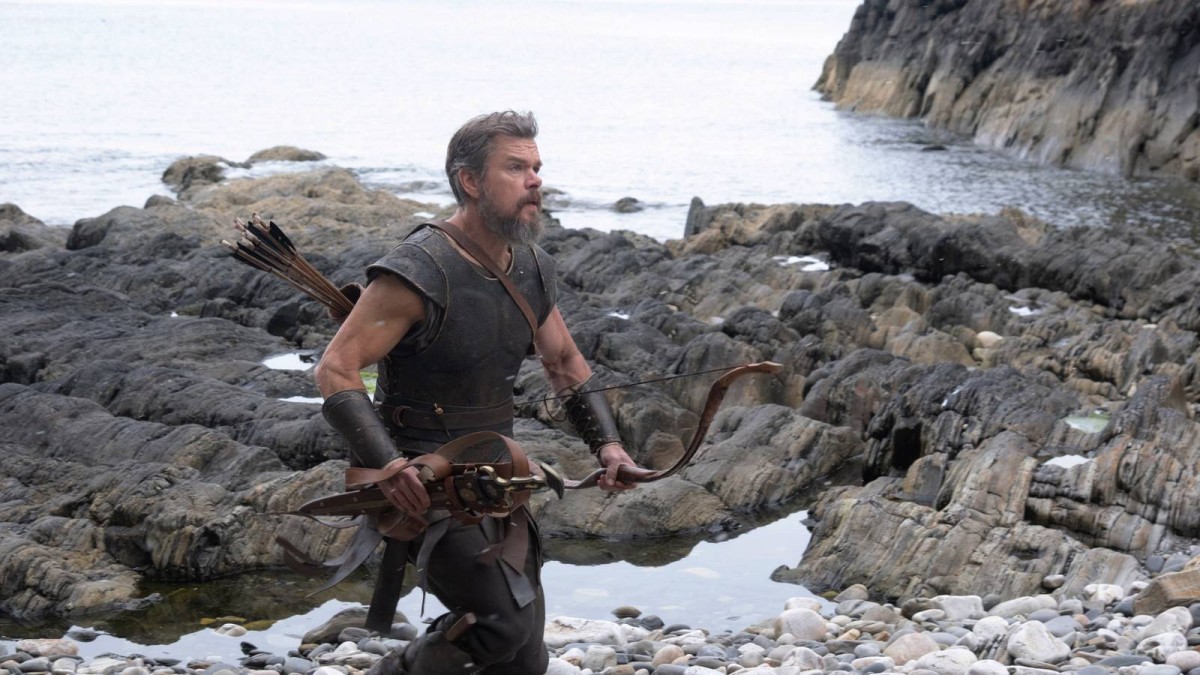
The Odyssey really takes its time getting to its ending. The new film from Christopher Nolan adapts the epic poem of the same name attributed to Homer, one of the oldest surviving works of literature in the world, about the Greek hero Odysseus' tortured journey home after the Trojan War. In the original version, he and his crew are cursed by the wrath of Poseidon as a result of Odysseus arrogantly taunting the Cyclops Polyphemus, one of the sea god's sons. In the movie, that... maybe happens. Still, the returning soldiers are beset by tragedy after tragedy until only Odysseus survives.
The whole story builds to the moment he finally returns home to Ithaca, two decades after he left, and cleanses his house of the conniving suitors who have been leeching off his estate. But neither telling rushes it – he arrives disguised and plans his next moves carefully, recognized only by a select few before he reveals himself by passing Penelope's challenge: stringing his old hunting bow and firing an arrow through a row of axes, as only he himself had ever accomplished. Then, all hell is unleashed on the suitors, with a special something saved for their de facto leader, Antinous.
In the film's final moments, Odysseus and Penelope are finally reunited, but depart Ithaca together. Previously, while speaking to his fallen men in the Underworld, Odysseus was tasked with sailing out into the unknown west as a way of honoring those he was not able to give a proper burial; despite how long it took him to get home, he was not destined to stay there. Instead, their son, Telemachus, takes the throne. But while this last scene is cast in the warm glow of a happy reunion, The Odyssey's ending is grappling with some pretty heavy ideas.
Why Odysseus Didn't Want To Go Home
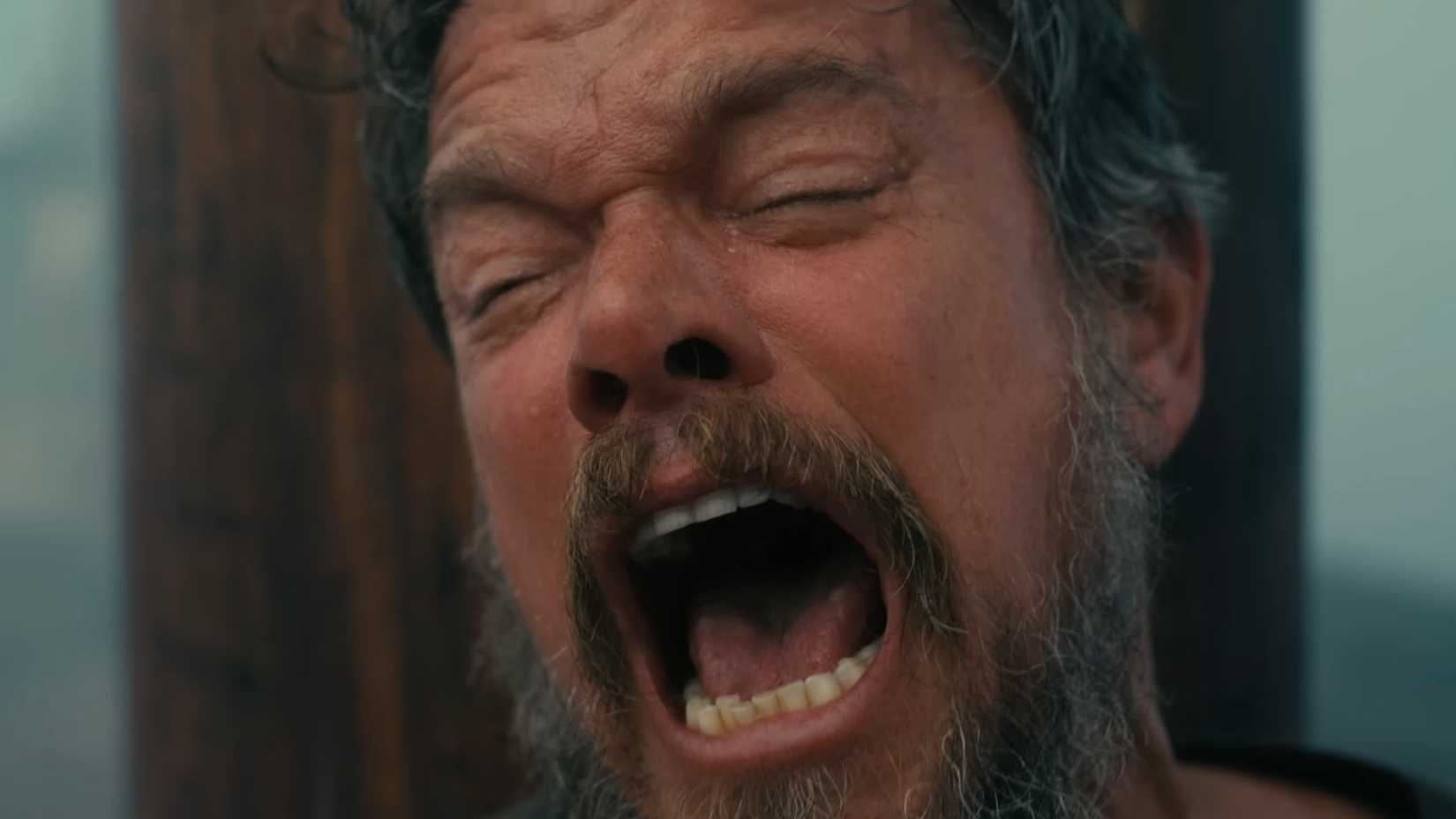
The question of why Odysseus and his crew are beset by such foul luck on their journey from Troy to Ithaca hangs in the air throughout the film, but over time, Nolan focuses less on external forces and more on the turmoil inside his hero. Eventually, he is forced to confront a difficult truth: He doesn't really want to go home. He is asked why more than once in the movie's final third, but it isn't until he finally speaks with his wife, under the guise of a poor, grizzled veteran of the Trojan campaign, that he's willing to confront the answer.
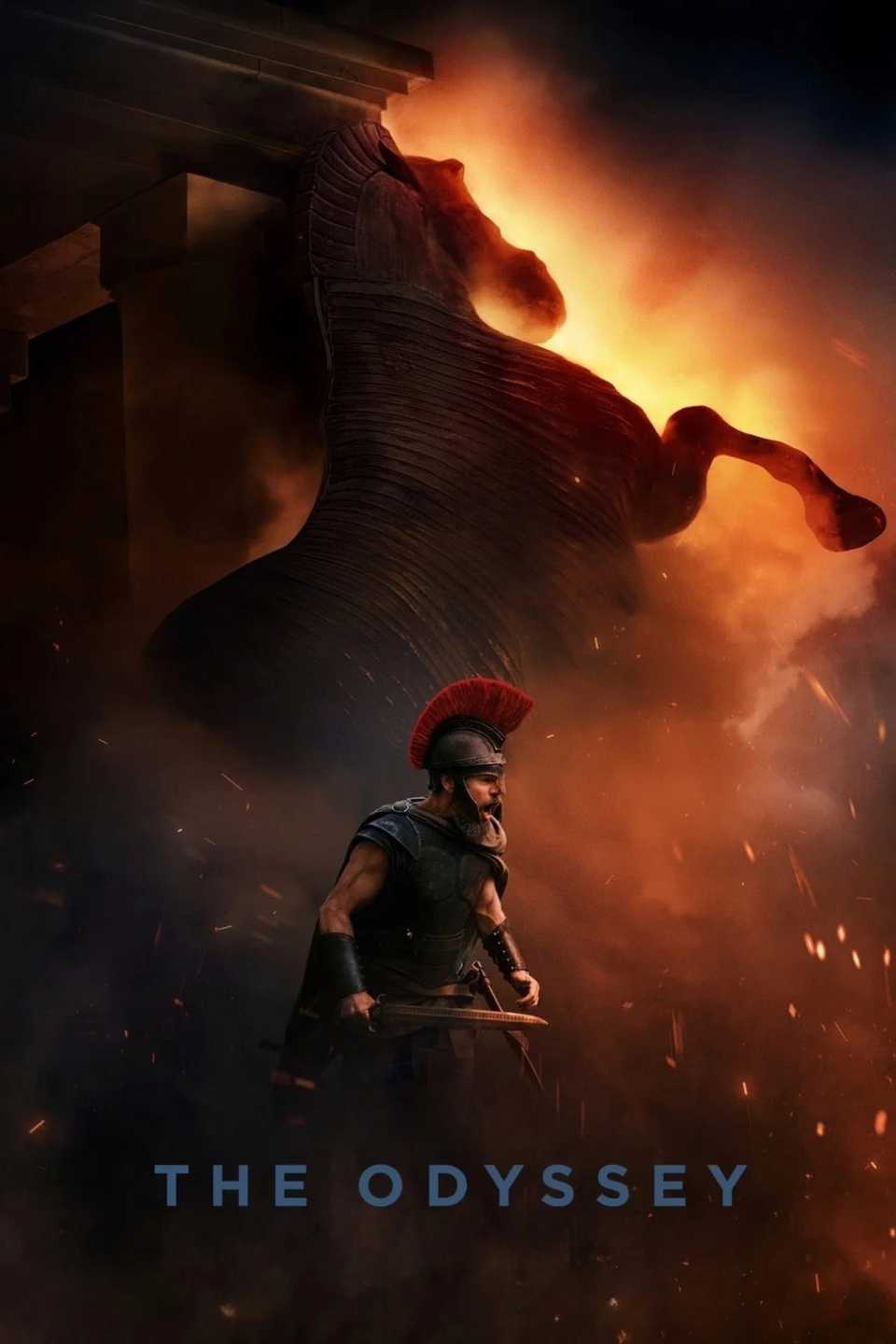
The world of The Odyssey is quick to sing Odysseus' praises – literally. His idea to hide Greek soldiers inside a wooden horse and present it as a parting gift to Athena, a god they share with Troy, won them the war, and it has already been immortalized in song. In the film, we see it as told to Telemachus by Menelaus, the King of Sparta who was there with Odysseus, and whose insider perspective is far more intimate than what can be recounted by bards. But Menelaus' truth is not quite Odysseus'. Living through that moment, he had the horrific realization that what he'd done wasn't heroic at all.
As clever as the Trojan Horse gambit may have been, it was deceitful, preying upon the conventions of civilized society to slaughter a city of people. Odysseus watched Troy fall as an almost out-of-body experience, even seeing a vision of the beheading of Athena's statue as if the flesh-and-blood goddess herself was being executed right in front of him. He began to think of this as the moment the world ended. This betrayal of basic trust would trigger the erosion of customs like Zeus' law, based on the fragile bonds between people that keep us from resorting to violence at the smallest inconvenience, and civilization as he knew it would slowly collapse.
This is ultimately what was keeping him from returning to his beloved Ithaca – why he refused to follow Agammemnon's ship; why he needlessly provoked Polyphemus; why he so eagerly ate of the mind-numbing lotus flower. He did not want to go home because he didn't believe he deserved to, and because, after what he did, the home he left could never be the same again.
Circe Was More Right Than She Knew
 Image via MovieStillsDB
This idea peeks its head out before Odysseus' final confession. Telemachus learns from Menelaus that word is spreading of dangerous people from the sea arriving on Greek shores and causing chaos. The suitors in Telemachus' own home have made a mockery of Zeus' law for years, and seem all but ready to break it once and for all by murdering Odysseus' heir. Everyone can see the bonds of society fraying.
Never is this point driven home more, however, than when Odysseus and his men encounter Circe. The sequence in which she turns them into pigs is truly one of The Odyssey's most memorable, but more notable here is why: Pigs, she argues, is what they already are, and their human forms are just disguises. The brutal violence they committed as soldiers was not thrust upon them, but already a part of them, and now it is in their nature. They would, she insisted, have attacked her eventually.
Regardless of whether these specific men would have, we come to understand that Odysseus somewhat agrees with her underlying point. This was part of his revelation at the sacking of Troy, and he later comes to understand that the people from the sea are not some foreign invaders, but his fellow soldiers – Greeks, who raped and pillaged for Agamemnon’s war abroad and continued to do so when they came back.
It's a sobering realization, and part of a trend in Nolan's adaptation to bring a heavy dose of cold, hard reality to this fantastical, myth-heavy story. Which raises a larger question...
Are The Gods Real In Christopher Nolan's The Odyssey?

One of the most striking differences between this movie and its source text is the use of the Olympian gods. In Homer's Odyssey, they are very much real. Poseidon's wrath is keeping Odysseus from reaching home. Athena's constant aid ensures that not only does he make it there, but he will find righteous victory waiting for him. The latter is a frequent presence in the life of Telemachus, as well, often disguising herself as Mentor and dispensing sage advice. Hermes, the messenger of the gods, is the one who tells Calypso that enough is enough and Odysseus should be freed.
Nolan's film takes a different approach. Notably, it opens by calling this "a time of apparent magic," which can be taken two ways: Either magic could be plainly seen, as in, say, when encountering a Cyclops, or the world simply seemed to be magical, and every peal of thunder was taken to be an expression of Zeus' will. The Odyssey straddles both, and when it comes to the gods themselves, there's significant evidence that they have no bearing on mortal affairs beyond the characters' imagination.
The one Olympian who physically appears in the film is Athena, though her role is much diminished from its original version. If anyone Telemachus ever encounters is the goddess in disguise, that's never made explicit, either to him or to us; though he notes Mentor has "wise eyes, Athena's eyes," a nod to the character's role in the text, he says the same to Odysseus in disguise, suggesting he's looking to find Athena's guiding hand in his life. Instead, Athena appears only to Odysseus, who may well be conjuring her in his mind.
This sense of the absence of the divine pervades The Odyssey. In myth, the Trojan War has its roots in Paris, a prince of Troy, choosing Aphrodite as the fairest over Athena and Hera in a story called the Judgment of Paris. Aphrodite offered Paris the most beautiful mortal woman, Helen, as a gift, despite her already being married to King Menelaus of Sparta. Agamemnon, Menelaus' brother, then rallied the Greek troops to invade and retrieve her.

Helen's part in this story exists in Nolan's telling, but from early on, we're introduced to this as merely a flashy pretext. In a flashback to before his departure, Odysseus insists this campaign is Agamemnon's excuse to secure key trade routes controlled by the Trojans. Not divine intervention, then, but common politics.
Later, when Odysseus' surviving crew flees Polyphemus, the film doesn't make a big deal of them having been cursed by a son of Poseidon. Instead, we're led to feel like the crew latch onto this superstition on their own. And through Odysseus' own arc, we're encouraged to believe that the primary obstacle to his return is not the gods, but his own guilt. Again and again, even in the face of supernatural wonders, The Odyssey emphasizes the human characters as agents of their own fate.
Whether Olympian gods are or are not real in Nolan's movie isn't critical to one's experience of it – in other words, this question doesn't need a definitive answer. But this layer of doubt, or at least of distance, puts the onus on people to shape their world, and that is essential to understanding what this version of The Odyssey is really about.
Does The Odyssey Have A Happy Ending?

In a god-driven world, the order of things is set. Zeus' law is binding, and anyone who disobeys it will be met with divine justice. All will be set right in the end.
In a human-driven world, the order of things is fragile. Zeus' law, the foundation of civilization, is but the thinnest of barriers between all the Greeks have accomplished and a new dark age. If people decide to push hard enough to break it, there's no guarantee that it will ever be fixed.
The Odyssey's ending belongs to this second world. Like Oppenheimer, Christopher Nolan's previous film, this is a pre-apocalyptic story, with Odysseus and the Trojan Horse functioning like Oppenheimer and the atom bomb – its creator fears the mere invention of it has doomed us. From this perspective, the film concludes in a pretty bleak place. Odysseus even notes to Penelope that their story will only be sung, because songs will be all they have after they lose all the people who can write.
But the ending doesn't feel bleak in the way that Oppenheimer's ending certainly does. It is lit warmly; Odysseus and Penelope are all smiles as they sail away into an unknown land, and Telemachus cuts a hopeful figure in his royal garb. Penelope, in response to her husband's doomsaying, insists that we will endure. Civilization will return someday, even if this one's time is up.
I am not the first to note that this adaptation of The Odyssey seems to speak to our time, when the bonds of civility feel especially fragile, if not outright broken. Perhaps, Nolan is hoping that his film can turn our attention back to what matters most in life, and that there is still time to keep from slipping into another dark age. Or, perhaps we should take comfort in knowing that we've been here before, that this great story of Odysseus endured regardless, and that civilization did indeed return to the world.
I'm honestly not sure whether The Odyssey's ending is a happy one for humanity at large. But despite his pessimism, I think it's impossible to read it as anything but happy for Odysseus. To tie it back to a theme seen in many of Christopher Nolan's films, he was right to come home. To leave it again with love back in his life is no great hardship.
Release Date July 17, 2026
Runtime 172 Minutes
What's Your Reaction?
 Like
0
Like
0
 Dislike
0
Dislike
0
 Love
0
Love
0
 Funny
0
Funny
0
 Wow
0
Wow
0
 Sad
0
Sad
0
 Angry
0
Angry
0








Comments (0)