

The Problem With Planning in Landscape Photography
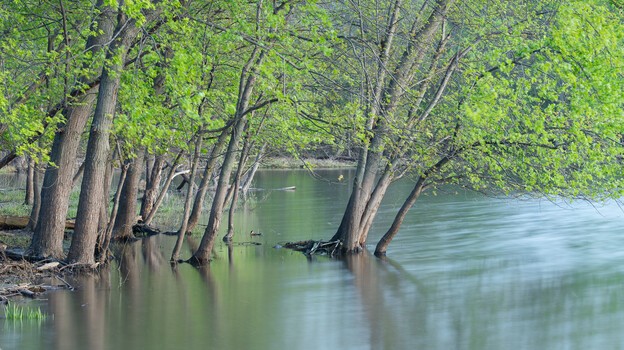
It usually starts a few nights before a shoot. You start checking weather forecasts, cloud-cover percentages, and sun angles. You try to judge the likelihood of fog. You pack your bag with the gear you need for the anticipated conditions. You have locations planned out. You know exactly where the car will be parked and what the light should do. You feel prepared. But have you just planned too much?
Feeling ready for a photography outing can be comforting, but there is a line where preparation crosses over into engineering. When we over-plan, we stop treating photography as an act of discovery and start treating it as the efficient execution of a predetermined script.
Anchoring and Expectation Blinders
When we build a shoot around a specific forecast or location layout, we anchor ourselves to a preconceived image. We decide what the photograph should look like before we even head out of the house.
This mental anchor naturally creates psychological blinders. If you drive to a location expecting a dramatic burst of light through a specific scene, your brain hyper-focuses on that single outcome. You stand by the tripod, watching that one patch of sky, waiting for the universe to perform on cue. Every other aspect of that location fades into the background.
The light might not show up, and that is a frustration that landscape photographers risk all the time. But the real issue here is that you become completely blind to the moments happening all around you. While you’re rigidly waiting for a specific outcome, you might miss the subtle interplay of the light with the colors or textures of the forest, or the way the conditions are developing across the landscape behind you. Because those elements and many more aren’t in the notes you made at home, they don’t register. You miss the honest gift of the landscape because you’re too busy chasing an outcome you engineered days ago.
Virtual vs. Reality
Design and software development often talk about mental models. These are the internal maps a person builds of how a system works. Digital scouting tools allow landscape photographers to build incredibly sophisticated mental models of places they have never physically explored. We can drop a pin on a 3D satellite map, simulate the shadows at a specific hour, and scroll through dozens of existing photos online to see exactly what others saw there. Thanks to these virtual tools, we can feel like we know the terrain intimately.
But a mental model is just an abstraction. It reduces a complex, living landscape down to a predictable set of data points. And while this helps us navigate the world more easily, it can also lead us to create false expectations about a location.
When we arrive on site with a pre-built mental model, we subconsciously spend our initial energy trying to validate the virtual information we had gathered rather than reacting to the physical environment itself. In other words, we look for things we expect instead of simply looking at what is actually there. The wind might be moving differently than expected, or the dampness in the air might change the atmosphere. When we let the digital model dictate our expectations, we risk dulling our raw, instinctual response to nature.
The Extraction Fallacy
This pressure to plan often stems from a corporate-style desire for efficacy. Many modern cultures obsess over maximizing our time and guaranteeing that an investment of effort yields the highest possible output. We have limited free time, gas is expensive, and if we’re waking up at 4:00 AM, we want to ensure we get the most out of the location.
When we adopt this mindset, we begin treating the landscape like a resource to be efficiently mined for images. If the sky is completely flat or the conditions are uncooperative, we log the outing as a failure or a waste of time.
I’ve found that photography rarely operates on a linear timeline of investment and return. By forcing a framework of maximum output onto a natural space with changing conditions, we become impatient. We pack up early, or we don’t go out at all. But sitting with a landscape in unproductive conditions is often the exact work required to understand it. The quiet, flat days are where you learn the shapes of the land without the distraction of dramatic light. Taking the time to experiment and explore with many compositions helps to build up a more accurate mental model of the location. If you want a structured look at how other photographers approach that process in the field, Photographing the World 4: Advanced Landscapes is worth a look. If you only show up when the apps promise perfection, you miss the deeper value of photography.
Opening Up to Unplanning
Connecting with nature doesn’t mean throwing away your maps or hiking into the wilderness unprepared. Think of it more as leaving room for serendipity to alter the course of your outing. If you want to practice unplanning, there are a few ways you can weave it into your routine.
- Commit to time, not conditions: Pick a morning or an evening when you are free to shoot. Look out the window, see whatever weather is happening, and just go out. Don’t worry about what the apps say. Give yourself zero expectations and see what happens.
- Lean into the immediate reality: Instead of trying to leverage the conditions to fit a specific outcome, look at what you are given and ask what these flat or chaotic conditions allow you to express that other conditions don’t. So if it’s gray and rainy, work with the moodiness and the wet textures rather than wishing for a sunset.
- Challenge your own expectations: Deliberately choose to go to a location when every instinct and weather app is telling you that it’s the wrong time for photography. Force yourself to stand in that uncooperative environment, become aware of what the light is doing, and find a way to create with what you find there.
The Value of the Unscripted Frame
There is still a time and a place for the planned shoot. If you are tracking specific astronomical alignments or dealing with complex coastal tides, the preparation matters. The planning process itself can also be deeply enjoyable, and there is a quiet satisfaction in the anticipation of a trip.
But the plan shouldn’t be a prison. The most honest, memorable landscape photographs are rarely the ones that went exactly according to script. They are often born out of the sudden moments of realization that happen when our plans and expectations unravel. They live in the moment we stop trying to extract an image from the landscape, leave ourselves completely open to whatever happens, and connect with the world.
When was the last time you skipped the apps, left the camera bag packed by feel, and just stepped outside to see what the day was offering? How did that change how you actually looked at the landscape?
What's Your Reaction?
 Like
0
Like
0
 Dislike
0
Dislike
0
 Love
0
Love
0
 Funny
0
Funny
0
 Wow
0
Wow
0
 Sad
0
Sad
0
 Angry
0
Angry
0











Comments (0)