

The Three Lighting Decisions That Control How Old Your Subject Looks
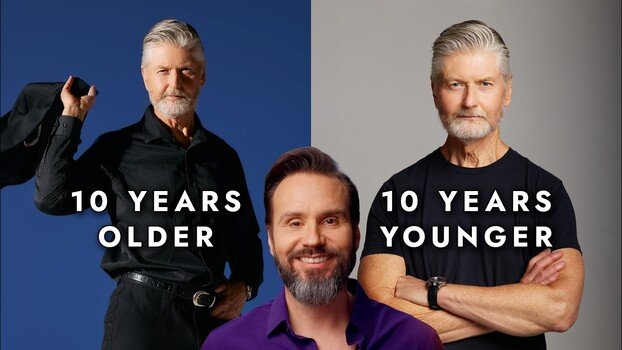
Lighting choices age or youth your subject more than any retouching tool. Three specific decisions, made on every shoot, determine whether someone looks weathered or fresh, and most people make them without fully understanding what they're doing.
Coming to you from John Gress, this practical video walks through the three lighting variables that control how old or young a subject appears in a portrait. Gress works through side-by-side comparisons using a 7-inch reflector against a 150 cm octabox to show exactly how source size changes the way skin reads on camera. The larger the light appears to your subject, the softer the transitions between highlights and shadows, and the less visible wrinkles become. Gress puts it simply: size equals softness. With the smaller, harder source, every crease and pore gets its own shadow, and the face reads older.
The second variable is the angle of the light. When light strikes the face from a steep side angle, it creates longer shadows across every surface texture, making skin look rougher and age more apparent. Move the light more toward the front and those shadows shorten, texture softens, and the face reads younger. The third variable is fill, specifically how much light you're adding to the shadow side. Gress demonstrates that by brightening the shadows with a fill light below the camera, wrinkles essentially lose one side of themselves and become far less visible. None of that requires retouching in Photoshop. It's a function of how dark you let the shadows get.
Where the video gets genuinely useful is when Gress flips the premise. He shows a fitness subject where the goal isn't to minimize texture but to maximize it, using a 30x100 cm softbox positioned overhead to create directional light with deeper shadows that define muscle. The same lighting decisions that make an older subject look weathered make a fitness subject look powerful. Gress makes a point that's easy to miss: there is no universally flattering lighting setup. The right setup depends entirely on what you're trying to say about the person in front of your camera. An older executive you want to look approachable gets a large source, front-weighted angle, and fill from below. A fitness model, regardless of gender, gets harder, more directional light with less fill. The modifier and its position are tools; the subject determines the goal. Check out the video above for the full breakdown and comparisons from Gress.
What's Your Reaction?
 Like
0
Like
0
 Dislike
0
Dislike
0
 Love
0
Love
0
 Funny
0
Funny
0
 Wow
0
Wow
0
 Sad
0
Sad
0
 Angry
0
Angry
0






Comments (0)