

The Words That Stopped One Photographer for Years
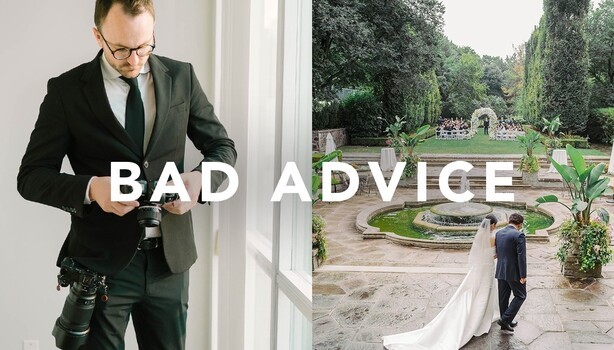
A respected photographer once told a teenager she wasn't good enough to make it, and that single sentence kept her from picking up a camera for decades. Those words carry a weight far heavier than the person who said them ever intended, and most creative people have heard some version of them, either out loud or in their own head.
That story sits at the center of a talk from Luke Cleland, who shares it after a coaching call with a woman starting a wedding photography business later in life. She had begun photography as a teenager, working in a strong studio, excited about where it could go. When she told the photographer she admired that she wanted to become a photographer herself, the answer was flat rejection. Cleland's first instinct is that the older photographer felt threatened, worried about someone taking her place. His second instinct runs deeper, and it's the idea he spends most of the video on.
That idea is "resistance," a concept Cleland borrows from Steven Pressfield's book "The War of Art." He describes reading it every year early in his career, especially when the pressure to quit felt loudest. Resistance shows up in two forms. External resistance is the person telling you your idea is bad. Internal resistance is quieter and often worse, the voice asking who you are to call yourself a photographer at all. In the book, that force gets personified as something that floats around and whispers, pulling you away from the work you're meant to do. Cleland's point is that resistance tends to hit the most creative people the hardest, the ones who should be making things.
He tests the idea against art he loves. Standing among 40,000 people at a Mumford & Sons concert, he found himself wondering what would have happened if any of the band members had listened to the doubt and never written their first song. Every piece of art that shaped his own life existed only because someone pushed through resistance instead of folding to it. That's the frame he uses on his own ideas when the doubt shows up.
Worth understanding is why this hits photographers specifically. Photography sits in a strange spot where the barrier to starting is low but the barrier to feeling legitimate is enormous. Anyone can buy a camera, so the doubt rarely attaches to the gear. It attaches to identity, the gap between owning a camera and believing you have the right to charge for what you shoot. This is why comparison culture on Instagram and portfolio sites tends to freeze people rather than push them forward. The fix Pressfield and Cleland both point toward is separating the stakes of an idea from the fear around it. A photo shoot concept that flops costs you an afternoon. Naming the true cost of an idea, rather than letting fear inflate it, is a practical way to decide which advice deserves your attention and which is just resistance wearing someone else's face.
Cleland is careful not to tell you to ignore everyone. Some people in your life will say "don't do that" and be right, and he draws a clear line around the difference. If a plan means going $40,000 into debt, listen to your friends. In the pure world of ideas, though, he argues there's far more resistance floating around than encouragement, and that imbalance is what quietly kills good work. His closing pitch is direct: the people who hired him over 13 to 15 years of wedding photography would have missed out entirely if he'd listened to his own doubt. Somebody out there needs the thing you keep talking yourself out of making.
Press play on the video above to hear Cleland tell the full coaching-call story and lay out how he uses resistance to get himself moving again.
What's Your Reaction?
 Like
0
Like
0
 Dislike
0
Dislike
0
 Love
0
Love
0
 Funny
0
Funny
0
 Wow
0
Wow
0
 Sad
0
Sad
0
 Angry
0
Angry
0








Comments (0)