

This phone accessory spots hidden cameras in 5 seconds — SweepLED prototype uses LED reflections and could cost only $7
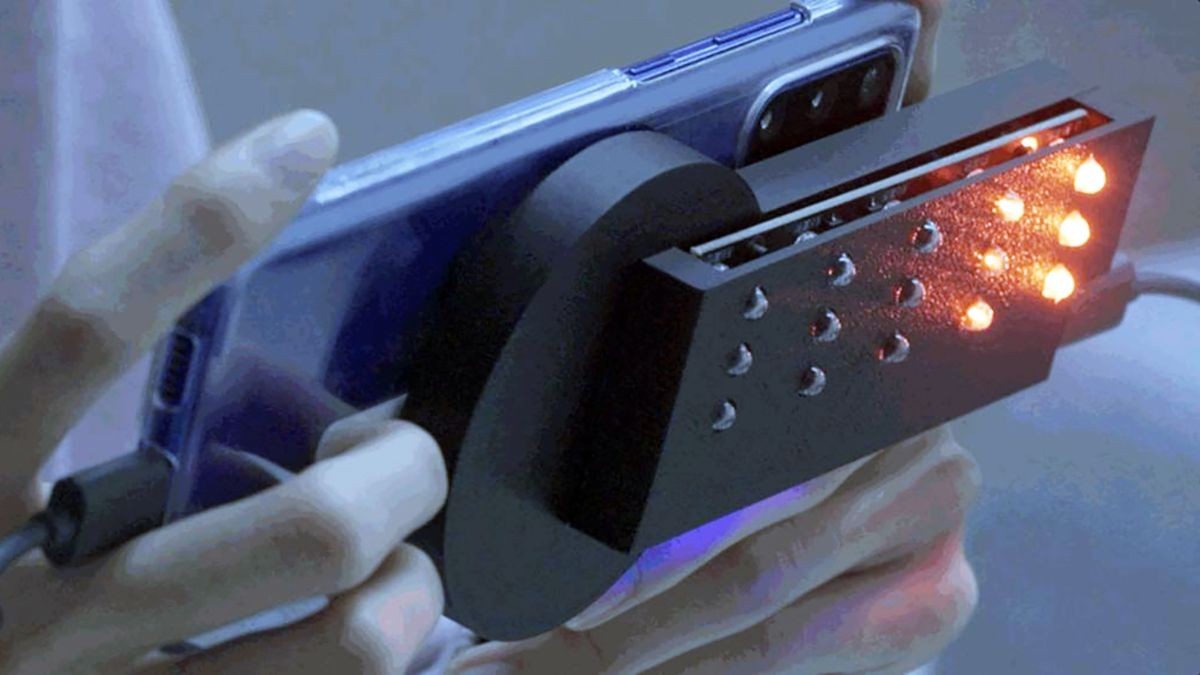
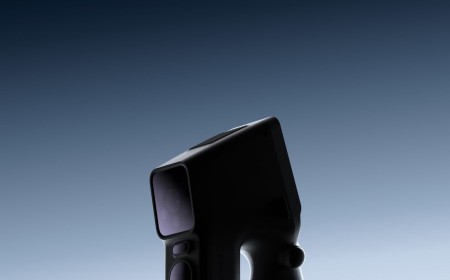
 SweepLED fits on the back of your phone
(Image credit: KAIST)
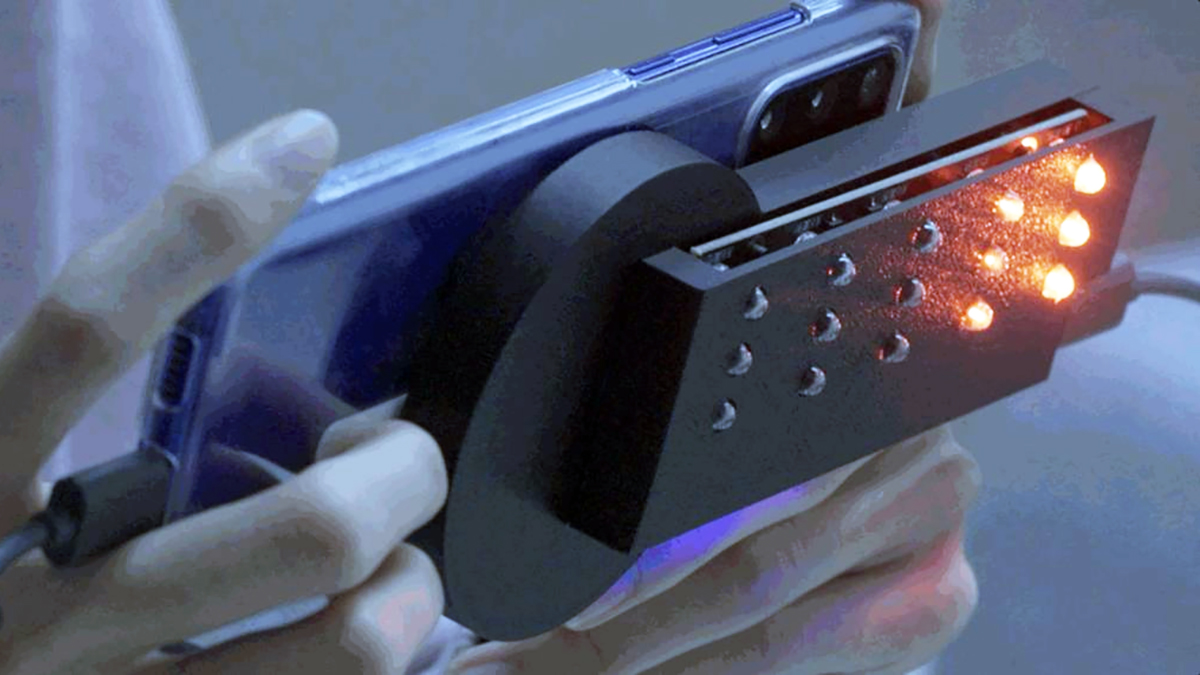
SweepLED fits on the back of your phone
(Image credit: KAIST)
- SweepLED can spot hidden cameras by varying its illumination
- AI can detect camera lenses by the light that gets reflected back
- The accessory fits on the back of a camera and works in seconds
Unless you're in the safety of your own home, there's always a worry that you're being surveilled without your knowledge — when you're in an Airbnb, hotel room, changing room, or restroom, for example. Now researchers have developed an LED-powered phone accessory to give you some extra peace of mind.
It's called SweepLED, and it's the invention of a team from the Korea Advanced Institute of Science and Technology (KAIST). The portable device combines 15 LED lights, a cable to attach to your phone, and some AI processing.
According to the researchers, SweepLED can spot hidden cameras 94% of the time with a processing period of just five seconds per object. While this is only a prototype for now, the team has tested it on 30 different objects, reporting a high level of skill at identifying where hidden cameras are embedded (or not).
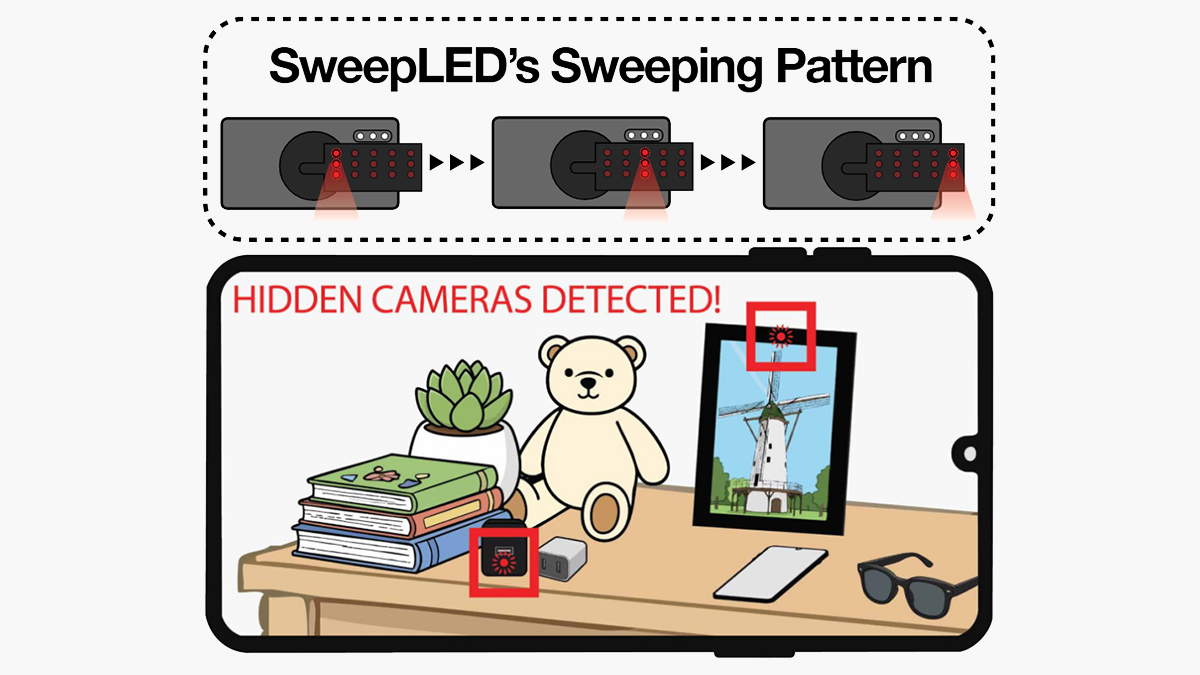
Here's how it works: SweepLED fixes to the back of a phone (over the camera). As video is recorded and the phone stays still, the add-on turns its LEDs on and off, comparing different reflection patterns against each other. Hidden camera lenses show up in those reflection patterns in a way that standard reflective surfaces don't.
Protecting your privacy
"Hidden cameras pose a serious threat to personal safety and privacy in everyday spaces," says Professor Jun Han, from the KAIST team. "This research is meaningful in that it combines low-cost smartphone-based hardware with AI analysis to present the possibility of a practical detection technology that even non-experts can use."
Previous devices along these lines required users to look for 'bright spots' manually as they were lit up by the detector, the tell-tale sign that there was a camera looking back at them. This should be more efficient, and better at spotting different camera types hidden in a variety of different housings (like clocks or mirrors).
There's still plenty of work to do to get this refined and commercialized, but it shouldn't be expensive: the KAIST team reckons the manufacturing cost of SweepLED would be in the region of $7 (about £5 / AU$10).
Get daily insight, inspiration and deals in your inbox
Sign up for breaking news, reviews, opinion, top tech deals, and more.
If you do a lot of traveling, it might be worth investing in something like this just to make sure you're not being spied on. The work has been presented at the ACM MobiSys 2026 conference and published online, though as yet there's no indication of when it might be available to the masses.

Follow TechRadar on Google News and add us as a preferred source to get our expert news, reviews, and opinion in your feeds.
Dave is a freelance tech journalist who has been writing about gadgets, apps and the web for more than two decades. Based out of Stockport, England, on TechRadar you'll find him covering news, features and reviews, particularly for phones, tablets and wearables. Working to ensure our breaking news coverage is the best in the business over weekends, David also has bylines at Gizmodo, T3, PopSci and a few other places besides, as well as being many years editing the likes of PC Explorer and The Hardware Handbook.
What's Your Reaction?
 Like
0
Like
0
 Dislike
0
Dislike
0
 Love
0
Love
0
 Funny
0
Funny
0
 Wow
0
Wow
0
 Sad
0
Sad
0
 Angry
0
Angry
0








Comments (0)