

Two ‘Ramayana’ Cuts Are in Theaters — but Your Best Bet for the Indian Epic Is Clear
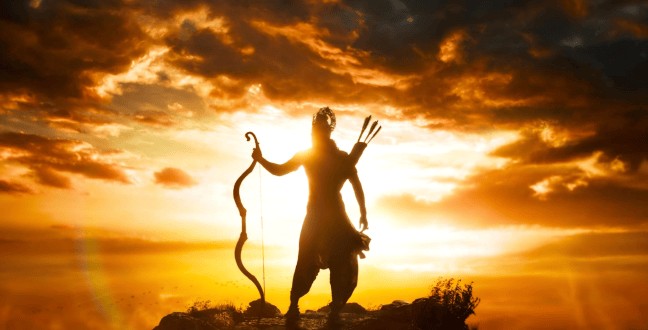
“Ramayana: Rise of a Legend” retells a millennia-old Hindu epic on a splashy scale. The Hindi-language studio film — part one of a planned duology — has been released outside India by Sony Pictures, which hopes to make it a cross-cultural hit by courting audiences who don’t normally spend every weekend watching the latest Bollywood fare. Among the strategies for this rollout have been a lavish Comic-Con panel, as well as an English dub of the movie, which was the version shown to press prior to the review embargo. However, language isn’t the only difference; this version is almost half an hour shorter than the Hindi original and excises some make-or-break material.


The Hindi version did eventually screen for press (about a day before the film’s release), but by then, early reviews quickly noted the awkward method of its transposition. Dubbing into different languages is hardly new, but AI-assisted lip syncing to match the actors’ mouth movements gives the English performances a stilted quality. Granted, the in-house program developed for this purpose (named “Brahma AI” after the Hindu creator-god, who features in one of the movie’s many prologues) seems a tad more ethical than most generative AI. The process involves real human beings recording the English lines — in some cases, the original actors themselves — as well as real mouth performances (creepy as that sounds) captured to map onto the original faces. Essentially, its data sets seem to be entirely internal, so the stealing aspect of the wider AI problem isn’t a concern here. However, the effect is distracting by way of exaggerated lip movements, and the English dialogue itself is clunky and emotionally restricting.
This becomes all too clear when watching the Hindi version for comparison, which I managed to on opening day at New York’s Mecca for Indian movies: the labyrinthine, 25-screen AMC in Times Square. The original cut doesn’t make the movie magically great — it still has the same haphazard approach to building action, and the same uncanny CGI — but it does call into question the methods by which Sony has attempted to localize (and globalize) the film for wider viewership. Most obviously: performances are more emotionally convincing in their original form, and the reverb on the original dialogue is much more befitting of a large-scale epic, while the mixing for the English lines conjures images of a claustrophobic studio booth. However, the more baffling comparison is between the different cuts, and how each one affects the story.
 ‘Ramayana: Rise of a Legend’
The English cut runs 166 minutes, which is about half an hour shorter than the original. With that much of a lag, you’d expect the discrepancies to be obvious early on, but surprisingly, the two films are mostly identical for about the first two hours. They cover largely the same ground, between the origins of the demon king Ravana (Yash), the condensed upbringing of the heroic prince Rama (Ranbir Kapoor), and his eventual exile to the forest alongside his graceful wife Sita (Sai Pallavi) and his devoted brother Lakshmana (Ravi Dubey). The differences are largely in how scenes play out, especially montages backed by songs.
The film has few traditional dance numbers, but in sequences where wider details from the poem are squeezed into the running time, the English version snips them here and there, removing only minor subplots at first. For instance, when Rama and Sita meet and talk for the first time, Rama’s three brothers can also be seen flirting with various women around the palace, as the prince mentions only wanting to marry Sita if his siblings can be married on the same day. This is absent in the English version, as are shots of the additional three weddings during Rama and Sita’s ceremony. It’s not the most vital thing to include from a plot standpoint, though it arguably gestures toward the nature of the story at large, as one in which Rama tries to stick to his promises, as fate contorts itself in his favor.
Still, this and some other deletions aren’t necessarily missed for much of the running time, like a few extra action beats in existing scenes, and additional shots of Rama and Sita living in their kingdom, Ayodhya, and getting to know its people, in another musical montage. However, they give the story a bit of breathing room, which is never a bad thing. In any case, the most destructive removal is far more noticeable. It arrives about two hours into the Hindi running time, by way of a single dramatic scene (or a trio of scenes in quick succession, depending on how you count them) that makes for the film’s emotional centerpiece, and practically resolves major issues with the English version’s latter half.
 ‘Ramayana: Rise of a Legend’
Both films conclude with the giant, humanoid bird king Jatayu trying to rescue Sita from a flying chariot when she’s kidnapped by Ravana, in a scene that, while visually dazzling, feels a tad random as the climax to its own movie (rather than a midpoint or inciting incident; the epic has been split quite inelegantly). This in turn leads to a mournful speech from Rama about rejecting his destiny and writing his own path as he plans to march on Ravana’s kingdom of Lanka. In the English cut, this feels like a distinction without a difference, since Rama’s training by various priests and sages has, in fact, been in anticipation of a conflict with Ravana. However, many of these dangling threads feel more emotionally whole in the Hindi version, thanks to the aforementioned scenes, known traditionally as the Bharat Milap, or the meeting with Bharat, Rama’s brother, who was placed on the throne in his stead.
In a subplot wholly absent from the English cut, a royal procession reaches Rama’s humble hut, where Bharat — who knew nothing of the palace conspiracy to replace Rama as king — informs him of their father’s death. In the English version, it’s never clear when, if ever, Rama learns about this major development (which even comes up in the film’s concluding scene), leaving viewers to intuit that it probably happened off screen. However, this isn’t even the only problem the Bharat Milap solves.
After Rama scatters his father’s ashes, the two brothers have an emotional conversation with Lakshmana by their side. Bharat tries to convince Rama to return to Ayodhya and take the throne, but Rama believes this ascetic path has been laid out for him as part of his fate and sacred duty, so he decides to remain in the forest. All the while, Lakshmana harbors a grudge against Bharat, and is angered by Rama’s decision to remain in exile, though he goes along with it as part of his own duty and moral code.
For one thing, this makes Lakshmana make a whole lot more sense as a character in subsequent scenes, in which he occasionally flies off the handle. Without these vital exchanges informing his state of mind, his volatility seems arbitrary (though sadly, neither version manages to make his comedic quips really land). For another, these missing scenes give Rama an actual character arc, and imbue the film with a vital throughline of how various characters approach the idea of divine destiny.
When Sita is kidnapped, and Rama comforts the dying Jatayu — who, by the way, features briefly in these missing scenes as well, making his climactic arrival less sudden — there’s a sense of direct causality to these events. Rama isn’t just a witness to his wife’s abduction and Jatayu’s slaying, but he feels the guilt of having made the decision to remain alone and vulnerable in the first place. When he talks of rejecting destiny and writing his own story, these cease to be the mere platitudes of the English version. They become a direct callback to his own decision-making, in which he chose to follow the lifelong path laid out before him, out of a sense of divine obligation.
This, in turn, affects another scene (albeit a smaller one) in which Ravana and his siblings bicker over whether to kidnap Sita in the first place. The notion of destiny comes up once more, in the idea that Ravana going down this violent path is something the gods might actually want to entrap him in a battle with Rama. Since the movie is a mere first half, its primary hero and villain never interact, and they don’t even feel thematically bound in the English version. In the original cut, these notions of destiny, as laid out by Rama’s chat with Bharat, set the protagonist and antagonist on an unavoidable collision course.
The decision to cut the running time makes roundabout sense, given that one of the few things most Western viewers know about Hindi movies is their historically enormous lengths. However, when Hollywood films like the “Avatar” sequels and “Avengers: Endgame” (and even Indian hits like the Telugu-language “RRR”) draw crowds with three-plus-hour running times, this phantom barrier clearly isn’t insurmountable. Shaving things down to a still-robust 2 hours and 46 minutes isn’t likely to be the deciding factor for many viewers; people tend to round up or down at that length.
While this feels akin to a Harvey Weinstein-esque interference, this particular decision was, according to Sony, made with the input of the team behind “Ramayana: Rise of a Legend.” But whatever the impetus for these competing cuts — both of which are now in theaters — the decision to cleave out such a vital emotional and thematic crux, the meeting between the brothers, is utterly confounding. It’s the story’s heart and soul, and erasing it is downright destructive to how the movie plays. So, if you’re deciding between the two versions, the choice should be pretty clear.
What's Your Reaction?
 Like
0
 Dislike
0
 Love
0
 Funny
0
 Wow
0
 Sad
0
 Angry
0









Comments (0)