

Ultrawide vs. telephoto: if the iPhone Fold only has one, which should it be?
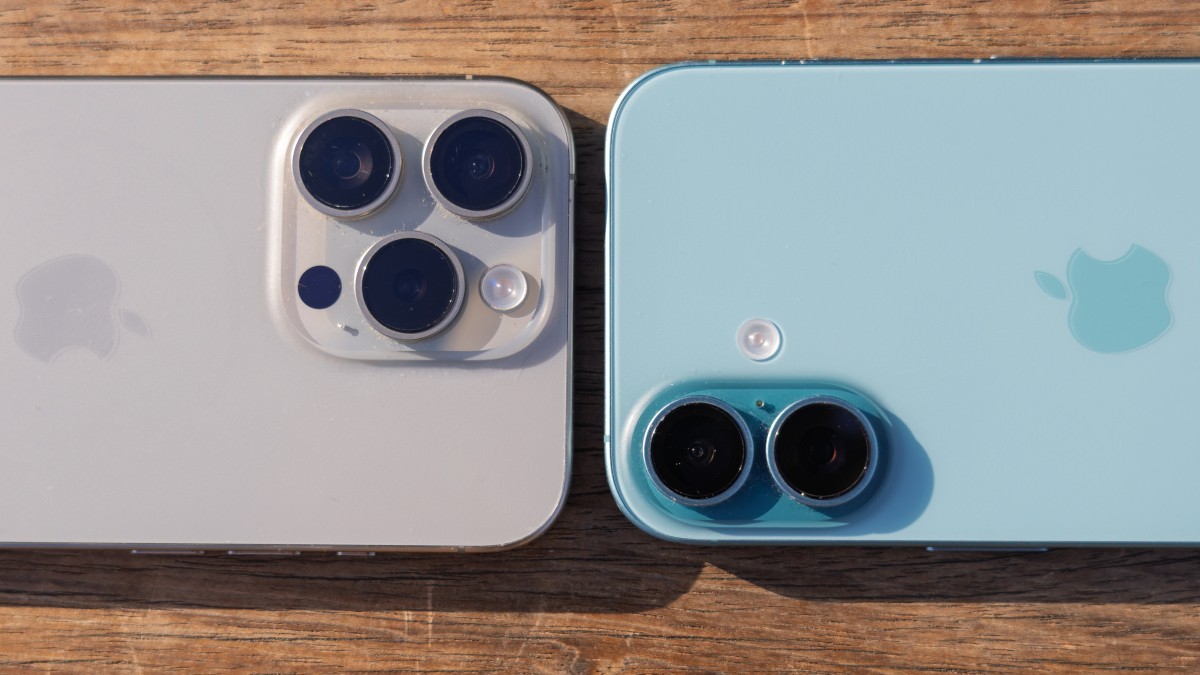
Many phones these days come with three cameras to cover ultrawide to telephoto. But on ones that pare it down to two, which is the right call?
 Mitchell Clark
We here at DPReview aren’t immune from falling into time-worn debates. When discussing the upcoming iPhone Fold, which, if the rumors are to be believed, will only feature two cameras, I made a comment about how I was annoyed that, when phone manufacturers choose to drop a camera from the ultrawide-wide-telephoto trio included on most flagships, it’s the long option that always gets the axe. If I can only have one (a choice I don’t think I should even have to consider for a phone rumored to be over $2000, but whatever), I’d prefer it to be the telephoto.
My colleague Dale Baskin, however, disagreed, saying he’d prefer to keep the ultrawide. And, surveying the the market, it seems like a lot of people, or at least phone manufacturers, agree with him. So I figured I’d put forward my argument for why the telephoto should be raised above the ultrawide… and then begrudgingly give the latter its due as well.
Go long
 This is the kind of photo where a telephoto really comes in handy. I don’t wish to get closer to the alligator.Mitchell Clark
Before we start, I want to note that I’m coming to this with data: I’ve owned two phones that have all three focal lengths on them – an iPhone 11 Pro and an iPhone 15 Pro – and in-between I owned an iPhone 12 Mini, which just has a wide and ultrawide. Barely a day went by that I didn’t miss the that telephoto option and, now that I have it again, I use it more than the 0.5x option. Of the 7000 pictures I’ve taken with my phone, around 830 of them were taken with the telephoto, versus around 750 with the ultrawide. (It’s admittedly a much smaller gap than I expected, though if I narrow it down to my favorites, it’s no competition; the tele wins 5:1).
To me, that’s for a very simple reason: I run into more scenarios where I can’t get closer than ones where I can’t get further away. Almost certainly, this will come down to my shooting style. Looking at the ultrawide photos I’ve taken, it’s pretty much exactly what you’d expect: interior shots, landscapes, photos of large objects that I didn’t feel like stepping back from and pictures of my cat where I’ve made him look goofy by getting the camera really close to him. Except for the latter, they’re all shots I probably could’ve replicated relatively closely using my phone’s main camera and a bit more effort.
 iPhone 15 Pro | 4x Telephoto | F2.8 | 1/625 | ISO 25Mitchell Clark
That’s not the case for the 4x telephoto shots. Those are comprised of pictures at concerts where the artist was far away, wildlife shots, portraits or product shots where I wanted background compression, odd things I saw off in the distance and, again, pictures of my cat being goofy, but in a way where I suspect he’d stop if I got up to get a closer picture. Sure, there are a few where I could’ve just zoomed with my feet, but they’re honestly in the minority.
This has become even more true as Apple has continued to increase the reach of its telephoto cameras. What was once something like a 50mm equiv. has become a 100mm equiv., which genuinely gives you the option to take pictures of things that are too far away for your standard camera.
Go wide
 Sometimes you just don’t want to be that person, obviously getting up and walking way back to get a photo.Mitchell Clark
There are, of course, reasons to prefer an ultrawide to a telephoto. Wider focal lengths are almost required for many forms of photography, like architecture, wide-field astrophotography (not that the iPhone has a great astro mode, but some Android models do) and more. And just like there will be times when you can’t get closer to something, there will be times when you actually can’t get far enough back to take the photo you want with a normal lens.
But while I can understand why you’d want an ultrawide, I’m also clearly biased (see the previous section). So I’ll hand it over to Dale to talk about why he would pick them over a telephoto.
Dale’s thoughts
My own preference for ultrawides likely comes down to my shooting style. I like to get close to things. To me, a subject photographed close-up offers a perspective that’s more intimate and personal than one shot from farther away. It puts you closer to the story and can immerse you in it, rather than placing distance between you and the subject. That doesn’t mean I don’t like or use telephoto lenses, and I’d be lying if I said I never used the one on my smartphone, but if I had to choose between the two, I’d go with my storytelling tool: the ultrawide.
Maybe I’m the outlier here. After all, I’m the guy who picked an altrawide lens as my DPReview gear of the year not once, not twice, not thrice, but four times, so I clearly have a bias. But I also know that when I show a friend or family member how to use their ultrawide lens to get a more dramatic landscape shot, they discover a new way of seeing that expands their photographic repertoire. And they love to use it.
And I can certainly appreciate why some people would prefer a telephoto option; there really are times when you just want to zoom in on something, whether it’s one of your kids playing sports or to shoot a portrait.
 Scrolling back through my photos, much of my ultrawide use is taking close-up pictures in the iPhone’s Macro mode.Mitchell Clark
Beyond the general photographic reasons, the iPhone utilizes the ultrawide in extra features in a way that it doesn’t for the telephoto. For the past few years, Apple has been using the camera to provide a “macro mode” that lets you take pictures of very close-up objects. It also uses it for “desk view” if you’re using your phone as a webcam. Finally, it has some computational purposes too; if you’re taking a “Spatial” photo that will render using depth data in VR, the phone uses the wide and the ultrawide camera to get its dual perspectives on the scene (though it’s possible that’s mainly because it’s the camera that most iPhones will have).
You can’t always get what you want
As I alluded to before, I realize that my preference for telephoto lenses probably isn’t widely held. When Samsung was deciding which cameras to put on the Galaxy Z Flip and passport-shaped Galaxy Z Fold8, it went with the wide and ultrawide, same as it had done with the ultra-thin S25 Edge. Apple does the same for the baseline iPhone series, and that was true for Google as well, before it decided it was better to have three mediocre cameras than two that were pretty good. And while I haven’t seen the market research that says the people at large prefer ultrawides, I’m certain it exists; otherwise, dual-camera phones that pair a wide and a telephoto wouldn’t be as rare as they are.
 Manufacturers near-universally choose the ultrawide when it comes to having a second camera on a phone. If you’re a tele-enthusiast, your choices are essentially go go without, or buy a phone that has all three cameras.Samsung
Part of that likely comes down to marketing. With most phones, you can at least somewhat approximate having a telephoto lens by zooming in. Phone manufacturers even make it easy to do, and say that even phones with a single camera actually have a zoom option with “optical quality.” I think they’re wrong, but when has that ever stopped marketers? And yet its true that you can’t even really approximate the effects of an ultrawide lens, nor can you use software to emulate the close-up shooting you can do with them like you can to telephotos with portrait mode.
Dale also pointed out that it may simply be easier and/or cheaper for manufacturers to build ultrawide lenses than telephoto ones, reducing costs while still allowing them to market their phones as having two cameras. And, indeed, I have to wonder if that’s part of the reason why folding phones, which have to fit their cameras into a much slimmer profile than normal, often compromise on the telephoto. It’s possible there’s just not enough room for the more ambitious lenses.
Is it a dealbreaker?
Whatever arguments there are for including an ultrawide to the exclusion of the telephoto, the strongest one is this: I, and I suspect many others like me who prefer the latter, will still buy a phone that doesn’t have the camera layout we want. That could be for many reasons; maybe you want to save money by not going with a higher-end model, or maybe (like I’ve done in the past and likely will do again in the future) you simply prefer the form factor of the phone that doesn’t have the complete suite. But even if I buy the iPhone Fold and love it, I know that, in the back of my mind, I’ll always miss that extra reach when I open the camera app.
Want to stay up to date on the latest product news and releases? Add DPReview as a preferred source to ensure our independent journalism makes it to the top of your Google search results.

What's Your Reaction?
 Like
0
Like
0
 Dislike
0
Dislike
0
 Love
0
Love
0
 Funny
0
Funny
0
 Wow
0
Wow
0
 Sad
0
Sad
0
 Angry
0
Angry
0









Comments (0)