

Valve Steam Frame 3 Review: Competent as a standalone VR, but wireless streaming remains the focus
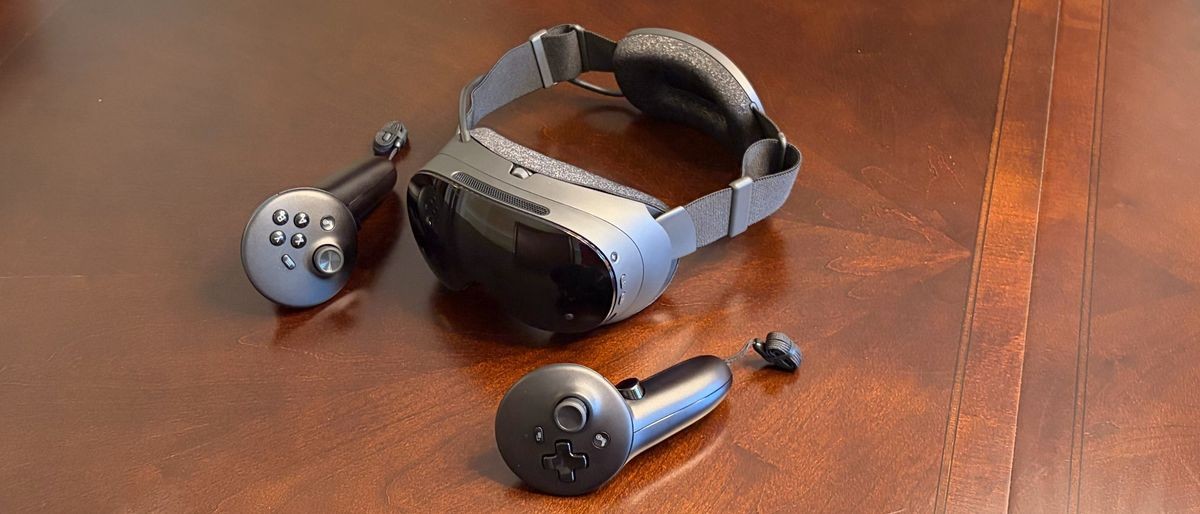
Lightweight design and a trick wireless strategy make the Steam Frame a top-notch VR gaming experience.
Pros
- +
Attractive and lightweight design
- +
Incredibly reliable wireless connection thanks to the Wi-Fi 6E dongle
- +
Access to the entire Steam catalog in streaming mode
- +
Can play optimized Steam games in standalone mode
Cons
- -
$1,059 starting price
- -
Slight performance hit when gaming in standalone mode
Why you can trust Tom's Hardware Our expert reviewers spend hours testing and comparing products and services so you can choose the best for you. Find out more about how we test.
Valve has been ramping up its hardware releases during 2026, with the Steam Controller launching this past spring, followed by the Steam Machine earlier this summer. The 2026 hardware onslaught is now culminating in the Steam Frame, the company’s latest headset aimed at VR and non-VR gaming.
Rather than being a streaming-only platform, like the preceding Valve Index, the Steam Frame has a powerful onboard Qualcomm Snapdragon 8 Gen 3 and up to 1TB of internal storage to play standalone games without the need for a PC. It’s an ambitious headset, which comes with an equally ambitious $1,000+ price tag.
Design and Comfort of the Valve Steam Frame
At first glance, the Steam Frame reminds me of oversized ski goggles, compared to the Daft Punk style of the preceding Valve Index headset. The overall design feels very organic, with soft curves and thin plastic to keep weight down. The thinner plastic drastically reduces weight compared to the Index (440 grams with the headstrap versus 809 grams for the Index).
Latest Videos FromTom's Hardware
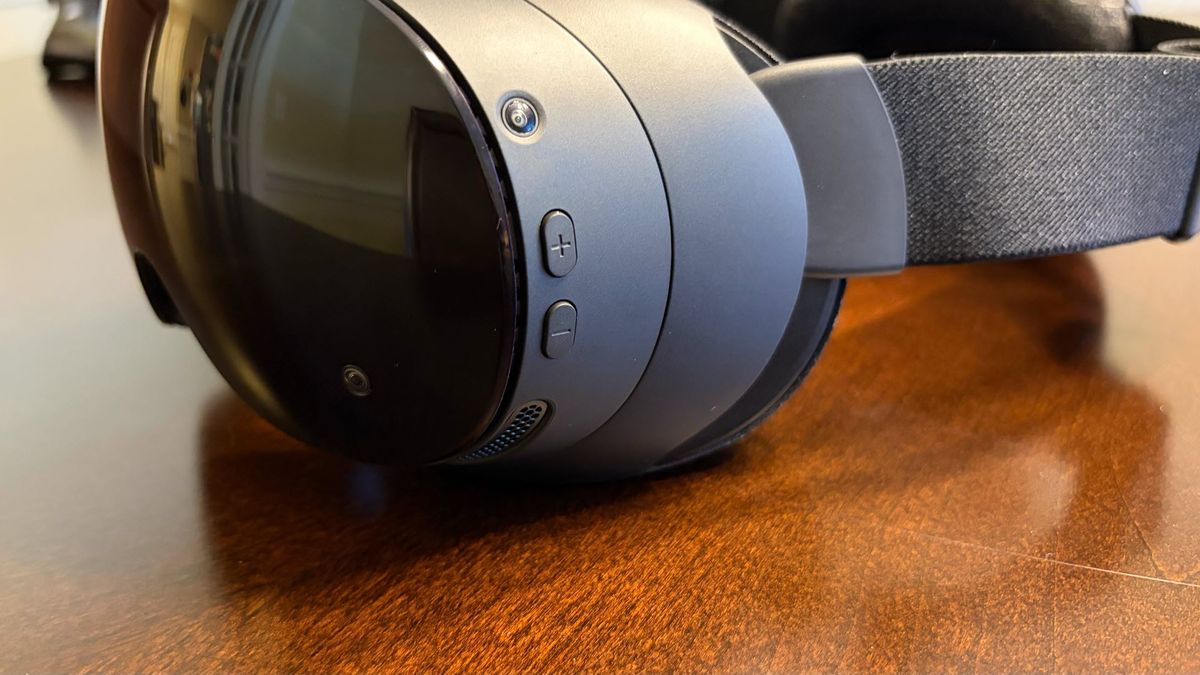
Two forward-facing cameras (which provide a monochrome passthrough of your environment) sit near the bottom of the front cover, while two additional cameras sit on the side of the Steam Frame, facing sideways and slightly upward. Together, the four cameras provide headset and controller tracking. The final two cameras are internal for eye-tracking purposes. The main unit also houses a cooling fan that helps remove warm air from the Snapdragon SoC and keeps your head from sweating during extended gaming sessions.
Image 1 of 4
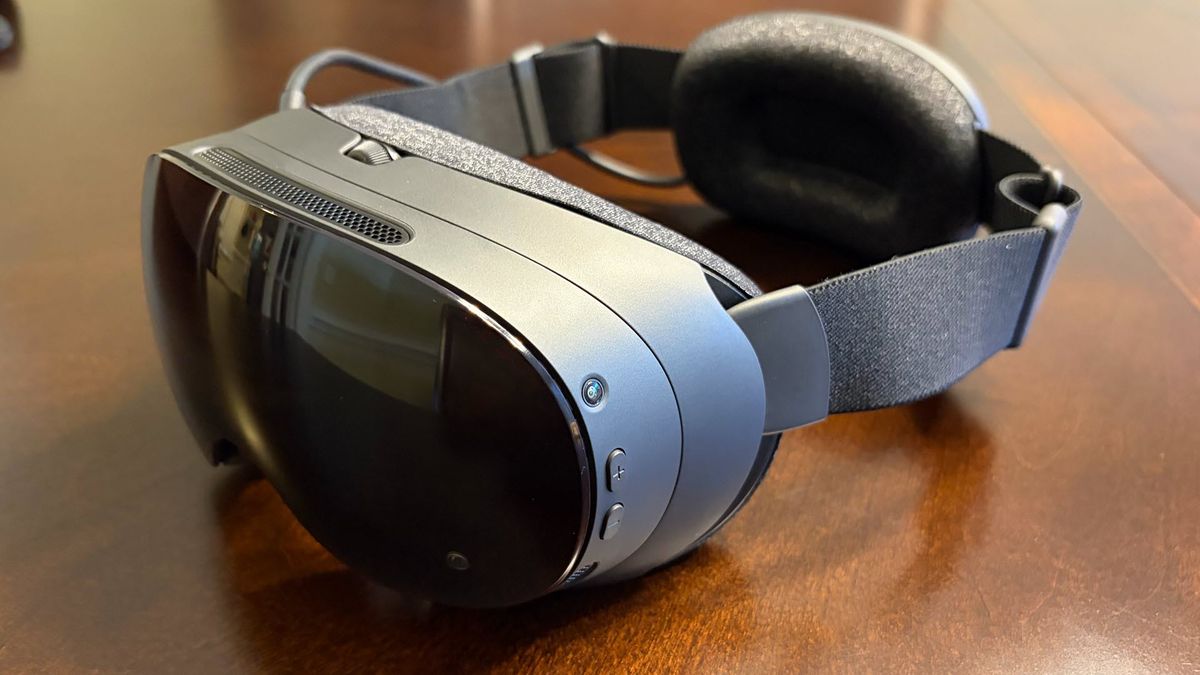
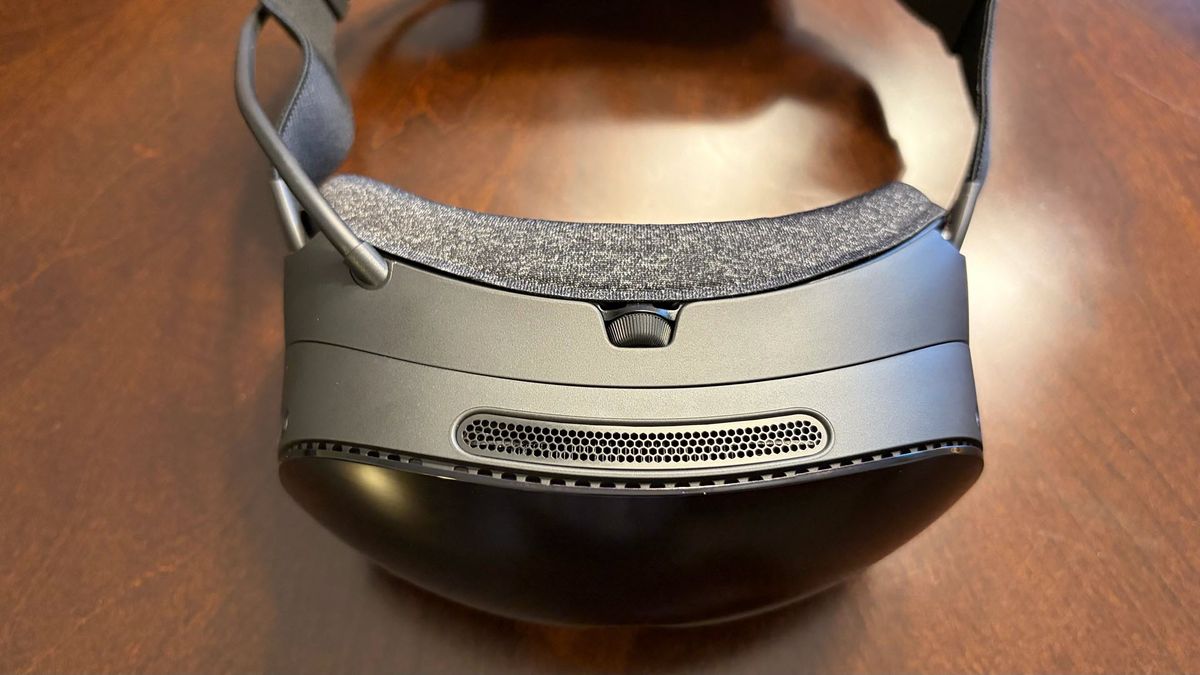
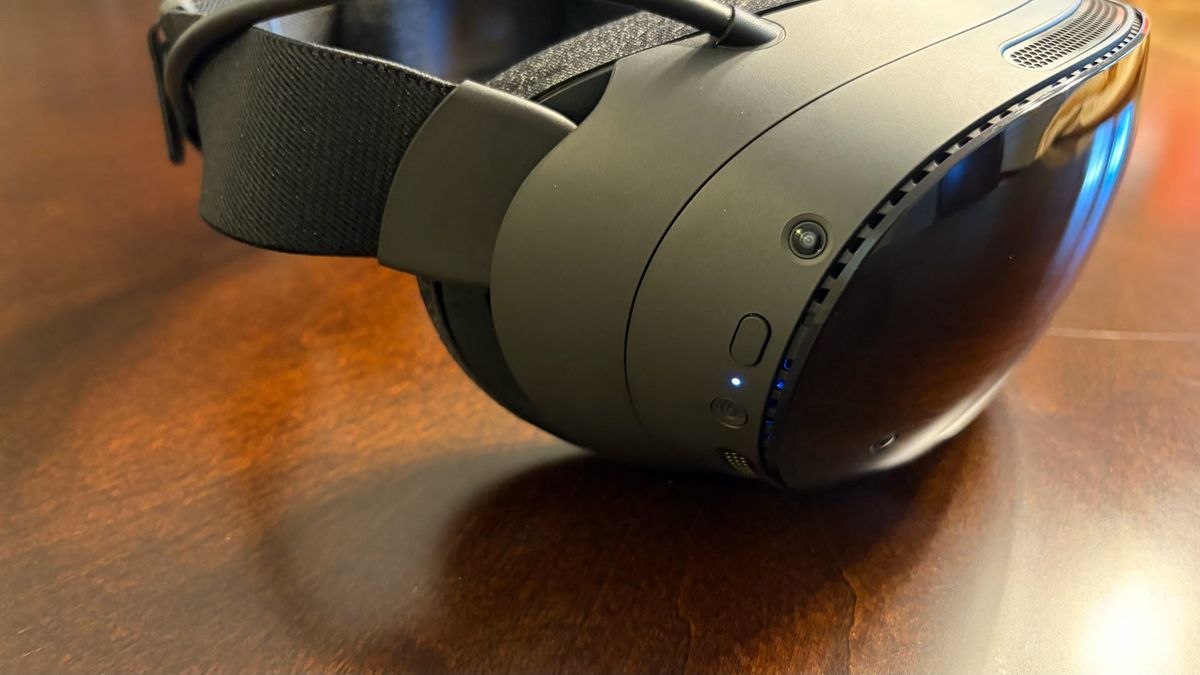
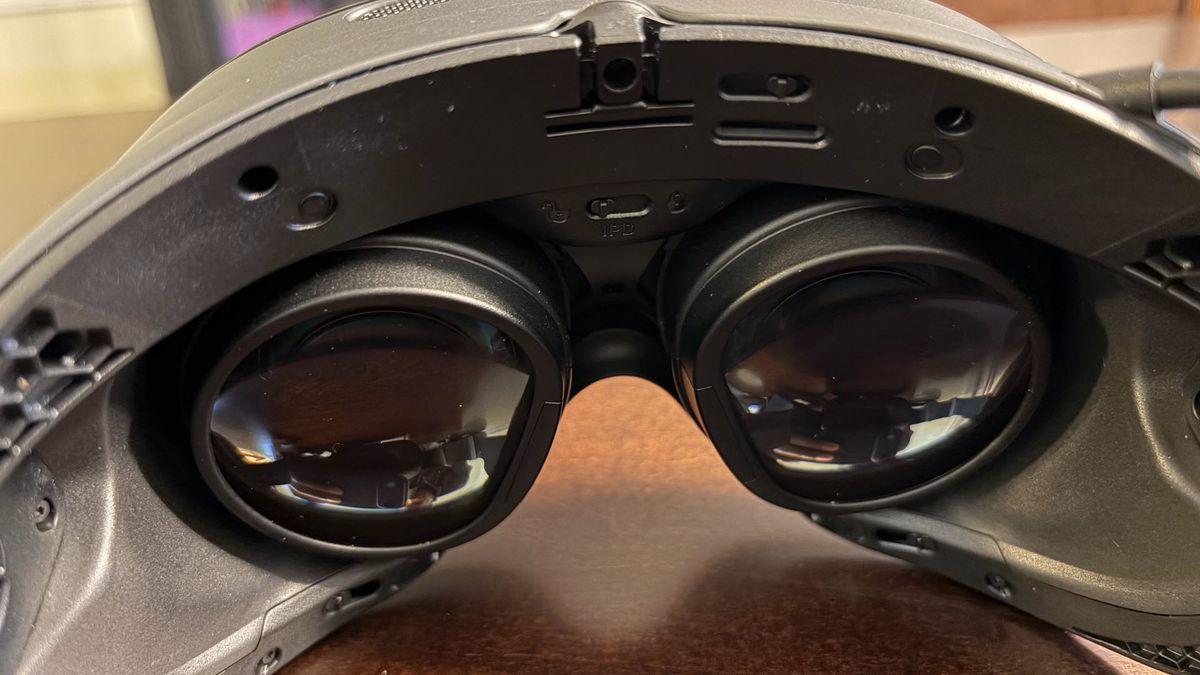
An expansion port for future features sits at the bottom front of the Steam Frame, just ahead of where the headset rests on your nose. An interpupillary distance (IPD) adjustment knob sits at the top of the headset (ranging from 57.6 to 69.6 mm), while an IPD lock switch (to prevent accidentally hitting the dial when putting on or taking off the headset) is located inside the Steam Frame, directly above the proximity sensor. Although our review unit came with 1TB of internal storage, a microSD slot is available for further expansion behind the fabric-covered foam gasket that attaches magnetically.
On the right side of the Steam Frame, there are two buttons: Aux and Power. On the left side, you’re volume up and volume down. The Steam Frame has four speakers, two on each side of the headset, positioned low just below the arm pivots for the adjustable strap. You can also use Bluetooth headphones/ear buds if you prefer.
Image 1 of 6
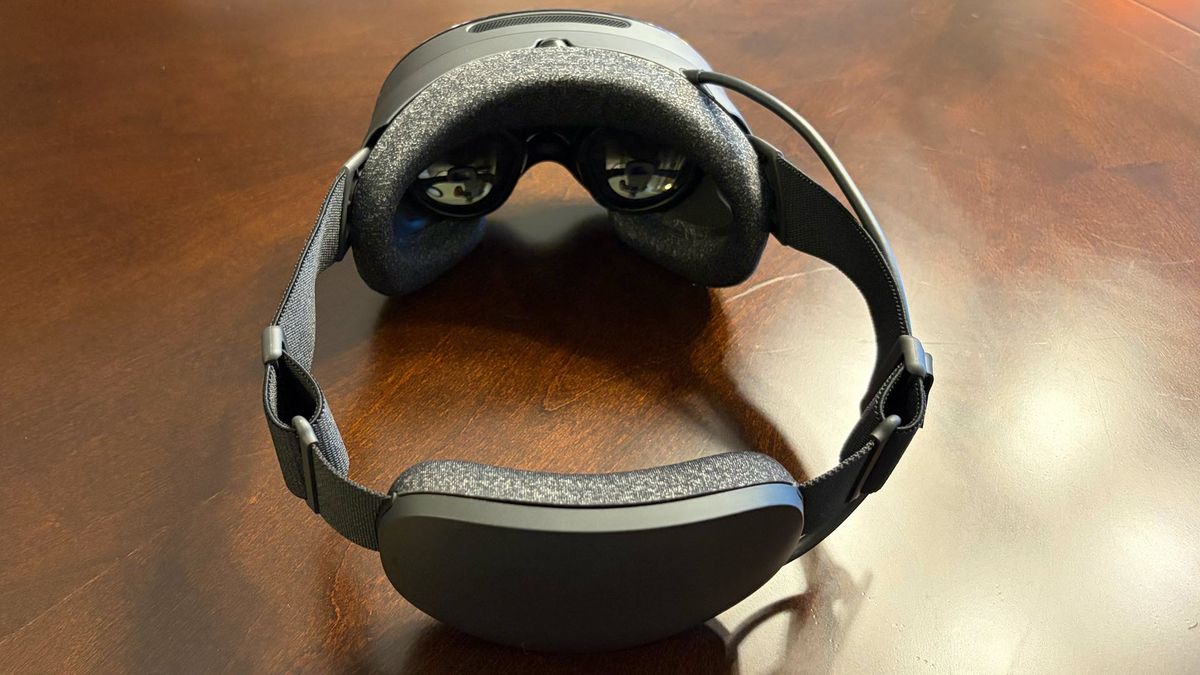
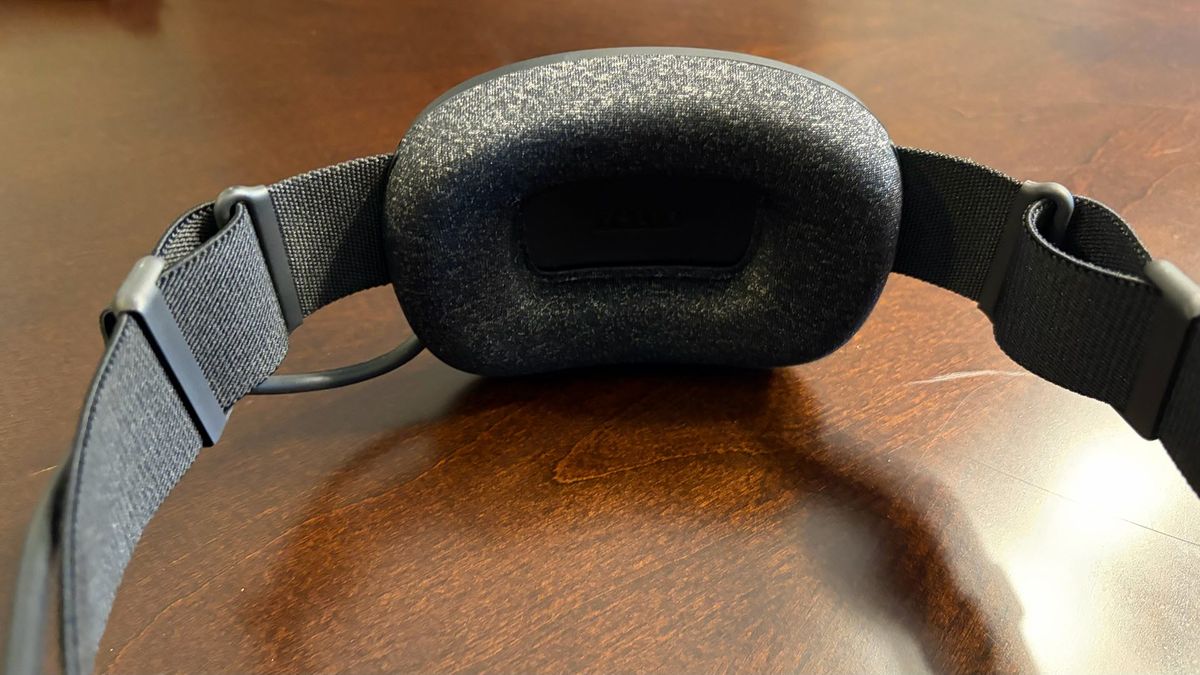
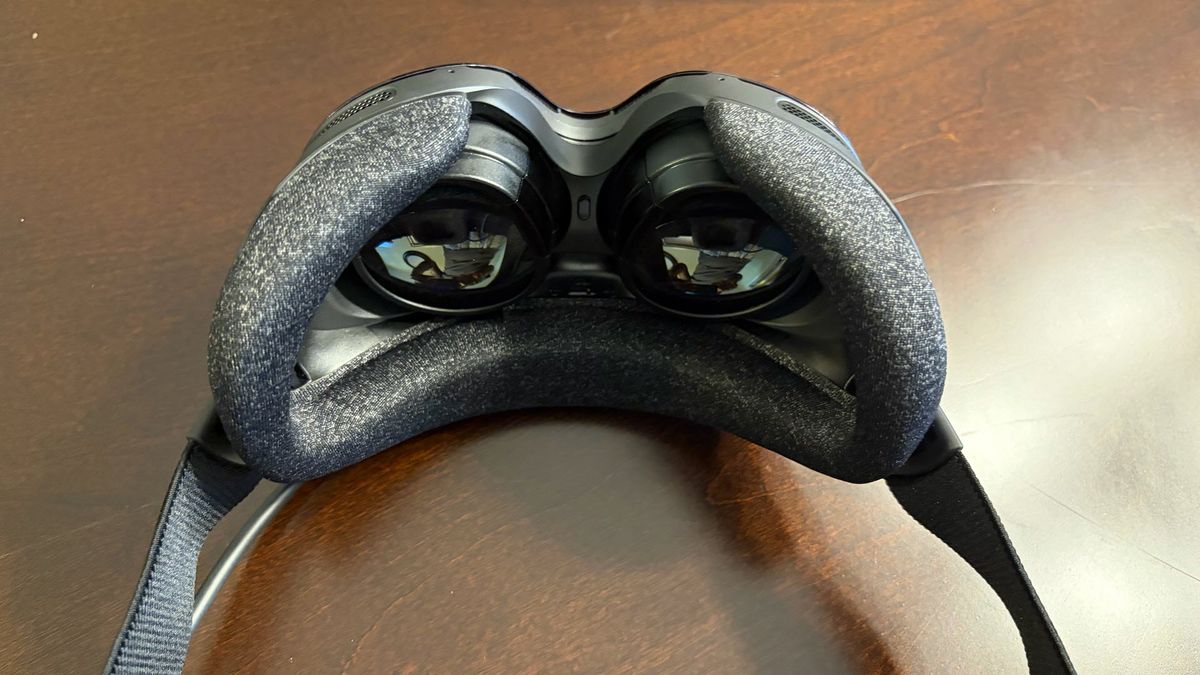
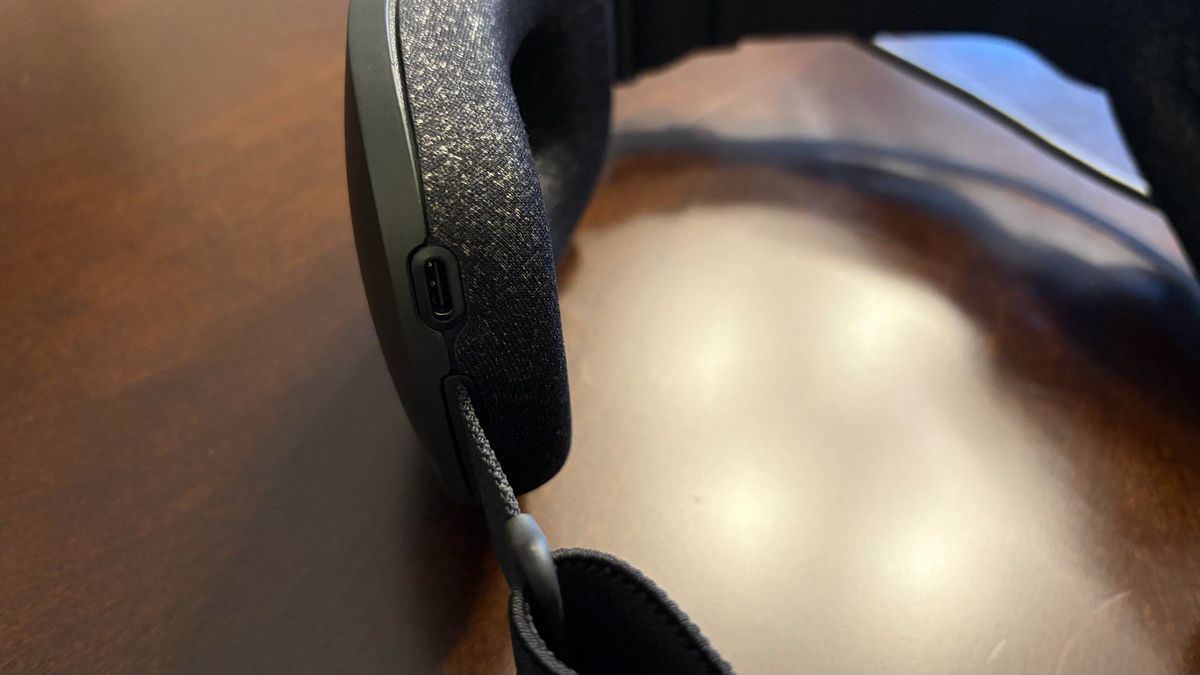
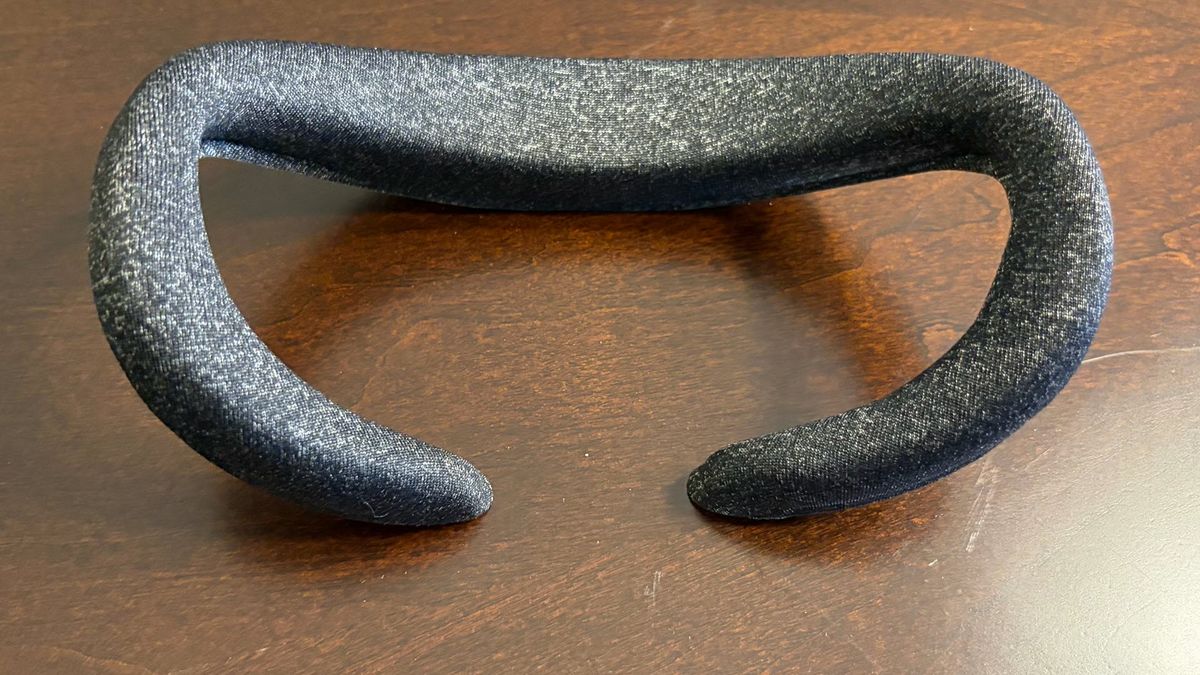
Speaking of the strap, I found it to be comfortable and highly adjustable. The straps attach to a padded restraint (which houses the 21.6 Whr battery) that cradles the back of your head. The Stream Frame's lightweight design, combined with the pressure-relieving front gasket and rear cradle, helped reduce fatigue after extended sessions (particularly with Half-Life: Alyx). Speaking of the rear cradle, I appreciate that the USB-C port for charging the Steam Frame is located here instead of on the front of the headset. This leaves the dangling cord behind, out of the way (if you want to charge the device while wearing it).
Stay On the Cutting Edge: Get the Tom's Hardware Newsletter
Get Tom's Hardware's best news and in-depth reviews, straight to your inbox.
Our review unit came with the Steam Frame, two wireless hand controllers, a USB-C to USB-C cable, and the headstrap. Our kit also included a USB-C power adapter ($29). We also received the Ergonomic Accessories Kit ($59), which contains a headstrap for the Steam Frame, two hand straps for the controllers, and an extended light blocker gasket that fits on the underside of the headset to further reject ambient light. I personally didn’t feel that any of the additional items in the Ergonomic Accessories Kit were necessary to enhance my experience with the Steam Frame.
Valve Steam Frame Specifications
Swipe to scroll horizontally
Display |
2160 x 2160 per eye |
Display Type |
LCD |
Refresh Rate |
72 Hz to 120 Hz, 144 Hz (experimental) |
Processor |
Qualcomm Snapdragon 8 Gen 3 |
RAM |
16 GB LPDDR5X |
Storage |
256GB or 1TB, microSD slot |
Operating System |
SteamOS 3 (Arch-based), KDE Plasma |
Field of View |
110 degrees horizontal |
IPS Range |
57.6 to 69.6 mm |
Degrees of Freedom |
6 DoF |
Audio |
Dual drivers per ear |
Wireless Connectivity |
Wi-Fi 7, Bluetooth 5.4 (Steam Frame), Wi-Fi 6E (Dongle) |
Battery Life |
1 to 4 hours |
Weight (Headset + Strap) |
15.52 ounces (440 grams) |
Price |
$1,299 as tested ($1,059 base) |
Valve Steam Frame Controllers
The Steam Frame comes with two wireless controllers that fit nicely in my hands. While the main body of the Steam Frame has a matte grey plastic finish, the controllers are made of shiny, textured black plastic. Each controller (which supports six degrees of freedom) features a dual-stage grip button, an analog trigger, a bumper, a Steam button, and a magnetic thumbstick with capacitive finger sensing. This is the same thumbstick that you’ll find on the Steam Controller used with the Steam Machine.
Image 1 of 5
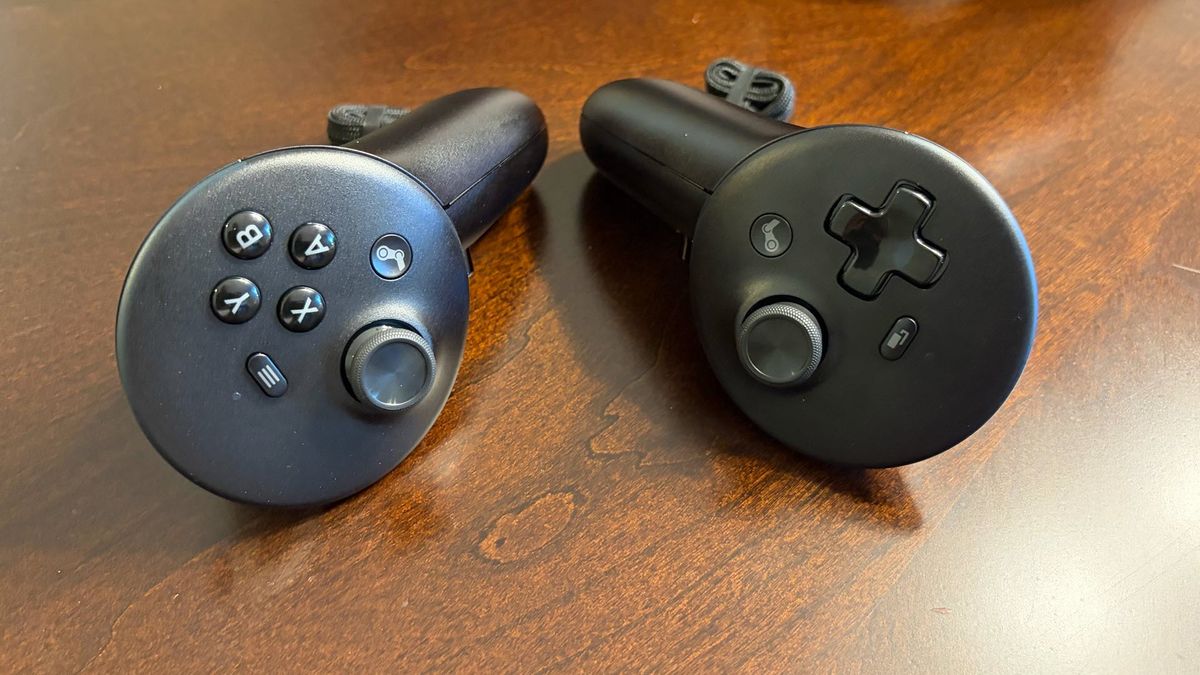
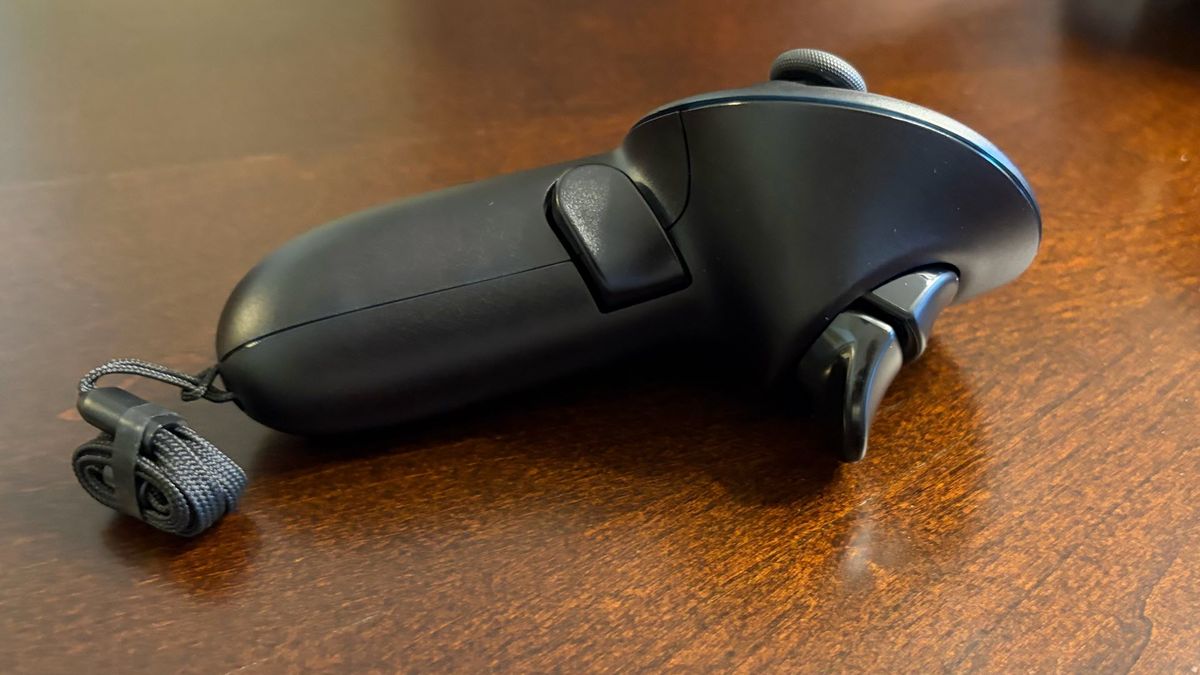
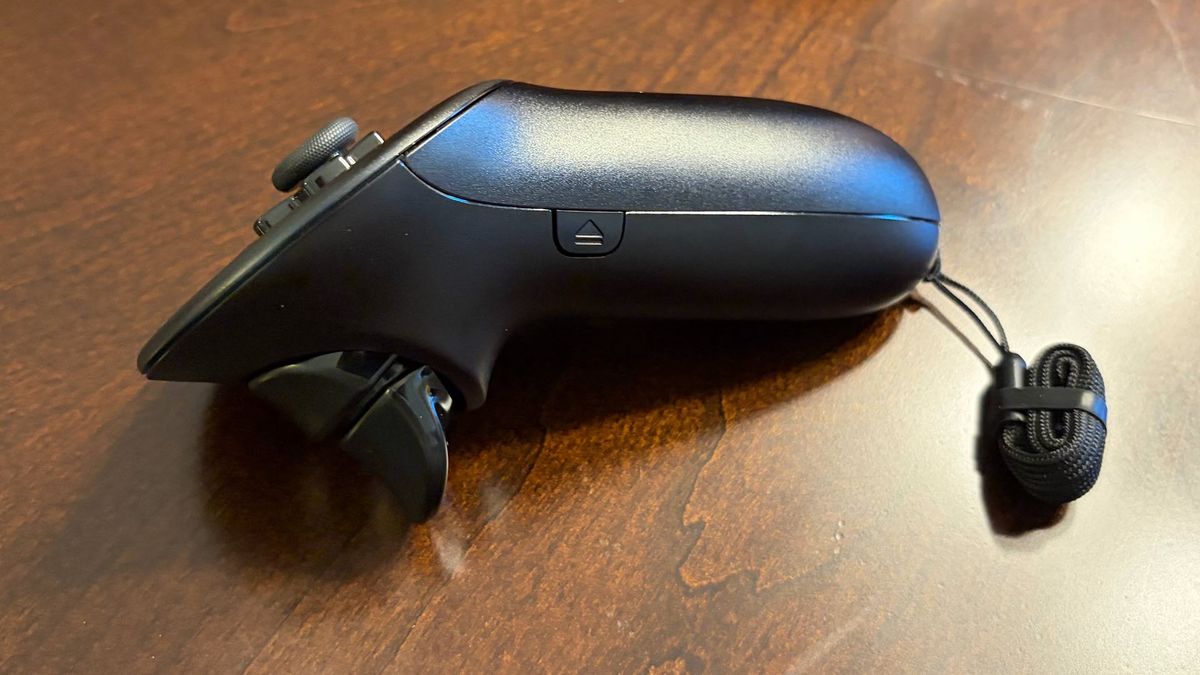
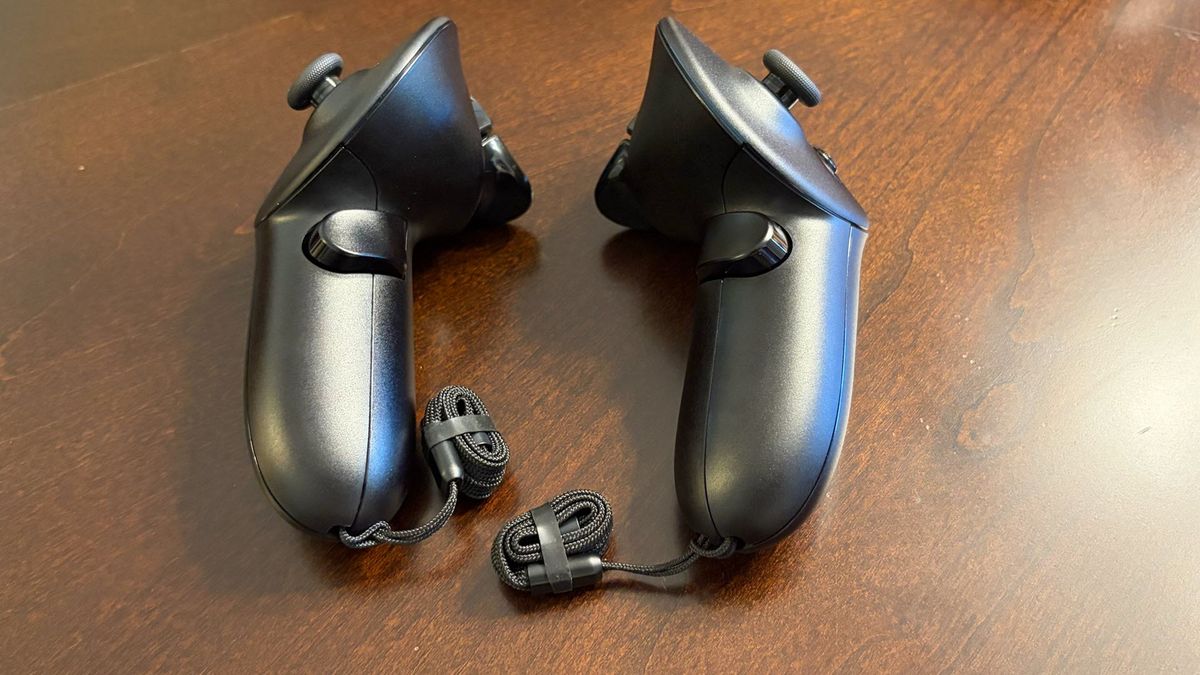
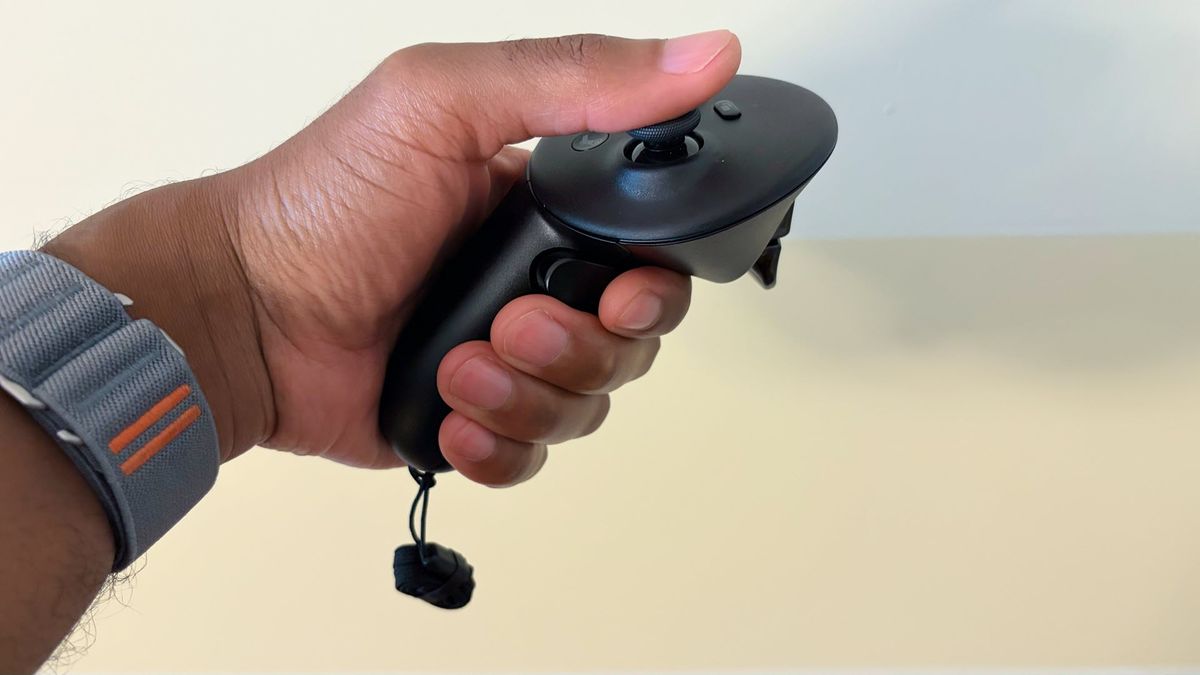
The right controller also has AXBY and Menu buttons. The left controller adds a View button and a D-pad. Both controllers feature a haptic motor and capacitive finger tracking. The controllers communicate directly with the Steam Frame using a dedicated Bluetooth wireless link.
Each controller is powered by a single AA battery, which Valve says lasts roughly 40 hours (a pair of AA alkaline batteries are preinstalled).
Valve Steam Frame Hardware
Valve designed the Steam Frame as a dual-purpose VR headset. It can stream games directly from your high-powered gaming PC, or it can work as a standalone headset (think Meta Quest series), thanks to its Qualcomm Snapdragon 8 Gen 3 Arm SoC and 16GB of unified LPDDR5X RAM. Although our review unit came equipped with 1TB of UFS onboard storage (further augmented by a microSD slot), a cheaper SKU with just 256GB of internal storage is available.
In standalone mode, the Stream Frame uses FEX emulation along with Proton to run x86 Windows games on ARM64 hardware.
However, for the best performance, you’re going to want to leverage your desktop PC and wireless connectivity for streaming games from Steam. The Steam Frame includes an integrated 2x2 Wi-Fi 7 radio, plus a standalone Wi-Fi 6E dongle that plugs into a free USB 3.0 port on your desktop or laptop. The dongle provides a low-latency link between your PC and the Steam Frame. Instead of clogging your wireless router’s bandwidth or adding unwanted lag, the direct wireless connection improves performance and reduces latency.
So, in essence, the Steam Frame takes a multi-pronged approach. The 5 GHz band primarily connects to your home network for internet, firmware updates, and software updates. The 6 GHz link, however, connects only to the wireless dongle. With that link, Valve can implement technologies like foveated streaming, which is an interesting (and much-needed) way to optimize data streaming across the network.
In short, foveated streaming uses the internal eye-tracking cameras to determine what part of a scene you’re viewing at any given time. Whatever is in your direct field of view gets full-resolution, full-priority data to improve image quality. Whatever is in your periphery, or not seen at all, gets lower priority and therefore comes through at a lower resolution. This saves bandwidth and helps to preserve as much performance as possible when streaming.
Just as important as the processing and networking hardware underlying the Steam Frame is its optics system. In this case, the headset uses dual LCDs, offering 2160 x 2160 resolution per eye. Valve opted for LCDs over micro-OLEDs to meet its design, performance, and cost targets. From what I've seen after spending over two weeks with the Steam Frame, it was a wise decision. Micro-OLEDs would have no doubt pushed the starting price of the Steam Frame even higher, as we’re certain that many folks will likely already be wary of the $1,059 base price ($1,299 as tested).
The displays can run as low as 72 Hz and as high as 144 Hz, though the latter mode is experimental right now. All of the games that I played on the Steam Frame defaulted to 72 Hz. The headset uses pancake lenses designed specifically for this use case, and offers a horizontal field of view (FoV) of up ot 110 degrees (a slight improvement over the 108 degrees on the Index).
Setting up the Valve Steam Frame
Setting up the Steam Frame was honestly about as low-impact as you can get with a VR headset. I first plugged the headset into the included wall charger and let it charge for about an hour. Once that was done, I ran through the initial setup, which involved logging into the Steam app on my smartphone to identify the Steam Frame. With that step complete, the setup process commenced, culminating in me installing the latest SteamOS update on the headset from the Stable channel.
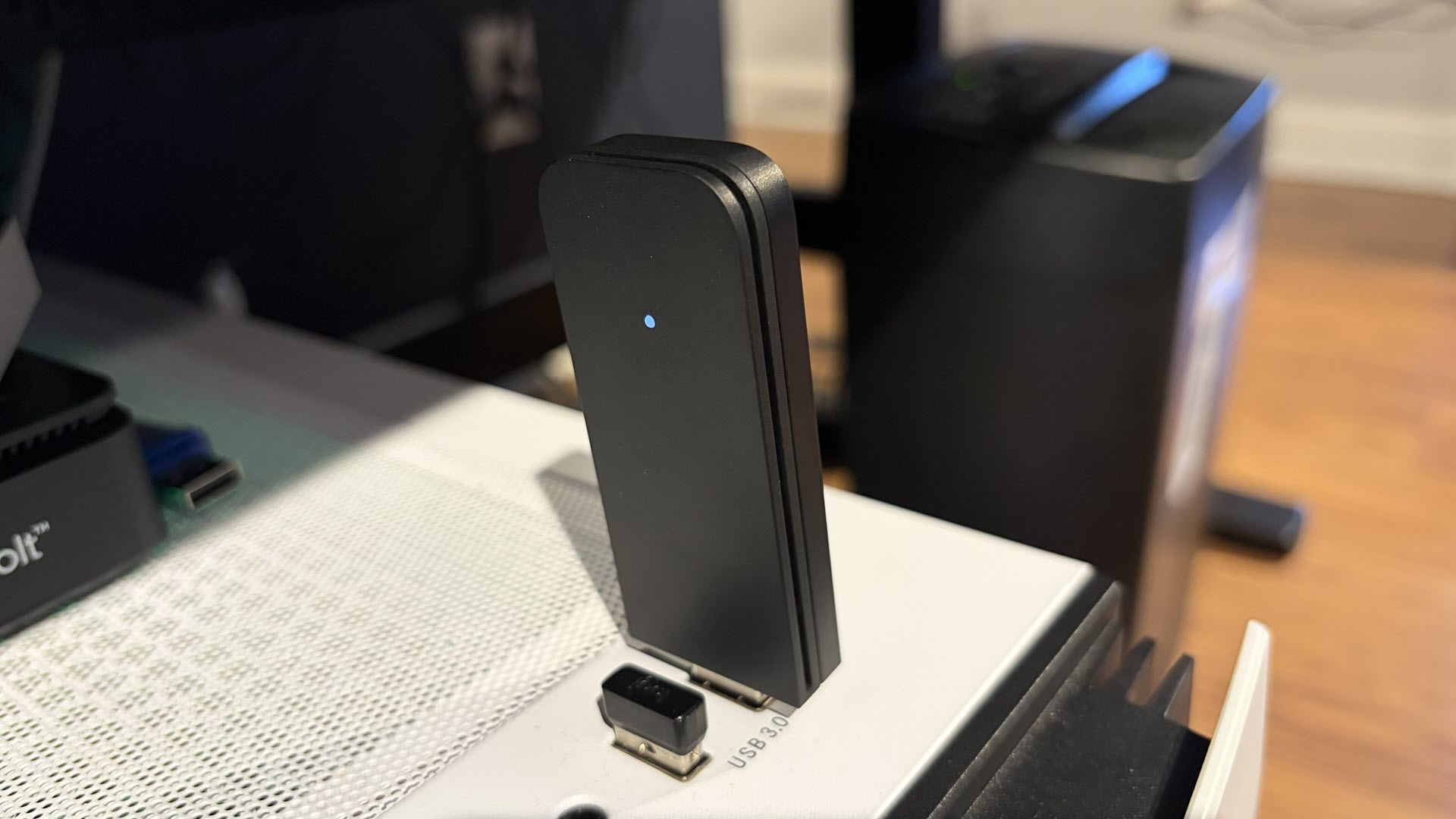
On the desktop side, I plugged the Wi-Fi 6E dongle into a free USB port on my Windows 11 desktop, and it was automatically recognized and ready to use.
Valve Steam Frame Streaming Mode
I tried several games, streaming them to the Steam Frame. The perennial favorite, Half-Life Alyx, was my go-to game to experience the full power of VR immersion from the headset. The PC rig that I used features a Core Ultra 7 265K processor, 32GB of DDR5-5600 memory, and a GeForce RTX 4060 Ti GPU. I had no trouble maintaining consistently high frame rates without dropping frames, which would be a serious hindrance in VR gaming.
Gunman Contracts “Stand Alone” was another game I tried; it offers quick, furious gunplay and sharp graphics. The game's concept reminded me of old-school arcade shooters from the 80s and 90s, where you used physical gun models to shoot at a display. However, Gunman Contracts “Stand Alone” advances that genre with total immersion and true hand/finger manipulation of objects. My only issue with the game is that the default smooth controls to move your character in the virtual environment physically made me feel sick. My body had a hard time adjusting to the movement because my physical body wasn’t moving forward or backward to match.
I also streamed non-VR games like Batman: Legacy of the Dark Knight, which played fine in Theater Mode. The game played on what vaguely resembled a movie theater screen, with a calming background filling the rest of the dead space around it. However, I couldn’t use the included Steam Frame controllers with a non-VR game, so I grabbed my trusty Xbox Series X wireless controller.
Other non-VR games I tried included BeamNG and Forza Horizon 6. Both games played without issue. The experience wasn’t nearly as all-encompassing as being dropped into a full VR environment, but it was preferable to sitting in front of a smaller physical monitor sitting on my desk.
Valve Steam Frame Standalone Mode
Since the Steam Frame offers a standalone mode without needing a wireless “tether” to a PC, I tried three games promoted to work with the handset. The first game was a repeat of one I tried in streaming mode: Half-Life Alyx. The game runs great on-device using ARM64 emulation, though I did notice some stutters and slight performance lags compared to streaming. Valve admits that there is a performance hit with x86 to Arm translation, but it will vary depending on the game.
Two other standalone games tested were Stellar Café and Dungeons of Eternity. The former is a cartoonish game set in a cafe, where you can use your voice to interact with the in-game robots/characters who serve you beverages. The back-and-forth conversational flow is fun and engaging. In fact, the conversations almost seemed a little too real, with human-like responses and realistic commentary.
Valve Steam Frame Battery Life
The Steam Frame's battery life varies greatly depending on whether you’re streaming from your PC or playing games natively on the headset. For example, when I played Half-Life Alyx directly on the Steam Frame at 72 Hz, I got about an hour of runtime before it died. However, when streaming, I could easily get more than double that amount at the same refresh rate, since the Arm processor isn’t taxed nearly as heavily.
I also saw a little over an hour of runtime with Gunman Contracts “Stand Alone” when running natively. Non-3D games like Forza Horizon 6 lasted for well over two hours when streaming from a PC.
However, even with the shorter runtimes with standalone play, battery life wasn’t an issue for me. I like to take a break from VR games at least every hour or so to have a reality “reset” and to give my brain a rest.
Bottom Line
I found the Steam Frame to be a versatile, enjoyable headset during my time with it. Weighing in at less than a pound, the headset is low-impact and comfortable to wear for hours on end. The foam padding around the headset provides a good seal against your forehead, and the weight is well balanced, partly because the battery sits at the back of your head.
Performance while streaming from a PC was excellent, while standalone gaming takes a hit due to the emulation required for the Snapdragon 8 Gen 3 Arm SoC. However, Valve is billing the Steam Frame as a streaming-first platform, so that shouldn't surprise you. Consider standalone gaming an added bonus if you want to have a quick VR gaming session when you’re away from your PC.
Valve also made some smart design choices, including wireless links between the Steam Frame and your PC via the Wi-Fi 6E dongle, monochrome passthrough to help you orient yourself when wearing the headset, and adjustable IPD to accommodate a wide range of faces.
However, what will make or break the Steam Frame is its price, which starts at $1,059. That’s a tall order in this economic climate, when gamers are already being assaulted from multiple fronts with rising memory, storage, and GPU prices. The $1,059 price gets you only 256GB of internal storage, and upgrading to 1TB costs $1,299. You could always get the cheaper model and add your own microSD, but you also have to contend with the inflated costs of portable storage.
But if you’re willing to ignore the price and have your mind set on a lightweight VR gaming experience, and you have the PC hardware to fuel it, you can’t go wrong with the Steam Frame.

Brandon Hill is a senior editor at Tom's Hardware. He has written about PC and Mac tech since the late 1990s with bylines at AnandTech, DailyTech, and Hot Hardware. When he is not consuming copious amounts of tech news, he can be found enjoying the NC mountains or the beach with his wife and two sons.
What's Your Reaction?
 Like
0
Like
0
 Dislike
0
Dislike
0
 Love
0
Love
0
 Funny
0
Funny
0
 Wow
0
Wow
0
 Sad
0
Sad
0
 Angry
0
Angry
0










Comments (0)