

Vice City was the GTA that established Rockstar's killer formula - and 24 years on, it's still one of the best games ever made
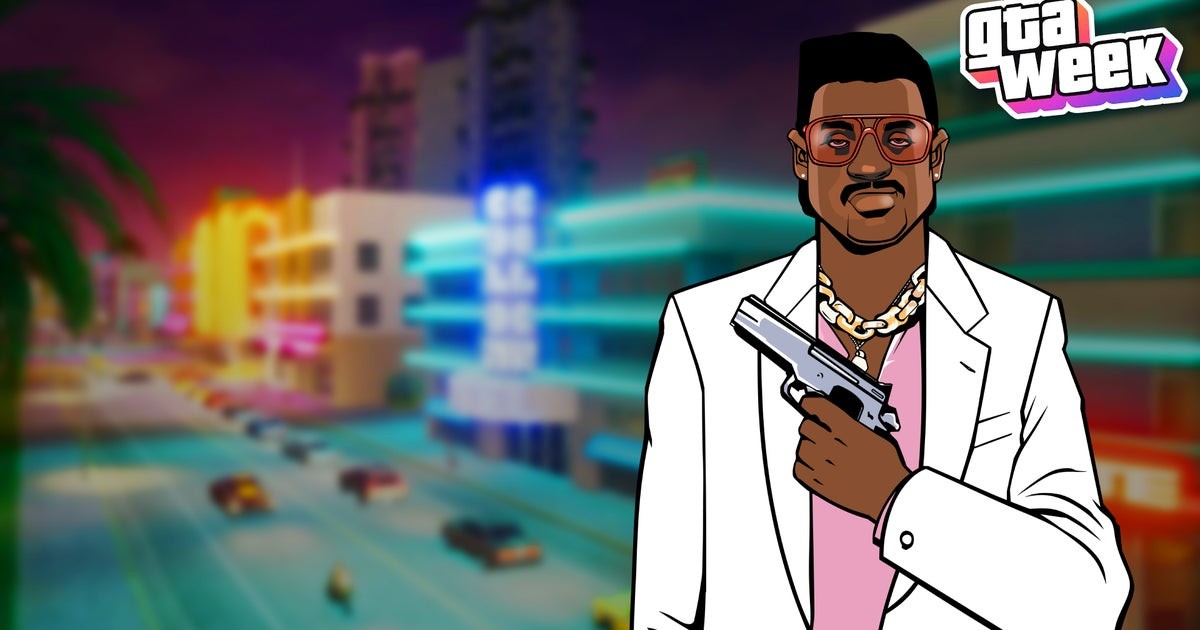
"Get the limey out of here," Burt Reynolds tells the producers of GTA: Vice City during a recording session for the game, as Rockstar co-founder Dan Houser enters the studio. "I'm not going to work if this limey Brit is in here!" Houser refuses to leave, so the story goes - he just came down to meet one of his heroes! - and he and Reynolds end up chest-to-chest, about to come to blows, before a studio engineer breaks up the fight.
I can't verify the truth of this story. It's one of those development rumours that's been around for a long time, originally written in a book about how games conquered pop culture called "All Your Base Are Belong to Us" by Harold Goldberg. But I like to believe it's true, because in this one moment, the two crucial strands of GTA: Vice City's DNA helix together: its star power and Rockstar's arrogance.
And I'm not saying that in a pejorative way at all. I think a game of Vice City's scope - stretched to breaking with ambition, budget, and technical wizardry - couldn't exist without the ego trip of Rockstar at its highest. This is a game that (somehow!) started as a bit of DLC for GTA 3, supposedly intended to launch as a mission pack when Rockstar North figured out how to port it to PC. GTA 3 launched in October 2001, and by some miracle - and lots of crunch, no doubt - Vice City hit shelves in October 2002.
This game - a game that would come to represent everything the GTA series is, for generations to come - was put together in about a year. I'd feel pretty full of myself, too, if I was able to crank out that sort of quality in that sort of timeframe. With a development budget of approximately $5 million (massive at the time, even though it seems paltry against GTA 6's rumoured $1 billion+) and a marketing spend of $13.2 million, Vice City's budget was indicative of a series shifting toward becoming a cultural milestone - a standard bearer for video games as a whole, and as explosive and attention-grabbing as Hollywood's biggest events.
It's not like Rockstar needed to borrow credibility from the movie industry to inject some panache into its work, but even so, I think it's in its vortex of unbelievable Hollywood talent that Vice City really makes its mark. This was the first time Rockstar used a voiced protagonist, and by the developer's own admission, it was "a riddle" they had to solve. It didn't come easy; by making the protagonist a fullyfleshed-out character, players also had to like him - not an easy ask when he's a bonafide psychopath with a fetish for revenge like Tommy Vercetti. But Ray Liotta pulls it off without breaking a sweat. The actor has gone on record saying it was a rough gig ("You're creating a character that's not there before", he bizarrely complained in one interview), and Vice City director Navid Khonsari often moaned about the actor's unpredictable moods, so I imagine the mood in the booth wasn't great, but the result? The result is phenomenal.
You shouldn't like Vercetti. He's arrogant, he's brash, he's a totem for all the worst elements of misogynistic 80s excess. And yet, because he's such a cartoon caricature of a Miami gangster, he becomes a sort of quasi-romantic figure; a mob stooge who's been set up by his old 'business associates' and by the very fabric of the American Dream. Vice City is, in a sense, a redemption story dressed in the clothes of a revenge one. Vercetti dreams of being a self-made man, of taming this new frontier of unbridled capitalism and clawing back the years that were taken from him by the mob in Liberty City.
From the moment he arrives in town and a cocaine deal quickly goes south, Vercetti is on the back foot. In the opening hours of the game, he - and, of course, you by extension - work for pocket change, picking up menial jobs here and there while meeting all the freaks and strangers Vice City has to offer. There are no less than 50 story characters here, brought to life by Ray Liotta, Tom Sizemore, Luis Guzmán, Gary Busey, Danny Trejo, Debbie Harry, Danny Dyer, Philip Michael Thomas, William Fichtner, and many, many more besides.
Playing Vice City again in 2026, I was absolutely floored by this cast - and how well their personalities and mannerisms translate to the almost puppet-like visuals Rockstar deployed for the game. Reynolds - despite not having a good time in the booth, if the story up top is anything to go by - is a highlight; the bombast and bravado of his Avery Carrington feels like a prototype for some of the more extreme characters we meet later in the series. I think I can even see a bit of Trevor in him, you know? It's how the Housers would take a trope - say, ruthless Texan oil magnate - and amplify it to its furthest, most cartoon extreme: what does this person look like with all the guardrails off, with the heady intoxication of unlimited capital at their disposal? For Trevor, that trope is 'unhinged redneck' and the cartoonish extreme is 'without a single shred of a conscience'. You can apply the formula to just about anything in the series, and it makes sense.
For Tommy Vercetti, though, it's slightly more nuanced. He isn't just 'Scarface' with a touch more humanity - no, he's a tragic figure, betrayed by all his closest friends. In striving to take back some power and gain a little more control over his life, he ends up decapitating the local drug smuggling scene and taking over as its head. The first half of Vice City is Sisyphean; an endless, uphill slog to scrabble just enough money to get by. Then, all of a sudden, the world opens up: you're now head of a drug smuggling ring, operating out of a suspiciously Scarface-like mansion, with the city at your fingertips.
The way the game, previously tightly-coiled and a bit miserly with its freedom, now unfurls in front of you is a perfect reflection of this new-found power. Suddenly, your world isn't governed by the little mission icons on your minimap, you're not being told what to do over the phone by contacts wanting something from you. No, you're calling the shots. This is the 80s, so those that are making it big are making it big, and those that are failing are failing. In a breathless display of uber-capitalist Yuppie thinking, you can even buy out nearly-bankrupt businesses and run them to your liking. The strategy is two-fold: one, you gain fronts for your other illicit activities, and two, you diversify your income streams and safeguard your assets should any one element fail.
And it's here, in its glorious second half, that Vice City becomes a breezy, beautiful bit of open-world catnip that fuses gameplay and story in a way few games have done so successfully since. You can buy a strip club (where you can launder cash), the Malibu Club (which comes with an outlandish set of missions culminating in a heist), the Cherry Popper ice cream van company (a front for dealing), the boatyard (a drug smuggling base run by two excellent potheads), Sunshine Autos (a fence for stolen cars), Kaufman Cabs (headed up by an old controller played by Debbie Harry), Interglobal Studios (an adult movie production company), and the Print Works (a counterfeiting operation). The roleplaying as Vercetti takes off; you're a bigshot touring his empire, helping out here and there, meeting your crew, setting up deals. This should feel like drudgery; workaday tedium unbecoming for a legitimate businessman like yourself. But every job, every bit of flavour text and dialogue, feeds into your growing sense of power… and Vercetti's unstoppable ego.
Alongside these key story beats are Vice City's non-essential tasks - which feel like a precursor to the 'Strangers and Freaks' missions in later GTA and Red Dead games - including the Love Fist missions. These, I think, are the best missions in the game (I'd also like to note here that 'Jez Torrent' is an amazing name for a New Wave of British Heavy metal frontman). But it's the way these core and non-essential missions dovetail that feels so great, and where the open world of Vice City really comes into its own.
In many ways, Rockstar's work here created the blueprint for what would become the Grand Theft Auto 'formula'; galvanising cinematic setpieces with free-roam activities and meta-progression that manage to alloy player agency with this sense of perpetual, unstoppable momentum. And it's all fun, too. There are some abysmal tasks, sure - piloting RC aircraft to ruin building sites, navigating boats with the wonkiest physics you've ever seen around stunt courses, waiting 15 minutes a pop for rare cars to spawn - but generally speaking, Vice City has the fun factor.
I don't think that's something I can say of other GTA games: I think often, they're a bit bloated around the middle, padded out with baggy missions and feckless busywork to give the illusion of depth and breadth. GTA 4 is also one of the most dour and oppressive open worlds I've experienced (this is a compliment, mostly), but it's not particularly fun. GTA 5, especially the Trevor segments out in the rural counties, can get a bit one-note - why introduce us to this massive world, to the state of Los Santos, if you're going to quarantine us to the rural outskirts when we're just starting to familiarise ourselves with the city? Why put up rails in a world begging us to revel in its open-ended sandbox? The only time that happens in Vice City is at the start, and the game is better for it: 'if you want to live the Scarface fantasy, buddy, you've got to earn it'.
And there's so much to love about the vibes of Vice City. The guys in shorts smoking pot on the beach; the girls in bikinis rollerblading down the promenade; the neon-drenched slick of a Florida night in the rain; the still-unbelievable who's who of music, deployed with panache in certain cutscenes; the incidental chatter of coked-up presenters on the radio; the distinct realisation of the Haitian and Cuban districts on the map; how 'downtown' actually feels like downtown. You'd think all this would have aged out of relevance by now - especially with GTA 5 being as lush and premium as it is - so it's a real credit to all those Rockstar employees that no doubt spent countless nights sleeping under their desks that Vice City still feels this good now, in 2026.
GTA: Vice City is still one of the best games ever made, I think, and probably one of the most important, too. Buoyed by Rockstar's ambition, and propelled to mainstream success by the strength of its cast, it represented video games coming out of their awkward teenage years and blossoming into young adults; biting off slightly more than they could chew, but cocksure and confident all at the same time.
Given how much of Vice City is built around the visibility and power of its cast, it's disappointing we're never going to see these characters really represented in any other GTA title again. Liotta, already unhappy about the process of recording his lines, reportedly refused to come back as Vercetti for San Andreas. And that's a real shame because - by former lead writer Dan Houser's own admission - Liotta saved his "awful writing" with his talent. The actor passed away in May 2022.
Though he balked with Reynolds, Vice City director Khonsari could usually corral the rampant ego of his Hollywood hires in the GTA studio. "If you want me to break it down to you," he’d say, "these games gross over half a billion dollars, more than all of your movies put together!" I think you can see that bravado in the spirit of Vice City, and reflected in the runaway ego of Tommy Vercetti. And I think - without that almost toxic sense of self-belief - Vice City would never have happened.
What's Your Reaction?
 Like
0
 Dislike
0
 Love
0
 Funny
0
 Wow
0
 Sad
0
 Angry
0





Comments (0)