

What Actually Makes a Photo Feel Dreamy?
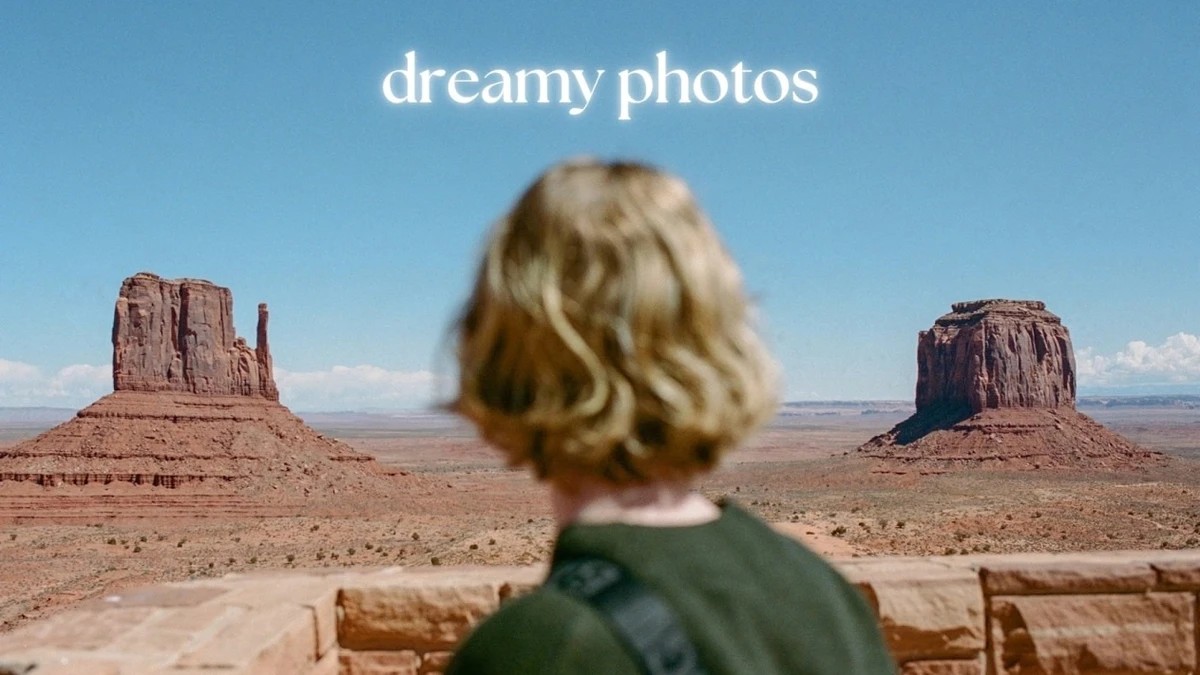
The usual advice for dreamy photos is to use shallow depth of field and a pricey diffusion filter, and both tend to leave you with images that look soft without feeling like anything. The look that reads as a memory comes from light, motion, framing, and focus working together, and most of it costs nothing.
Max Kent spent years trying to recreate the feeling he found in a few frames from a morning commute, and he starts with light. Blue hour, just before sunrise or just after sunset, gives you soft light along with color and tones you won't see at any other time of day. An early start also means empty streets, which changes the mood of a scene on its own. That softness carries into golden hour, so the two ends of the day are your most reliable windows. Fog and mist are his other favorite conditions. Diffused light seems to take on volume, almost as if it has a physical form, and that adds a sense of depth a clear day can't match. Kent is also upfront that you can't count on that kind of light, and the rest of his methods work without a 5 a.m. alarm.
His favorite tool is shutter speed, though he isn't after 30-second exposures that turn waterfalls into silk. Kent works in a range between roughly 1/10 s and 1/60 s. In that window, movement shows up clearly, but a person still looks like a person and a car still looks like a car. The subject keeps its form while picking up just enough blur to seem slightly unreal, which gives the frame its whimsical quality. His go-to approach is to find a composition and wait for something to move through it, whether that's a cyclist, a pedestrian, or a passing car. He also gets the effect by panning with a subject or shaking the camera slightly during the exposure. Each of these produces a different kind of blur, and he stacks them with his other techniques for a stronger result.
At midday, that shutter range is hard to reach. The sunny 16 rule puts a bright scene at about 1/100 s at f/16 and ISO 100, so dropping to 1/15 s at the same aperture calls for close to three stops of light reduction. A 3-stop ND filter covers that gap. At blue hour, the math flips. Ambient light falls far enough that 1/30 s often arrives on its own at a moderate aperture, which is part of why low light and motion blur pair so naturally. If your camera has in-body stabilization, it helps keep the static parts of the frame crisp while moving subjects smear, and the contrast between sharp and blurred areas is what sells the effect. Phones have pushed this look into the mainstream as well. Apple's Live Photos include a Long Exposure effect that blends frames into motion blur after the fact. With a dedicated camera, you choose the exact amount of blur at the moment you press the shutter, and you can match it to how fast your subject is moving.
Framing does a lot of the work too. Kent uses what he calls disembodied subjects, deliberately cutting most of a person out of the frame so only an arm or a pair of feet remains. The result is imperfect and a little confusing, which is close to how memories actually look when you try to replay them. He pairs that with out-of-focus foregrounds, which add texture and depth while making the scene feel less real. He goes further with out-of-focus subjects. A blurred person sends a mixed signal: they're clearly the point of the photo, yet the camera treats them as if they barely matter, and the subject can seem like they shouldn't be there at all. He uses this in blue hour and in harsh light alike. He finishes with a single slider move in the edit that he relies on when he has hundreds of frames to process. He also shows how far you can push it before a close-up portrait starts to fall apart.
Kent's full set of examples, including exactly where he stops that slider, is in the video above.
What's Your Reaction?
 Like
0
Like
0
 Dislike
0
Dislike
0
 Love
0
Love
0
 Funny
0
Funny
0
 Wow
0
Wow
0
 Sad
0
Sad
0
 Angry
0
Angry
0











Comments (0)