

What Happens When You Let Photoshop's AI Assisted Editor Edit Your Milky Way Photos? More Than You'd Expect
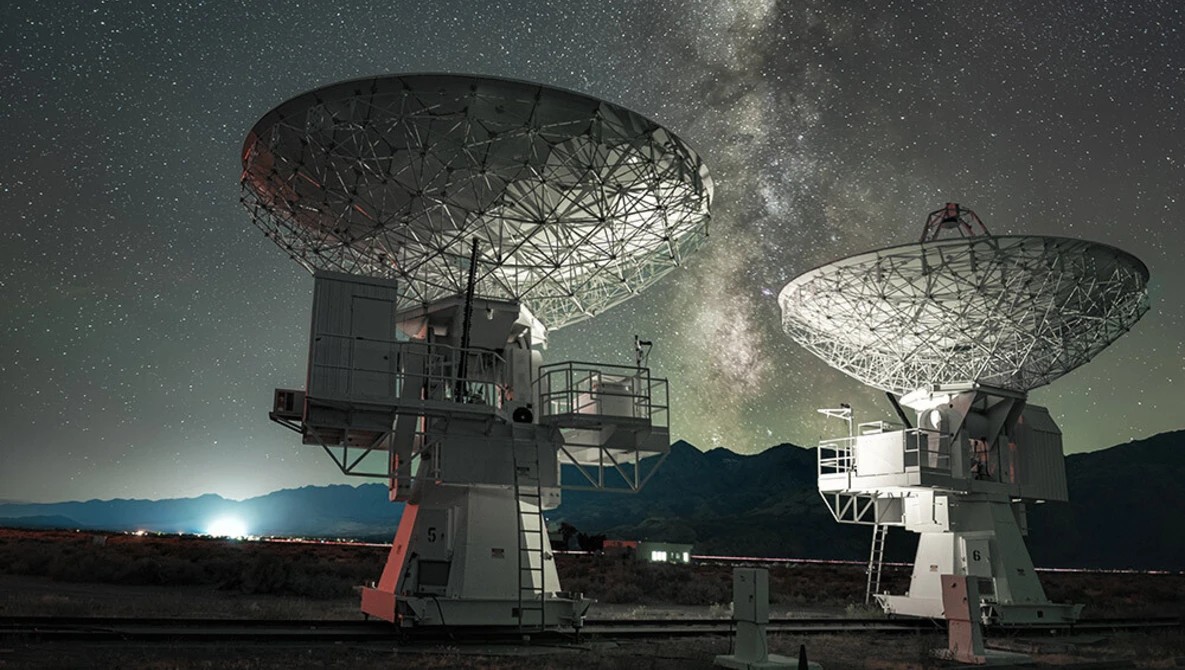
You write a prompt. Adobe edits your photo accordingly. The AI Assisted Editor, released August 31, 2026, as part of Photoshop 27.10, lets you edit images simply by describing what you want in plain English. Just type what you want, and the AI figures it out. You'll find out what happened when I let it loose on my Milky Way photos.
AI Assisted Editor
The AI Assisted Editor is a new, completely separate mode from Photoshop's standard editing environment, which Adobe now calls the Pro Editor. These appear in the upper-left corner, and you toggle between the two with a single click.
As Adobe describes it, AI Assisted Editor is "a simplified, AI-powered mode in Photoshop that helps new users edit images using natural language prompts and AI-powered tools, such as Prompt, Markup, Fill, Remove, Crop and expand, Upscale, and Remove background."
One important thing to know before you dive in: switching from Pro Editor to AI Assisted Editor flattens your layered document. However, when you switch back, your AI edit gets added as a new layer. In other words, it's nondestructive. No need to panic.
How would it do with unedited Milky Way photos? Here's what happened.
Test One: Sharpening the Milky Way
For my first photo, I kept the key prompt simple: "Make the sky and the Milky Way sharper and well-defined while retaining realism." I did this twice. Since AI is interpreting the prompt fresh each time, results will vary. In other words, this is not a preset. And given that I can write any prompt, there is no way it could be.
The first result was competent. It carried out my prompt without going overboard.
The second attempt pushed things a little too far for my tastes. Your mileage may vary, of course. For me, this was a little too processed-looking.
Here is a photo with my processing. The foreground looks different because I blended a low-ISO photo with a longer exposure so I could have enough time to light-paint the radio telescopes, using a lower ISO to reduce noise and increase dynamic range.
Test Two: Sharpening the Milky Way and Fixing Color
For my second Milky Way test image, I was curious about how AI Assisted Editor would handle a prompt instructing it to reduce some of the cyan and green in the sky. While some green occurring naturally on the horizon was expected, the original photo seemed to have a little too much for my taste. My prompt was straightforward: "Make the night sky, including the Milky Way, more sharp and vivid and greatly reduce the cyan and green colors in the sky."
The result was once again carried out well. The feel seems relatively natural. And the edit did reduce the cyan and green colors in the sky.
The second attempt, once again, felt too processed for my tastes. Again, this is indicative of the fact that AI isn't running a preset but actually interpreting the prompt fresh each time, with varying results.
With each photo, I liked AI Assisted Editor's first attempt. While I ultimately wanted to edit my photo differently, I was impressed with its processing choices.
I tend to go for less punchy and colorful Milky Way processing, preferring a subtler approach than AI Assisted Editor. But that might not be what you want. Perhaps you might like AI Assisted Editor's interpretation of the Milky Way more. It sure is a considerably easier way of editing! Or perhaps you like something else. Processing and interpretation are two of the main reasons why so many Milky Way photos differ greatly from each other.
One Important Observation
One thing worth noting for pixel-peepers: the stars shifted very slightly between attempts. Worse, some very faint stars were added, shifted positions slightly, or disappeared entirely. The difference was subtle but apparent. You'd never see it on a social media post, but if you're printing large or scrutinizing at 100%, it's worth knowing.
However, this is important because the photo is being altered, even if it requires pixel-peeping to see. Because of this, I would not use AI Assisted Editor to process any of my Milky Way photos if I were submitting them to publications such as National Geographic. And I would not use it if this were for any journalistic reason.
Below are three photos at 100% magnification. Two of the photos were processed using AI Assisted Editor, and one of them is the original. I compare the first and second processing attempts to the original. Toggle back and forth to see the minute differences between the faint stars.
I am not a lawyer. I don't know what the legal ramifications are for submitting a photo that has been altered, no matter how slightly.
I already use Lightroom AI Denoise with a very gentle hand, as settings at its default of 50 and above can also sometimes alter some of the stars, causing them to have artifacts or slight, wispy tails if used too strongly.
And if AI Assisted Editor is changing, adding, or subtracting stars, no matter how faint, then that is something that all of us should know. I know that many will say, "No one is pixel-peeping the way that you do when you are processing a photo. No one will see it, and it will not matter. Stop talking about a problem that does not exist." That might be a fair point if creating art or posting on Instagram or Facebook.
But it might be an issue if one needs journalistic integrity or is otherwise submitting it to a publication that requires that the photo not be altered.
Thoughts About Processing
Generally, I was impressed with AI Assisted Editor's ability to carry out my key prompts and process Milky Way photos in a reasonably pleasing manner. As many night photographers know, Milky Way photos are not the easiest to process. Raw Milky Way photos are often underwhelming, lacking contrast, color, or any sort of "life."
For a deeper look at astrophotography shooting and post-processing, Photographing the World 2: Cityscape, Astrophotography, and Advanced Post-Processing covers the subject in detail.
Therefore, processing a photo is largely a matter of taste. After all, the photo we are processing will not look like it does in person. If it did, it would be a mostly black photo with a very dark foreground and a faint smudge of stars to represent the Milky Way. In other words, it would not look like much at all.
Much of processing a Milky Way photo is about judgment and taste. In my opinion, as night photographers, we want to create a Milky Way photo that fills us with awe as it did in person. It should be grounded in what we experienced, even if it does not look exactly like what we saw. But it should also not look like someone superimposed a deep-sky NASA photo or have a sky filled with psychedelic colors, completely unhinged from reality.
But that's my opinion, one of many valid approaches. Other people might want something that does look like a deep-sky NASA photo behind radio telescopes, reasoning that, after all, those colors do exist, and our cameras can legitimately see them. Just because I prefer a more subtle edit doesn't mean anyone else should.
The prompts that you give to AI Assisted Editor reflect your tastes. And depending on the model being used, its interpretation may reflect patterns in Milky Way photos represented in its training data, which can influence how it interprets your key prompts.
What's Your Reaction?
 Like
0
Like
0
 Dislike
0
Dislike
0
 Love
0
Love
0
 Funny
0
Funny
0
 Wow
0
Wow
0
 Sad
0
Sad
0
 Angry
0
Angry
0









Comments (0)