

DoorDash Will Photograph Your Menu Free, Claim a 44% Sales Lift, and Bar the Pictures From Uber Eats
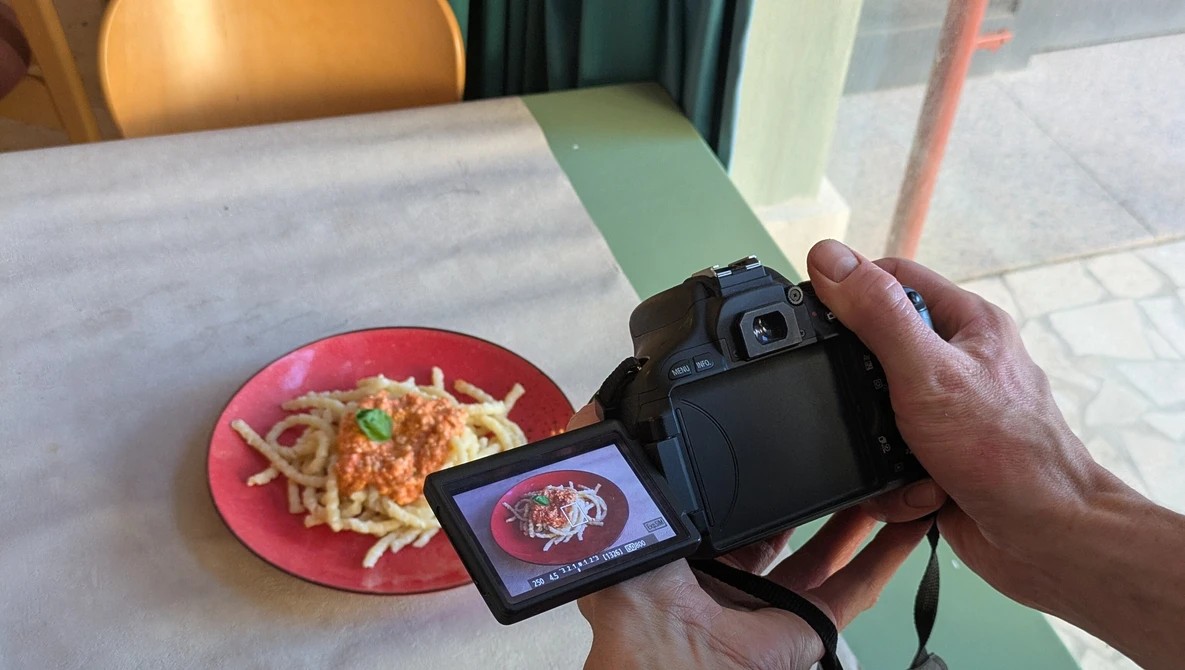
DoorDash's help center lays the deal out in plain language: a professional photographer comes to your restaurant for a 1.5-hour session, shoots up to 20 menu items plus one header image, and DoorDash pays the photographer. You pay for the food and the labor to plate it. Then comes footnote three, which reads, "Photos provided by DoorDash may not be used on other third-party delivery platforms."
That footnote describes what has happened to commercial food photography at the low end of the market. A marketplace now pays for the shoot, sets the shot count, sets the turnaround, and writes the license. The restaurant gets pictures of its own food that it cannot put on a competing app. The photographer gets a booking that was priced by a platform rather than negotiated with a client. And the independent food shooter down the street is now quoting against zero.
What the Free Shoot Actually Buys
The current help center article is specific. Each shoot includes a 1.5-hour session, up to 20 menu items, and one header image. You choose which dishes get photographed, and DoorDash recommends picking your best sellers. Anything beyond that is between you and the photographer, and DoorDash says plainly that extra photos are not covered. One session is what DoorDash pays for.
Run the arithmetic on that session. Twenty-one finished frames in 90 minutes works out to a little over four minutes per shot, and that window has to absorb plating, styling, tweaking the light, shooting, and resetting for the next dish. Nobody is building a set. This is an assembly line, and it is designed to be one.
Two details in DoorDash's own documentation do not agree with each other. An older help article, still live, describes the same 1.5-hour session but says the photographer will shoot "up to fifteen items." The current booking article says up to 20 items plus a header. The 20-item figure is the one carried by DoorDash's photo glossary and by its merchant learning center, so 20 is the live number and 15 is a stale page nobody retired.
Turnaround has moved too, and in the wrong direction for anyone who liked the old promise. DoorDash's merchant learning center used to tell restaurants they would get the images "within two business days." That page now redirects to the help center article, which says it can take up to seven days after the shoot for images to be delivered and uploaded, and asks merchants to open a support case if a week goes by with nothing.
The $200 is real, and it is narrower than it sounds. It belongs to the Premier pricing plan, DoorDash's top tier, which charges 30% commission on delivery orders. The free photoshoot itself is listed as a feature of the Basic plan at 15%. The credit's own fine print limits it to one per eligible menu, and a merchant who previously took a $300 incentive payment for uploading menu photos is not eligible for it at all. Merchants outside DoorDash's photoshoot service area can get the $200 only after uploading 10 approved photos themselves.
Where the 44% Number Comes From
The popular version of this statistic, repeated in every restaurant marketing blog and every AI menu-photo startup's landing page, is that menu photos increase sales by 44%. DoorDash's own sourcing is narrower than that. The number is internal, and the company says so on its merchant blog: it comes from DoorDash's own platform data covering more than 15,000 local small-business merchants during the second quarter of 2022, and the claim is that menus carrying item photos take up to 44% more in monthly sales. An archived version of the booking page put the window explicitly at April to June 2022.
So the figure is internal, four years old, drawn from DoorDash's own platform, and hedged with "up to." DoorDash has never published the method, so there is no way to tell from outside whether menus with photos were compared against menus without them, or whether anything was controlled or matched. That alone means the number does not establish that photos caused the lift. The obvious confound is that restaurants which go to the trouble of photographing their menu tend to be the restaurants that also update their hours, mark items out of stock, price sensibly, and answer the tablet. Photos may be entangled with all of that, and nothing DoorDash has released rules it out.
In DoorDash's April 2025 announcement of its AI photo tools, the same statistic appears as a flat assertion that restaurants have seen a 44% increase in monthly sales for menus with item photos. The "up to" is gone. That is the sentence a restaurant owner reads before booking, and it is doing more work than the study behind it can support.
None of which means photos do not sell food. They obviously do, and DoorDash also cites its own finding that 38% of customers prioritize photos when picking a new restaurant. The honest framing is that photo coverage correlates strongly with sales on a marketplace where the thumbnail is the storefront. The dishonest framing is that a free 90-minute shoot will add 44% to your revenue.
The Clause That Keeps the Pictures on One Platform
DoorDash states the usage restriction three different ways across its own pages, and the tone varies more than the substance. The archived learning center page said, "You cannot use the photos on any other third-party delivery platforms." The older help article says, "These images are yours to keep, we only ask that you don't use the photos on any other third party delivery platforms." The current article's footnote says, "Photos provided by DoorDash may not be used on other third-party delivery platforms." Website, social media, and marketing materials are all explicitly fine. Uber Eats and Grubhub are not.
The older help article also explains the mechanism, in a sentence DoorDash probably wrote as reassurance. It tells merchants that DoorDash will pay for the photographer's services and the rights to the images for you. Read it closely and it says DoorDash pays for the rights "for you," and the same page twice tells merchants the images are theirs to keep. What DoorDash does not publish anywhere is who holds the copyright afterward. What is documented is the restriction, one carve-out drawn precisely around the platform's competitors. Your fish tacos, your plates, your dining room, your staff's plating, and a use license that stops at the border of your other sales channel.
Uber Eats runs the same play from the other side. Its merchant help pages tell prospective partners that Uber will reach out to schedule a photography session, and tell existing partners who never had theirs to contact support and ask for an appointment. Uber's published merchant documentation does not state a shot count or a turnaround the way DoorDash's does, so the comparison is structural rather than line by line.
Both platforms have pushed the model further downstream, to the diner. DoorDash offers selected customers account credits for a "menu-worthy photo of an eligible menu item," and it is specific about which items qualify: the marked ones are the items that currently have no menu photo. The company is using its customers to fill exactly the gaps the free professional shoots leave behind, and the same page now covers video. The license it takes is a "perpetual, irrevocable, transferable, fully paid, royalty-free, non-exclusive, worldwide, fully sublicensable" one, exercisable "without notification to and/or approval by you." Uber pays in Uber Cash instead, capped at $500 per person, with the credit expiring 30 days after receipt and spendable only in the Uber Eats app. Reported payouts run to a few dollars per accepted photo. In exchange, Uber's content terms take "a worldwide, perpetual, irrevocable, transferable, sub-licenseable, royalty-free license to use, copy, modify, create derivative works of, distribute, publicly display, publicly perform, and otherwise exploit in any manner such UGC in all formats and distribution channels now known or hereafter devised," without further notice, consent, or payment. The policy is careful to say the content remains yours. The license granted alongside that ownership carries no limit in time, territory, medium, or payment.
What the Photographer Is Actually Paid
DoorDash does not publish what it pays the people holding the cameras, and I could not confirm a current per-shoot rate from any primary source, so treat the following as directional rather than settled.
The clearest first-hand account is old. In December 2019, stock photographer Steven Heap wrote that he had shot 11 restaurants through DoorDash's program for $385 in fees, organized through the crowdsourcing platform Snapwire, and that an in-restaurant shoot where the chef plated and the photographer only pressed the shutter paid $60. He described running it as a rapid-fire assembly line and called it easy but not great money. That was nearly seven years ago, and the market has consolidated since.
One consolidator is Snappr, which names DoorDash among its enterprise clients on its own press page and advertises that it serves more than 138,000 restaurants worldwide and three of the four largest food delivery apps. Its business is booking on-demand photographers against a platform's specification, at a platform's price, on a platform's schedule.
Snappr's terms spell out where the pictures end up. "Photographer hereby assigns (and agrees to assign) all Photograph Content and the Photograph IP and all related intellectual property and proprietary rights to Snappr," the agreement reads, covering the raw files as well as the delivered images, with the photographer engaged as an independent contractor. Content the client does not purchase stays Snappr's property. Whatever the day rate, that is a copyright assignment on a per-booking basis.
So the economics of a free menu shoot look like this. The restaurant pays for food. The platform pays a contractor a fixed fee for a fixed 90 minutes. Under Snappr's published terms the photographer assigns the copyright to Snappr, and then it moves again: "Once the Booking transaction is complete, Snappr transfers the Photograph IP in Purchased Prints to the Subject." The restaurant is the Subject. A partner who subsidizes the shoot gets a nonexclusive license, not the copyright. So on the public paperwork the restaurant can end up owning the pictures outright and still be told not to put them on Uber Eats. The binding thing is not the copyright. It is the condition attached to the free shoot.
Photo Coverage Is a Ranked Metric Now
A restaurant owner reading all this might reasonably decide to skip the free shoot and hire someone properly. DoorDash has made that expensive in a quieter way. Its Merchant Status system, which replaced the old Most Loved program, scores stores on four operational signals, and photo coverage is one of them, defined as the percentage of menu items with images. The others are missing and incorrect item rate, cancellations, and menu markup.
Most Loved is the only tier customers can see, and it comes with a dedicated homepage carousel, more frequent homepage recommendations, and a badge on the store page. DoorDash says the benchmarks are applied consistently across stores, updated monthly, and visible to each store in the Merchant Portal. Photographing your menu stopped being a marketing choice at that point and became a compliance item with a visible reward attached.
How to Price Against Free
Free is not the competitor most independent food photographers think it is. The platform shoot is capped at 21 frames, produced in 90 minutes, plated by kitchen staff mid-service, lit for a 16:9 crop that will be displayed as a small square thumbnail, and licensed with a hole cut in the middle of it. It exists to fill empty grid cells, and it does that job.
What it structurally cannot do is everything a restaurant needs the moment it has any ambition beyond one app. It cannot supply images for the Uber Eats listing, which is the exact use the terms forbid. It cannot produce a coherent brand set across menu, website, print, and paid social. It cannot shoot the room, the bar, the owner, or the line cooks. It is no longer true that it cannot do video: DoorDash now books video shoots covering five items plus a header group, which can be combined with the 20-photo package, though the page does not say what that costs. It cannot come back in October for the seasonal menu. Every one of those is a line item, and every one of them is a conversation about licensing that the free shoot has already lost by writing a restriction into its own terms.
The pitch that works is not "my photos are better." It is that a restaurant listed on two marketplaces needs a set of images it can legally put on both, plus its own site, plus a printed menu, and that a set like that has to come from a source whose rights permit all of it, which in practice usually means a photographer the restaurant hires directly. If your craft on the plate needs sharpening before you make that pitch, Taylor Mathis' Photographing Food covers the styling and lighting fundamentals that separate a menu thumbnail from a hero frame.
Move fast, though, because the free shoot was never the destination. Three AI Photo Enhance modes now sit in the Merchant Portal. AI Retouch tidies the background and the lighting. AI Replate drops the dish onto better dinnerware and restyles the plating. Match Style takes one reference frame and pushes its lighting, color and background onto everything else, to your dish. The help article explaining all of it was updated on May 20, 2026, and it closes with a less-than-pleasant sentence: "AI Photo Enhance makes it easier to create polished menu photography without needing professional editing tools or a photo shoot."
Lead image by Auregann, CC BY-SA 4.0. Source.
What's Your Reaction?
 Like
0
 Dislike
0
 Love
0
 Funny
0
 Wow
0
 Sad
0
 Angry
0




Comments (0)