

A 4-Shot System for Better Travel Photos
You can spend months planning a trip around one famous view and still come home with a memory card that feels thin. The pictures that bring a place back years later are rarely the ones you saw online before you left.
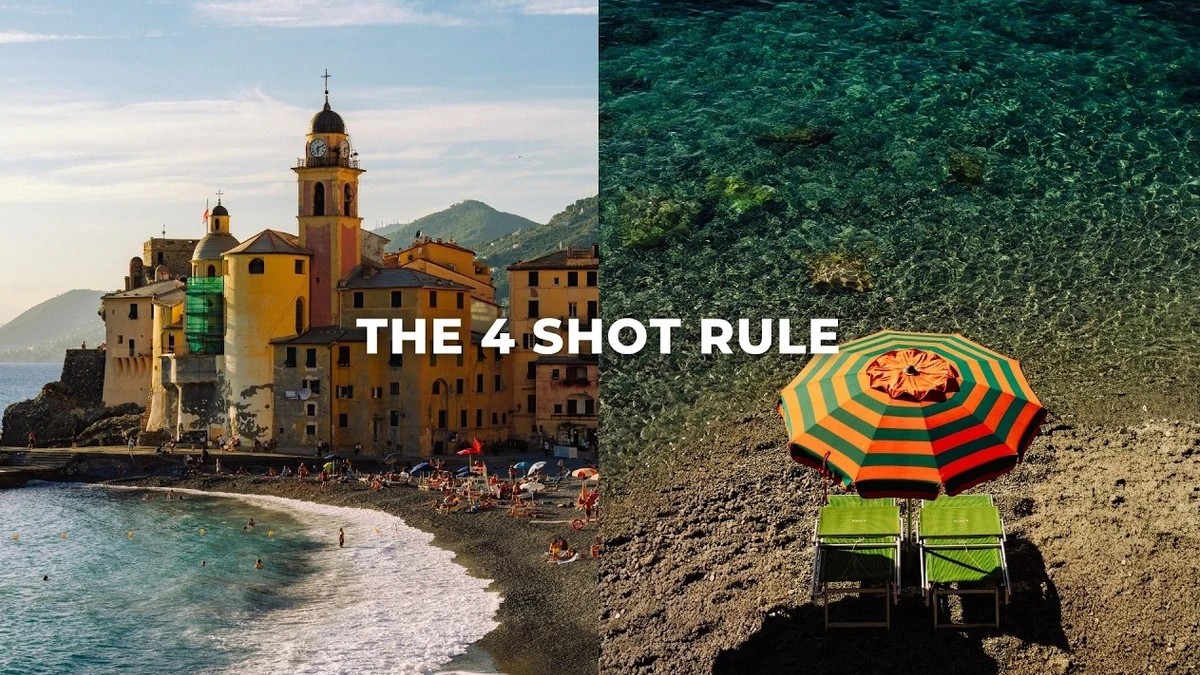
Most travel shooting starts with a single frame in mind: the Cinque Terre angle everyone knows, a sweep of Tuscan hills with a stone farmhouse in the corner, the Grand Canal in Venice. Sean Dalton calls the habit of chasing only those images tunnel vision, and he builds a four-shot system around breaking it while working his way through Italy. His first step is to take the obvious shot and get it out of the way early. He has no problem with these pictures. He spent years thinking about his Cinque Terre frame before he finally stood there to make it. Once that image is on the card, the pressure lifts, and your attention can go to everything else the place has to offer.
From there, Dalton works inward. After the wide postcard image, he moves to mid-range compositions pulled from the same scene, then closer still to texture and small details. In Tuscany, that meant the worn medieval brickwork in hill towns like Montepulciano, which he likes for how much color he can pull out of it in the edit. In Liguria, it meant boats and the painted facades that line that stretch of coast. He's upfront that a detail frame rarely holds up as a single post. Set beside the wide shot, though, it changes how the whole group reads, and the habit of hunting for those details starts showing you what makes a place feel like itself.
Magazine picture editors worked this way for decades. A classic photo essay in Life or National Geographic leaned on a familiar mix: an establishing view, a few medium frames showing activity, tight details, and portraits of the people involved. Filmmakers use the same logic with wide, medium, and close-up coverage so an editor has something to cut between. You can borrow that discipline on vacation without turning the trip into a job. Try giving yourself a small quota at each stop, maybe one wide, two medium, and three detail frames before you move on. That forces you to linger a few extra minutes in spots you'd normally walk away from, and after a week or so, you'll start seeing the sequence while you're still walking toward the view. It also makes editing easier at home, since you have options to pair and sequence instead of a folder of near-identical wide angle shots from slightly different spots.
The third shot on Dalton's list is people, and he makes a strong case that residents produce the most memorable travel images because they're the ones who make a place what it is. You don't need a tight portrait to get there. A figure small in a landscape, a hand, or a foot at the edge of the frame can carry that human element. His favorite images from Procida, a small island in the Bay of Naples, came from a hillside at sunset as residents walked up to Mass to honor St. Michael, the island's patron saint, with the colorful village glowing behind them. He also talks about how the hard light on Procida's angular streets worked in his favor rather than against him.
The fourth shot is experimental. Working the last light of the day with an ND filter for long exposures of boats and water, Dalton also explains a running series of shadow self-portraits he made across Italy, something he'd tried before but never so deliberately. Your version might be a slower shutter speed, a lens you've never used, or a first roll of film. He then adds a step after the four shots: printing, whether as a zine, a larger photo book, or small prints from something like the Canon SELPHY CP1500. He explains how planning for a printed set changes what you look for while you're still out shooting, and how he's already organizing his Italy images toward that goal.
You can watch Dalton photograph Procida's residents walking up to Mass at sunset in the video at the top of this page.
What's Your Reaction?
 Like
0
 Dislike
0
 Love
0
 Funny
0
 Wow
0
 Sad
0
 Angry
0










Comments (0)