

‘When you tell people the story, it’s almost too good to be true’: the incredible journey behind The Cycle of Love
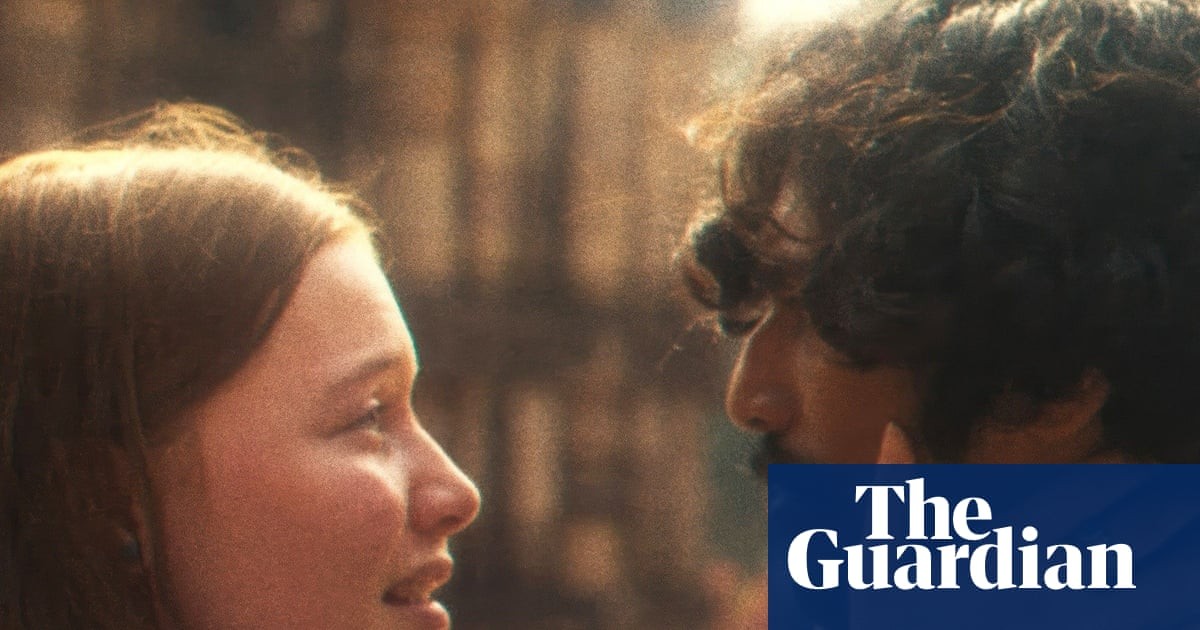
New Delhi, December 1975. It was love at first sight when a Swedish hippy called Lotta von Schedvin sat down to be sketched by an Indian street artist, Pradyumna Kumar Mahanandia, known to everyone as PK. In the 10 minutes it took PK to complete her portrait, everything clicked into place for the pair. They were swept headlong in a whirlwind romance, and PK took Lotta to his village in the east of India to meet his family. But soon after, the time came for Lotta to pack up her VW campervan and head back home with her friends.
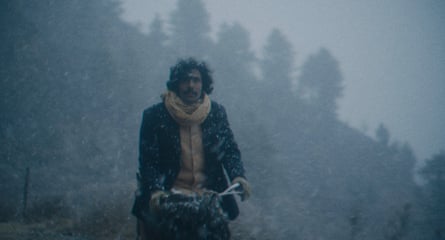
Heart-stricken PK promised to follow, but a plane ticket to Sweden was an impossible dream. Determined not to lose the love of his life, PK bought a secondhand Raleigh bike, and with $80 sewn into the waistband of his trousers, set off to cycle 6,000 miles to Lotta. He knew the sun set in the west, so that was the direction he took. His plan was to follow the hippy trail, cycling through India, Pakistan, Afghanistan, Iran and Turkey, crossing Europe, finally arriving in Sweden.
Actually, he was heading to Switzerland until a fellow backpacker pointed out that Switzerland and Sweden were two different countries. In a new Netflix documentary, The Cycle of Love, PK jokes that his strength was his fuzzy grasp of European geography. Watching the film, you wonder if his superpower might have been his smile – warm and joyous, it lights the room. Either way, he made it to Sweden. The journey took 123 days, and ended up involving a flight or two, and a couple of trains. In May 1977, PK knocked on Lotta’s door in Borås, Sweden. They have been together ever since.
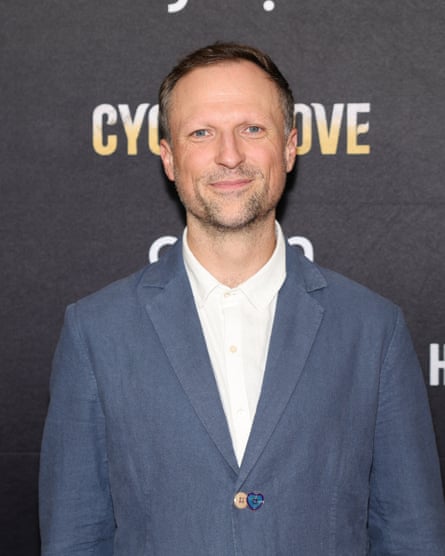
Documentary-maker Orlando von Einsiedel first heard about the story when he gave a talk in Sweden. “At the end, two young people came up and handed me a book,” he says. “They said: ‘This is about our parents’ story. We know your work. Would you be interested in this as a film?’” The book was The Amazing Story of the Man Who Cycled from India to Europe for Love by Swedish journalist Per J Andersson.
The two young people were PK and Lotta’s grownup kids Emilie and Karl. Von Einsiedel politely took the book but didn’t think too much about it. “Normally in my experience, when somebody approaches you and says ‘I’ve got a brilliant story’, it doesn’t work out.”
A couple of months later, Von Einsiedel picked up the book as a holiday read, opening it on the flight out of London. “The moment I started I thought, ‘Oh my God, you idiot Orlando! This is extraordinary.’” It wasn’t just the against-all-odds, 6,000-mile cycle ride, PK’s story was a tale of fate and destiny. When he was born, the astrologer in his village made four predictions about his future wife: she would be a Taurus, born outside India, musical and own a jungle. So naturally the first question he asked Lotta was: “Are you a Taurus?” Her answer was yes. She was also a gifted musician, and – most bonkers of all – her family owned land with a forest in Sweden.
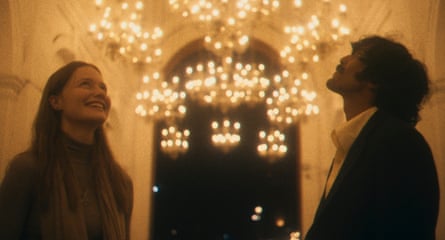
“When you tell people the story, it’s almost too good to be true,” says Von Einsiedel, cheerful and chatty on a video call from New York. The previous night he attended the US premiere of The Cycle of Love with PK and Lotta, who have been happily married for nearly 50 years. The pair have been getting the celebrity treatment wherever they go. “Everybody in the cinema stands up for them, people are weeping when they come on stage.” What do the couple make of the film? He grins. “I know they like it, because whenever they go to a festival, they watch every single screening from beginning to end.” How many times have they seen it? “A lot.”
The film tells their story with enormous warmth. It includes a dramatisation of the epic ride, with PK played by the British-based Indian actor Chirag Lobo, and Mina Dale as Lotta. Everybody else is non-professional, explains Von Einsiedel. “Our producers would go out and street-cast people on the morning of filming.”
What about the script, I ask? There are gorgeous, heartwarming scenes as PK shares his story with people he meets on the road, who in return tell him about their life and loves. How were those scenes scripted? “No script. Everything is improvised. When PK interacts with everyday people he meets along the way, those are just normal conversations about love and hopes and dreams.”
Wasn’t that a bit risky – getting a plane to India with two actors, no script and trusting that deep and meaningful conversations would materialise from conversations with ordinary people? “Massively risky, except I tested if it might work in Lewisham town centre,” Von Einsiedel says, grinning. “I have a friend who’s an actor. We went to Lewisham with a bike.” Armed with a notepad, his friend told people that he was cycling from London to Cape Town for love. “He pretended to draw portraits. What was extraordinary is the first person he sat down to draw turned around and said: ‘I love your story. I’ll buy you a plane ticket immediately.’”
It’s the kindness of strangers that makes the documentary so uplifting. When PK cycles out of Kabul, he stops to help an Austrian backpacker, Linea, who crashed her car, knocking out most of her teeth. He stays with her for several days at hospital, even though it means his visa expiring and further delay. Later, when he arrives in Istanbul and checks his post, there is a train ticket to Vienna – a thank you from Linea for his kindness.
What struck Von Einsiedel when he met the real-life PK was that his story about love went beyond boy-meets-girl. “For me, it’s not just about romantic love. It’s about self-love and love for all the people that we share this planet with.” PK was born into a dalit family, the marginalised group in India formerly known as “untouchables”. At school, he was made to sit outside during lessons and not allowed to play with the other children. Even after he won a scholarship to study fine art in Delhi, he experienced periods of homelessness and isolation.
“From the moment I started talking to PK it became clear what a difficult and traumatic childhood he’d had,” Von Einsiedel says. “He spoke so movingly about being on the journey and how it was the first time that strangers would touch him and hug him. That it was key to him starting to believe in himself and love himself. He said: ‘How can you love anybody if you can’t love yourself?’ I get emotional just saying that.”
PK explained how he felt accepted on the journey, hanging out with hippies and locals in the villages and towns he passed through. People with very little offered him hospitality, a meal or a roof for the night. In the documentary, this warm feeling of togetherness thuds to the ground when PK arrives in Europe, grilled by hostile and overtly racist German border officers. “That was his first experience,” says Von Einsiedel. “He travelled through all these countries, Afghanistan and Iran, and everybody treated him with respect. Then as soon as he got to Europe he immediately experienced racism.”
Von Einsiedel grew up in south London. At university he studied social anthropology and in his 20s was a professional snowboarder. “I learned the craft of film-making making snowboard films,” he says. “When I knew how to do that, I segued into making films about social issues I believed in.” He started working with Al Jazeera, travelling to conflict zones.
In 2015, he was nominated for an Oscar for his first full-length documentary, Virunga, about the battle to save a national park in eastern Congo, home to some of the world’s last mountain gorillas. His documentary short, White Helmets, following Syrian volunteers rescuing civilians, won an Oscar. Next he made Evelyn, an incredibly moving film in which Von Einsiedel turned the camera on his own family. His brother Evelyn took his own life aged 22 over a decade earlier. In the film, Von Einsiedel and his two surviving siblings hiked the routes their brother loved to walk with friends and family. “I was very emotionally closed for a long time after my brother died,” he says. “I used to think being emotionally open was a sign of weakness. I was terrified of my own emotions. I see the opposite now. I think being emotionally open is a sign of strength.”
When it comes to picking a subject for a new documentary, he says he is attracted to people who inspire him. “I’m drawn to stories that show the better side of human beings. That’s a thread that runs through the work I like to make.” The Cycle of Love is by far the sunniest film he has made to date. What’s that all about, I ask? “I wanted to make an optimistic film that’s about joy and human connection. The world is difficult. Love is one of those things that all of us can agree on. This story just felt so important to tell.”
What's Your Reaction?
 Like
0
Like
0
 Dislike
0
Dislike
0
 Love
0
Love
0
 Funny
0
Funny
0
 Wow
0
Wow
0
 Sad
0
Sad
0
 Angry
0
Angry
0






Comments (0)