

Why dual card slots exist, from an editor who just learned the hard way
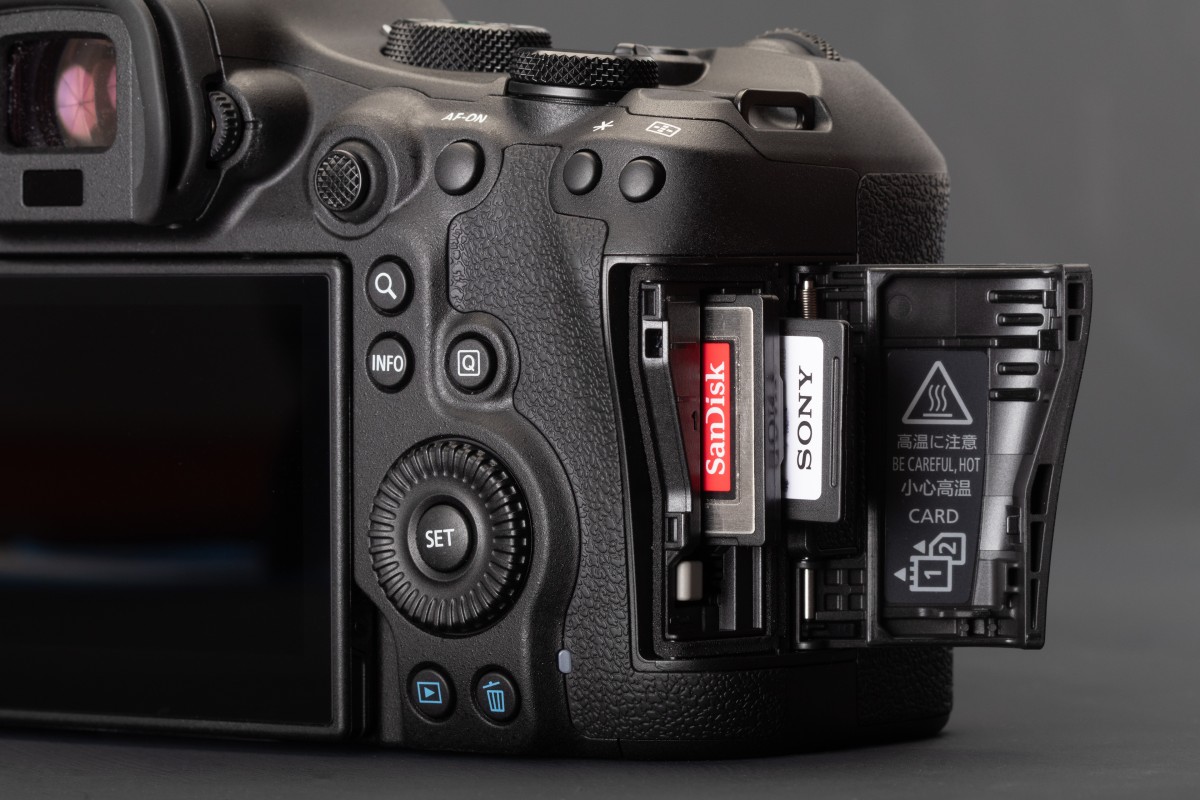
I lost a full day’s worth of photos to a corrupted card in a camera that had a second slot I never used. Most of the time, a single card is an acceptable risk – but not always.

Earlier this week, we published a news article about a new Sony lens, along with a sample gallery we shot with it. That gallery came with the following editor’s note:
“Due to a memory card failure, this sample gallery contains fewer images than usual; most of the photos captured for it were lost before they could be transferred.”
Reader Horshack pointed out that the camera I used to shoot that gallery, the Sony a7 V, has two card slots, and proceeded to cut through my editor-speak in five words.
He meant it in good humor. He was also completely right. In every conceivable way, this was an unforced, preventable error.
It’s worth explaining why a reader spotted this so quickly. Camera enthusiasts love to talk about dual card slots. So much so that it’s become a bit of a running joke. When we write about an inexpensive novelty camera, we can reliably expect at least one reader to jokingly ask, “Does it have two card slots?” That meme even extends beyond digital; I can recall articles about film cameras where someone posted, “But does it have two film slots?”
 I shot the sample gallery using the Sony a7 V, a camera with two card slots.Mitchell Clark
The joke works because the fixation seems excessive. I spent a night with data recovery software reconsidering that.
I had become complacent, which is usually when disaster strikes.
At DPReview, we’ve been shooting digital cameras for over two decades, and we’ve rarely had a memory card fail on us. I could count the number of failures I’ve personally experienced on one hand and have several fingers left over. I’ve used cards from every major manufacturer, and they’ve been consistently reliable. Intellectually, I know card failures can happen, but in my experience, they’ve happened so rarely that it was easy to ignore the risk.
In a nutshell, my choice to use a single card was proportionate to the perceived risk.
I blocked out a full day to shoot with the lens before it had to go back to Sony and had even traveled to find subjects that would be interesting to photograph with a fisheye: a ghost town in the Rocky Mountains and a new airport terminal with interesting architecture.
 The Sony FE 8-14mm F3.5 G Fisheye is a fun lens, but our sample gallery for it is small due to data loss on a memory card.Dale Baskin
The total time between capturing the final image and inserting the card into my computer was only about three hours, during which the card never left the camera. But I got a sinking feeling the moment a “card not readable” error popped up on my screen. When I put it back into the camera, the a7 V told me the card needed to be formatted. Not good.
Hours later, in the middle of the night, with multiple data recovery tools in the rearview mirror, I gave up.
In a nutshell, my choice to use a single card was proportionate to the perceived risk.
Fortunately, I have a habit of offloading photos and backing them up at the end of each day of shooting, so I had a few photos taken with the lens from the previous week. That’s what ran in the gallery.
Do I use two cards when working for a client or shooting a wedding? Every. Single. Time. After all, the job and your professional reputation are on the line. But it’s easy to think of shooting sample galleries for DPReview as part of daily life. We’re constantly toting around cameras and lenses, shooting whenever the opportunity arises. It’s often continuous rather than scheduled, and it’s easy to stop treating it as a job.
 Pictured: a bounty of riches in 2026.Richard Butler
At the risk of sounding alarmist, I’m not suggesting that everyone needs to shoot with two cards. Are we flirting with disaster when we use one card? In most cases, I don’t think so. It’s still rare that one fails, and unless you’re doing something mission-critical, it’s probably safer to say that you’re flirting with disappointment, frustration, and possibly sorrow. For most of us, most of the time, a single card is an acceptable risk.
The question worth asking when evaluating risk isn’t whether you’re shooting professionally. It’s whether the day is one you could shoot again. A walk around the neighborhood can be repeated. A day you blocked out, traveled for, and can’t redo because the lens has to go back tomorrow is not.
Dual card slots exist for a reason, and my recent experience is a good reminder of that. During a discussion with the team, Richard Butler pointed out that this isn’t a free option. Extra cards aren’t cheap, and managing two per body for a small amount of extra insurance isn’t a trivial cost. That’s a fair objection. But this experience has tested my personal risk tolerance, and going forward, my best practice will be to have two cards in the camera when shooting a sample gallery, if that option is available.
Have you lost photos from a memory card? If so, tell me about it in the comments.
Want to stay up to date on the latest product news and releases? Add DPReview as a preferred source to ensure our independent journalism makes it to the top of your Google search results.

What's Your Reaction?
 Like
0
Like
0
 Dislike
0
Dislike
0
 Love
0
Love
0
 Funny
0
Funny
0
 Wow
0
Wow
0
 Sad
0
Sad
0
 Angry
0
Angry
0












Comments (0)