

Why Emmy Wins and Hollywood Recognition Don’t Guarantee Jobs for BIPOC Artists: ‘The Needle Has Not F***ing Moved’
Get the agent, book the studio job, win the award, and so on, collecting infinity stones like Thanos until you can buy that dream house in that quaint part of Studio City. For many working filmmakers, especially women and people of color, the realities of making it in Hollywood are even more nuanced. Recognition can get you into the room, but it does not necessarily get your movie made.
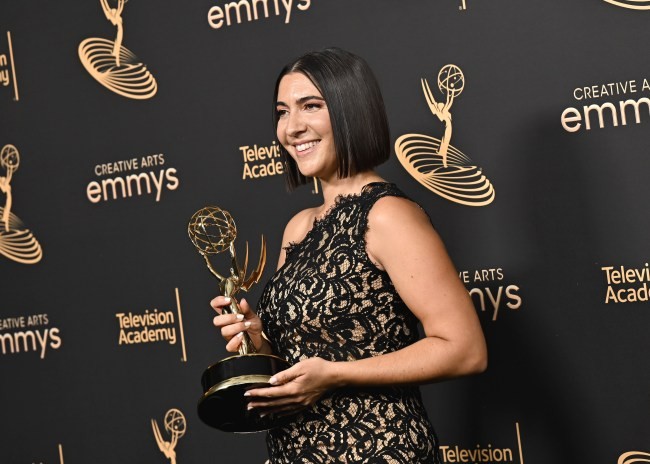
Bridget Stokes knows this distinction intimately. When she became the first Black woman to win an Emmy for directing a variety series in 2022 (“A Black Lady Sketch Show”), meetings followed, and congratulations poured in from every angle. She says the award may have earned her more sit-downs when she reached out, but it didn’t produce the career acceleration outsiders might expect. “I didn’t get a [studio] job offer for almost four years after I had won the award,” Stokes said. “Like four years after I had won an Emmy and had this decoration, I never got a job offer.”


Her experience comes amid a contraction that has made an already difficult business considerably harder. According to a Film LA 2025 Q4 and year-to-date Film Production Report, Los Angeles on-location production fell 16.1 percent in 2025. Every major category declined, including student films, shorts, documentaries, and music videos. At the end of 2025, television production was 50.1 percent below its five-year average and feature films were 31.7 percent below.
The coronavirus pandemic, major labor strikes in the entertainment and media industry, mega mergers like Skydance, and the 2025 wildfires have played a major role in these declines. Though Film LA’s 2026 Q1 report shows an uptick from recent lows, production remains far below historical levels.
“There’s No Place You Can Reach and Have Made It”
Stokes’ experience also complicates one of Hollywood’s most enduring ideas about success — that it’s linear, and that careers operate like ladders. Climb high enough and eventually you reach a level where getting the next project greenlit becomes easier. “There’s no place you can reach and have made it,” Stokes said. She has spoken with Oscar-nominated directors and established auteurs who still struggle to finance passion projects. “We’re artists trying to convince commerce people to make our art. It’s just never going to be easy, no matter who you are.” Stokes wrote and will direct her upcoming project “Zugzwang,” a film noir political thriller starring Christina Elmore as Lady, a Black female private detective and former child soldier.
Who originates the work can tell you who will get the jobs. In her 2026 report, Boxed In, author Martha M. Lauzen of the Center for the Study of Women in Television and Film at San Diego University, found that programs with at least one woman creator employed substantially more women in other key creative positions. Women wrote 48 percent of episodes on those programs, compared with just 17 percent on programs created exclusively by men. The report says women accounted for just 22 percent of creators across broadcast and streaming television in the 2025-26 season.
These pressures are creating a new slate of indie filmmakers who aren’t posting eulogies to Hollywood on Threads or waiting for the good old days to return. They are finding investors, building production companies, making smaller projects, cultivating core audiences and collaborating with one another. In some cases, they are questioning whether the traditional markers of Hollywood success should remain the destination at all.
Producer Ebony Elaine Hardin has spent enough time inside both systems to see the contrast. Hardin began in casting, working for companies including CBS and NBCUniversal and casting directors Francine Maisler and Carmen Cuba before moving into production. Today, she is director of production at Dropout, an independent, subscriber-funded comedy network, studio, and distributor.
“We kind of dropped out of the studio system,” Hardin said tongue-in-cheek. Instead of trying to meet the expectations of a larger corporate owner, the company chose something smaller, more creatively autonomous, and able to craft programs for its audience.
That model challenges another assumption of the traditional system. Must everything appeal to everybody in order to be successful? “I don’t think that entertainment personally has to do that,” Hardin said. “It can be more niche.” She said the independent model can start with a smaller community. “This is just for these people,” made by people who care deeply about that audience. If the work eventually crosses over, all the better.
In 2025, just one in 10 of Hollywood’s top theatrical films had a woman director, while roughly one in five had a director of color, according to UCLA’s 2026 Hollywood Diversity Report for theatrical feature films. The numbers get worse when you count all credited writers. BIPOC writers accounted for just 13.5 percent of the 185 writers for top theatrical releases, while women accounted for 19.5 percent. 71.9 percent of all credited writers were white men.
Vietnam-born actor Trieu Tran, who immigrated to Canada and was raised in Boston, has been working professionally for 25 years. He said this year marked his first time working with a Vietnamese filmmaker. He has worked on cult classics like “How High” and “Tropic Thunder,” spent two-and-a-half seasons on HBO’s “The Newsroom,” built a substantial theater career in such works as “Equus,” where he played Alan Strang alongside East West Players co-star George Takei, earning a Los Angeles Drama Critics Circle (LADCC) nomination, and even once flew to Thailand for the independent feature “Trade of Innocence” opposite Oscar-winning actress Mira Sorvino in 2011.
 Adria Arjona and Trieu Tran in TV‘s ‘Monsterland’ Season 1©Hulu/Courtesy Everett Collection
The film gave him a prominent supporting role as Duke, the antagonist. “I’m in Thailand with Dermot Mulroney and Mira Sorvino. The three of us, making this film for two months. I’m thinking, hey, you know, now here’s my chance,” Tran recalled. He returned home hoping the film would succeed, but it didn’t find its audience. “You come back, and the film was not a success for myriads of reasons,” Tran said.
He had no clear next steps to take. “I’m booking the jobs. All my coworkers are telling me I’m a good actor. I do theater. All the critics are loving my work. Audiences are loving my work, and I’m just like, I don’t know what I need to do to get to that next sort of level, and then ‘The Newsroom’ happened.” After the 2012 Aaron Sorkin series, Tran worked on S1 of “Altered Carbon” as series regular “Mr. Leung” in 2018, and then starred as “Sharko” in Hulu’s 2020 anthology “Monsterland.”
In a SYFY WIRE interview, show creator, executive producer and writer Mary Laws said of Tran, “I think that he’s a phenomenal actor who just has not gotten his day and I think that that’s part of the inherent racism in Hollywood. And we, as a writers’ room, fought really hard to make sure that we cast a Vietnamese actor in that role as a Vietnamese trawler.” Since the show, Tran hasn’t had any acting work — in film or TV — outside of theater.
The Needle Only Moves for a Select Few
To be clear, making a living as an artist is precarious for actors of any race. But actors of color, Tran said, start with a bigger mountain to climb, with fewer roles available and many still constrained by stereotypes. Casting feedback can become almost absurdly specific: “Too Asian, not Asian enough. Too Vietnamese, not Vietnamese enough,” he said. “I hate when I hear people say the needle is moving. The needle has not fucking moved. We need to stop saying that. It’s only moving for a select few.”
BIPOC performers made up only 23.1 percent of leads in top theatrical films in 2025 despite comprising 45.2 percent of the U.S. population, according to UCLA’s report. Asian actors made up just 3.7 percent of that lead slice. When young actors ask Tran for advice, he tells them, “There is literally no blueprint. There’s luck involved…not quitting, getting the opportunity, and finally getting the sheer luck. There’s so many intangibles why you get cast and don’t cast. And a lot of time, it really has nothing to do with talent.”
Emmy-winning casting director Jazzy Collins has watched the traditional markers of achievement lose some of their predictive power. She is the first Black woman to win the Emmy for Outstanding Reality Casting. She said an award gives her name “a little bit more weight,” particularly among people accustomed to the traditional Hollywood hierarchy. But she has also watched digital creators build lucrative careers without ever appearing on a network television show.
“There’s some really fantastic people that have never won an Oscar, never won an Emmy, and they’re working more than the people that have,” Collins said. She isn’t dismissive of those honors. “I am so thankful for it,” she said of her own recognition. Rather, she believes the traditional markers of what makes you good in this industry are changing.
 Jazzy Collins, the first Black woman to win the Emmy for Outstanding Reality CastingKristina Bumphrey/Variety
“This Hustle Doesn’t Stop Just Because You Meet Five Investors”
So Collins has spent years learning another, rarely romanticized part of filmmaking: fundraising. She has deliberately sought out investors, learned how to discuss financial structures, and built relationships with people interested in financing films. Work that, she said, never really ends. “This hustle doesn’t stop just because you meet five investors,” Collins said. In doing that work, she arrived at her current philosophy, “I’m not gonna wait for you to knock on my door. You’re gonna have to come knock on my door when I’m already up and running.”
Filmmaker Lauri Levenfeld shares the same sentiment. “I’ve always been extremely scrappy and known that I’ve got to participate in many ways to make a project happen,” said the writer-director who got her start in film as a cinematographer. Levenfeld will direct her feature “Swipe Up,” a southern-gothic horror dark comedy about a deadly sorority competition, while also producing Stokes’ “Zugzwang.” For emerging filmmakers, Levenfeld argues, a good script and financing aren’t enough. “You have to literally think about from A to Z how you’re going to get this thing done.”
Former Netflix executive and producer Wayne Horton offers an important counterweight to the romance of going independent. “Studios have become increasingly risk-averse,” he said, “because executives are under enormous pressure to make projects that work.” Familiar stars and proven filmmakers offer some protection against that risk, but the result can be fewer opportunities for people without many credits. Independent filmmakers cannot ignore those economics either.
“There are a lot of great scripts out there, but there isn’t a strong business case for every script,” Horton said. “My job as a producer is to develop projects that are great creatively, but also turn a profit.” With so many entertainment options, viewers have become extremely segmented. To have a sustainable career in this business, Horton said, he has to develop work that speaks directly to specific audiences. Horton is developing several projects, including a high school rom-com starring Marsai Martin and an ensemble comedy with Emmy winner Lamorne Morris attached.
Is the Answer in Indies?
The data suggests these audiences are a big part of the business. BIPOC moviegoers bought the majority of opening-weekend tickets for five of the top 10 and 11 of the top 20 films at the global box office in 2025, plus half the tickets for another film, according to the UCLA report, and the theatrical films with casts that were 41–50 percent BIPOC produced the highest median global and domestic box office.
And filmmakers building outside Hollywood’s traditional gates aren’t rejecting the business. Increasingly, they are learning more of it themselves. Who is the audience? How much should the film cost? Where does the financing come from? How will people find it? And the question most recently making headlines: Who owns what they create?
Hardin once viewed success through traditional Hollywood milestones, but now has a broader sense of what a creative career looks like. These days she’s more focused on making work she cares about with a community she wants to work alongside.
“I know incredibly talented writers and directors with phenomenal stories,” she said. And as creative producer and executive at her company 903 Entertainment, she’s championing “Flacalta Effect,” a satirical zombie movie in which an Ozempic-like drug triggers a zombie apocalypse, written and directed by Rochae Jeffrey and featuring an all-POC cast, and “Trashy People,” a coming-of-age story about a young woman working at her college recycling center to pay for school, written and directed by Marissa High.
Hardin hasn’t given up on the accolades either. She still wants the Emmy. She still submits projects to Sundance and SXSW. She still intends to knock on those doors, but no longer believes she has to wait behind them. “I’m just going to keep knocking until I get my moment,” Hardin said. A moment she’s certain will come through independent work.
And the data supports her confidence. According to feature film data from Film LA’s Q1 2026 production report, feature production rose 52.3 percent year over year in Q1 2026, from 451 to 687 shoot days, and was actually 20.6 percent above the five-year average. Most of that quarter’s feature-film activity came from independent films.
The revolution will likely be built on an indie budget (including equitable backend for all involved), and it just might get a theatrical release before it goes to streaming. The heavily guarded industry gates will likely never fling open, but with filmmakers now understanding exactly how high the mountain is, they are much better poised to build another path up.
Chaseedaw Giles is a Los Angeles-based journalist, screenwriter, and filmmaker.
What's Your Reaction?
 Like
0
 Dislike
0
 Love
0
 Funny
0
 Wow
0
 Sad
0
 Angry
0





Comments (0)