

10 Most Ambitious Books of All Time
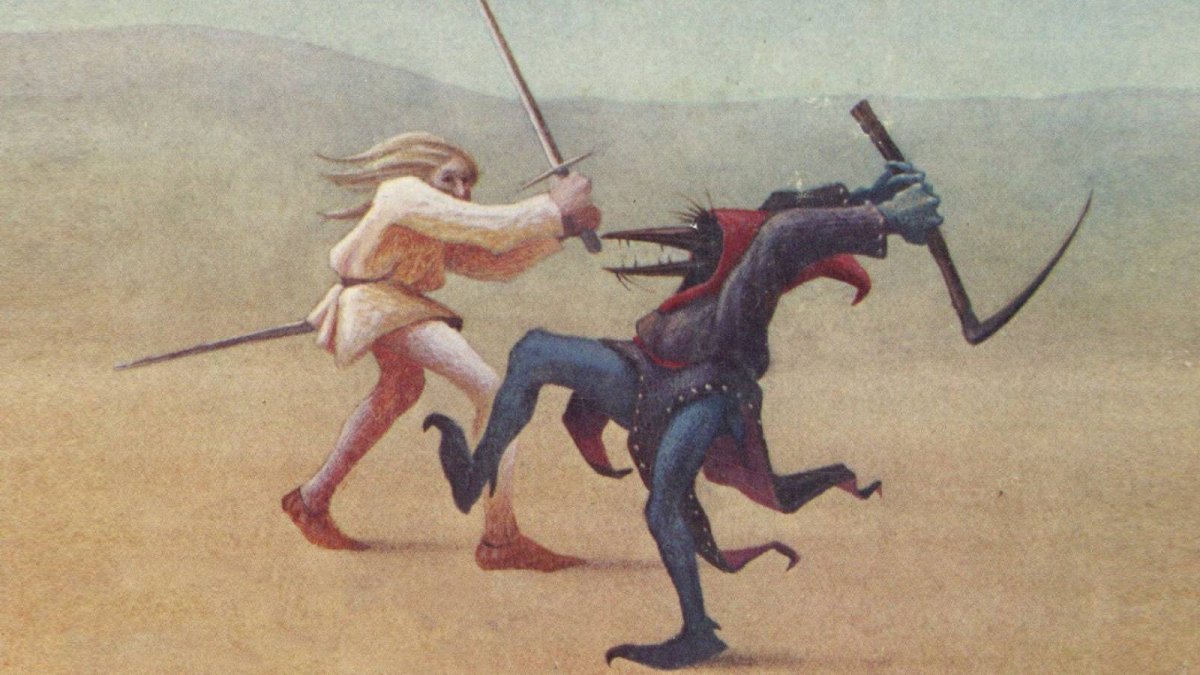
 Image via Doubleday
Published Jul 1, 2026, 12:14 AM EDT
Jeremy has more than 2600 published articles on Collider to his name, and has been writing for the site since February 2022. He's an omnivore when it comes to his movie-watching diet, so will gladly watch and write about almost anything, from old Godzilla films to gangster flicks to samurai movies to classic musicals to the French New Wave to the MCU... well, maybe not the Disney+ shows.
His favorite directors include Martin Scorsese, Sergio Leone, Akira Kurosawa, Quentin Tarantino, Werner Herzog, John Woo, Bob Fosse, Fritz Lang, Guillermo del Toro, and Yoji Yamada. He's also very proud of the fact that he's seen every single Nicolas Cage movie released before 2022, even though doing so often felt like a tremendous waste of time. He's plagued by the question of whether or not The Room is genuinely terrible or some kind of accidental masterpiece, and has been for more than 12 years (and a similar number of viewings).
When he's not writing lists - and the occasional feature article - for Collider, he also likes to upload film reviews to his Letterboxd profile (username: Jeremy Urquhart) and Instagram account.
He has achieved his 2025 goal of reading all 13,467 novels written by Stephen King, and plans to spend the next year or two getting through the author's 82,756 short stories and 105,433 novellas.
Sign in to your Collider account
Books certainly aren’t restricted the way movies generally are, though there are definitely experimental films that run for far longer than two hours. But books can be hundreds and hundreds of pages long, and some are in the 1000-to-2000-page range before the notion of splitting things into volumes has to be considered, which makes the time commitment to reading some books much more like watching a multi-season TV show or a lengthy video game than watching a film.
So, there are probably more ambitious and overall gargantuan books than there are movies. Some are classics, including a bunch below. There’s a mix of older and some slightly newer works here, but they're included because they're all among the most ambitious books of all time, with a lot of ground covered, so many words to read, and – for most of them – approximately 1000 or so pages you'll need to physically turn to get through everything.
10 'Les Misérables' (1862)
 Image via Penguin Classics
To start with an easy and obvious pick, here’s Les Misérables, which is famous for being very long and very heavy-going. There are almost two decades covered, with fictional characters existing and struggling during a tumultuous time in French history; namely, from the mid-1810s until the June Rebellion in Paris, which took place in 1832 (so not part of the French Revolution of the late 1700s, though that mistake does sometimes get made).
If you want to be flippant, you could also say Les Misérables is a novel about a guy who steals a loaf of bread, and then miserable (or misérable?) things happen. There are some tangents, lots of side characters and subplots, and just a lot of stuff that feels sprawling in general, but it is all rewarding and interesting, even if there are parts that don’t necessarily focus on the main plot, nor the truly “main” characters. It’s a classic for good reason, and one of those books everyone seems to agree, uncontroversially, is an essential one as far as world literature is concerned.
9 'House of Leaves' (2000)
 Image via Doubleday
House of Leaves is written and presented in a way that’s meant to make you feel like you're going more than a little mad, and it’s also impressively layered, to say the least. There are a few different accounts of a documentary called “The Navidson Record,” with analysis of the contents of said documentary being covered throughout, and it’s mostly about a house with a mortifying secret (or some kind of portal) inside.
There’s a lot more to it than it being a haunted house novel, though, with some parts of House of Leaves also being weirdly funny, other parts being just weird, and even more parts that manage to be scary in ways that aren’t necessarily related to “The Navidson Record.” It’s a probably unadaptable beast of a book that finds so many interesting and unique things to do with certain horror conventions, and stands as the kind of thing you do need to read if you want to believe it (and even then, believing might remain somewhat difficult).
8 'Underworld' (1997)
 Image via Scribner
If Underworld progressed in chronological order, it would still qualify as quite ambitious, what with it being dense, covering a great deal of history (much of the second half of the 20th century), and being lengthy, at over 800 pages. Structurally, though, it’s all those things plus something told largely in reverse, starting with a story about a prized baseball from a match in the early 1950s, and then jumping forward to the 1990s.
It’s about people who had – or wanted to have – that baseball in their possession, but everything keeps jumping back, and though there are some people in it who are sort of main characters, Underworld goes off on tangents fairly often. It does so in a way that works unusually well, with there being something powerful about the novel overall, even if it sometimes feels hard to say just what exactly makes it feel such a way.
7 'The Second World War' (2012)
 Image via Weidenfeld & Nicolson
The ambition here goes a little further than you might expect, since The Second World War covers some events that happened in the lead-up to 1939, which was the “official” start of World War II. It’s a way to set things up before the bulk of the book focuses on a very complex, sizable, and world-shattering event, with about as much detail as you can get when you're doing only one book on the whole subject.
There are 50 chapters all up, and they're about a whole range of different battles, events, and developments within the overall conflict. If you want more than an overview, it would, naturally, be better to find books that focus on a more specific part of the Second World War, but for a breathless recount of so much that happened during the biggest – and most impactful – event of the 20th century, you do get that here, condensed into a single book, which is undoubtedly impressive.
6 'Against the Day' (2006)
 Image via Penguin Press
Having a one book per author limit here makes things a bit difficult, because there’s an argument to be made that Gravity’s Rainbow is Thomas Pynchon’s most ambitious book, owing to it being his densest, or maybe Mason & Dixon, since that one is so stylistically surprising and singular. Both of them are long and sprawling for sure, but Against the Day is longer than either, and it feels like more of a conventional epic.
Well, a conventional epic in the sense that it spans a good deal of time and has many characters, but then the rest of it’s quite unconventional in the way you can usually rely on a Pynchon novel to be. It’s a work of historical fiction that spans 1893 to 1918, and has countless characters, some borderline fantasy/sci-fi elements, and cameos from real-life figures throughout. Against the Day is often bewildering and a bit exhausting, but it’s also extremely impressive and, for the most part, rather rewarding, if you’ve got the time and patience for it.
5 'Infinite Jest' (1996)
 Image via Little, Brown and Company
Infinite Jest is a psychological something of a novel. Not really a psychological thriller, but maybe a psychological dramedy would be the best way to describe it? Even then, it’s kind of a mystery just because of how confounding it is, and how little certain things seem to line up with everything else. You're also dealing with non-chronological storytelling here, and a massive number of characters, with some of them being residents at a drug and alcohol recovery program, others being members of a tennis academy, and some other people being radicals/revolutionaries.
You need two bookmarks and probably about 30 hours (at a minimum) to read a book like this, and then re-reads are necessary if you want to even come close to getting a grip on most of it.
And that’s before getting to the fact that Infinite Jest is over 1000 pages long (the font is small, and the style is such that most pages are filled with text), plus there’s all the footnotes to take into account, because they're about the length of a short novel on their own. You need two bookmarks and probably about 30 hours (at a minimum) to read a book like this, and then re-reads are necessary if you want to even come close to getting a grip on most of it. As for understanding all of it… if you want to dedicate your life to reading and analyzing Infinite Jest, sure. No, not sure. Maybe. Godspeed.
4 'Reclaiming History: The Assassination of President John F. Kennedy' (2007)
 Image via W. W. Norton & Company
Reclaiming History: The Assassination of President John F. Kennedy is the longest book here, at over 1600 pages, and it’s also a hefty-sized book with so many words per page. By comparison, the Kindle version of Reclaiming History (which doesn’t have to worry about being bound), is 5,919 pages, though that surely includes the approximately 1000 pages of footnotes. If you want to see them after buying a physical copy of the book, you can, but they come on a CD with each physical copy.
So, 2600 pages, and those pages have the number of words you'd probably find on two pages of a more regularly formatted book. And so many of those pages exist to refute every single conspiracy theory regarding the assassination of John F. Kennedy, with a decent chunk of those pages also serving as a comprehensive overview of the event itself, and the chaotic/eventful days that immediately followed. It’s exhaustive, but perhaps the ultimate resource for covering just about everything you could want from a book on the subject (there are fictional and even sci-fi-related stories about it, sure, but this is arguably the definitive non-fiction book about the event).
3 'The Stand' (1978/1990)
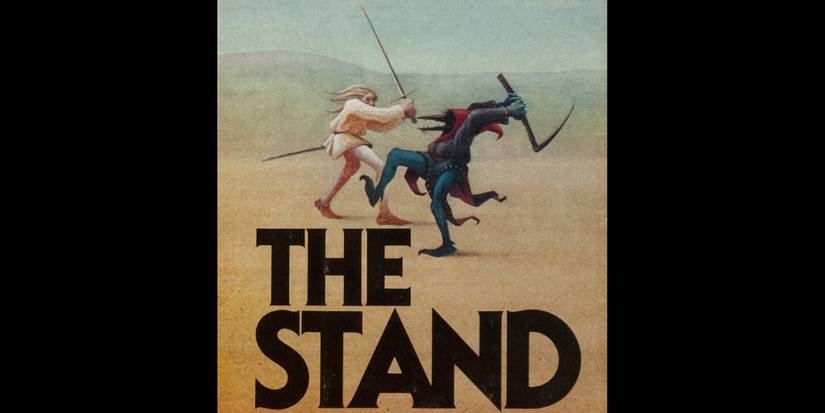 Image via Doubleday
There are two versions of The Stand, and they both tell the same story, but the 1990 uncut version is much longer, and it shifts the events of the story forward by a decade. You got either an 800-ish-page-long book about a flu wiping out most of humanity and a battle for the human race’s future, or a book that’s about 1200 pages long about the same thing.
Stephen King went all out for both, since The Stand (1978) was easily his most ambitious book at the time, and remained so until arguably IT (1986), but then The Stand (1990) outdid IT, in terms of page-count and scale, so it’s about as big as a Stephen King book has gotten. There are other beefy ones, of course, and if you were to count The Dark Tower as one cohesive story, then that would technically be his biggest and most sweeping epic to date, given there are seven main books that make up the overall continuous story in that series, all of them published over a period of a bit over 20 years.
2 'The Lord of the Rings' (1954–1955)
 Image via HarperCollins
The one book that will rank ahead of The Lord of the Rings here is a work of historical fiction, but then again, The Lord of the Rings almost is, too. It’s just a history that’s entirely fictional, and there’s an argument to be made that J.R.R. Tolkien inventing it all and planning everything so thoroughly, all the while doing more by way of world-building than just about anyone ever, is more astounding than doing a more conventional work of historical fiction.
There’s a narrative here about a war that’s building while two Hobbits undertake a dangerous journey to destroy a very important Ring, but there’s also so much more to The Lord of the Rings than just the main narrative. It could be only the narrative, and it would still be a classic, but it’s the way Tolkien makes Middle-earth feel so convincing and tangible that makes The Lord of the Rings particularly special. As corny as it might sound, you can almost believe that Middle-earth did really exist, at some point. Tolkien does an outstanding job at maintaining – and building upon – that illusion, so to speak.
1 'War and Peace' (1869)
 Image via Wisehouse Classics
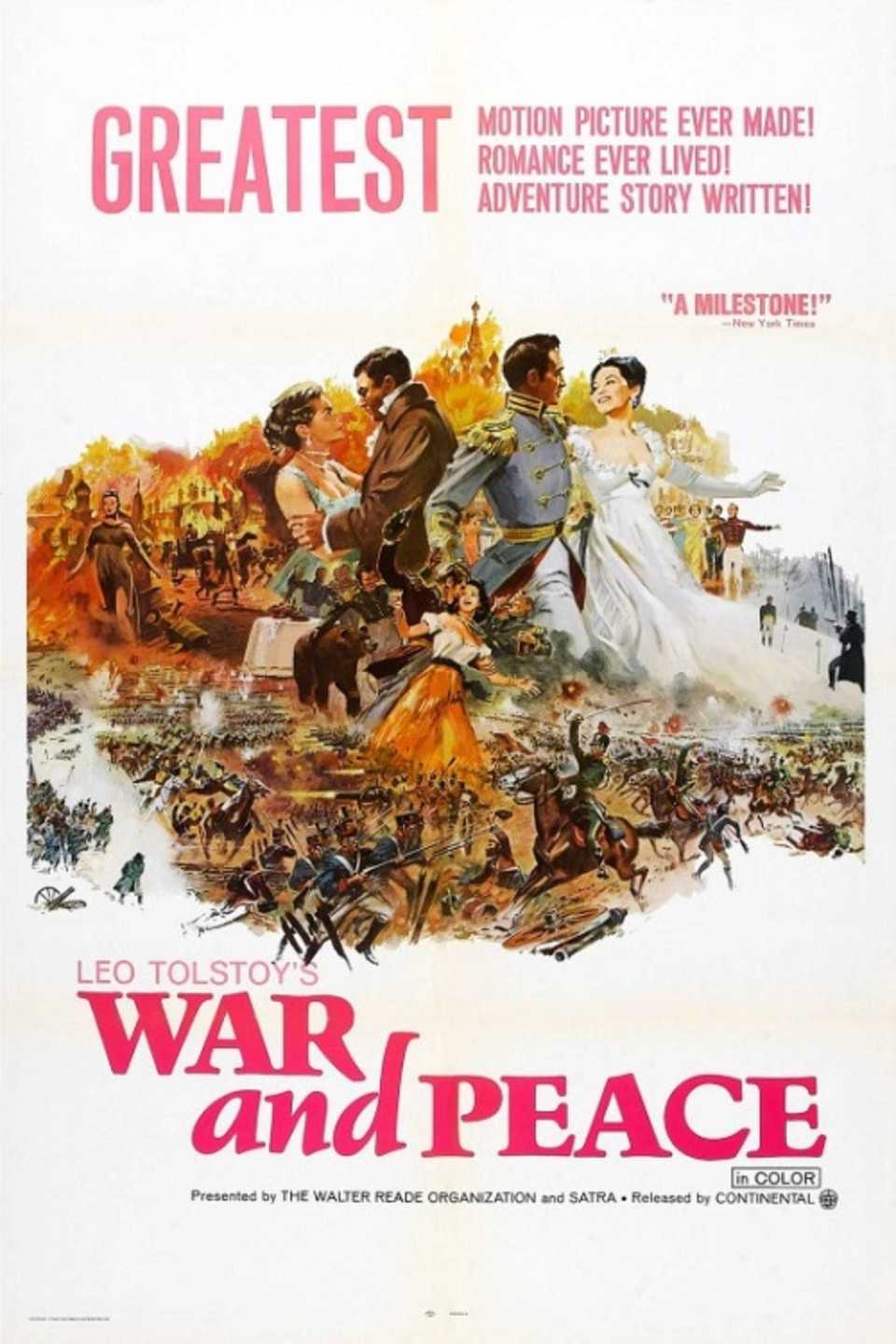
War and Peace feels a little in line, ambition-wise, with Les Misérables, and they were both published in the same decade, too. War and Peace involves Russian history, though, even if France does factor into the plot and some of the conflict, seeing as War and Peace takes place during the Napoleonic Wars, and there’s a similar amount of time covered in Les Misérables, going from about 1805 to 1820, rather than that previously mentioned novel’s span of 1815 to 1832.
There are stretches of War and Peace that aren’t too narrative-focused, with Leo Tolstoy using some of his 1200+ pages to unpack history and philosophical ideas, too. Like with Les Misérables, it’s all compelling and well-written, so he more than gets away with it. War and Peace is famously huge, and beyond iconic, as an epic… maybe even the ultimate epic, so here it is, trumping all the other books, and standing, arguably, as the most ambitious piece of literature of all time.
War and Peace
Release Date March 14, 1966
Runtime 393 Minutes
Director Sergey Bondarchuk
Writers Sergey Bondarchuk, Vasiliy Solovyov, Leo Tolstoy
What's Your Reaction?
 Like
0
Like
0
 Dislike
0
Dislike
0
 Love
0
Love
0
 Funny
0
Funny
0
 Wow
0
Wow
0
 Sad
0
Sad
0
 Angry
0
Angry
0






Comments (0)