

2026 Subaru Outback review: Great interior, refined drive, divisive looks
hybrid soon please, Subaru?
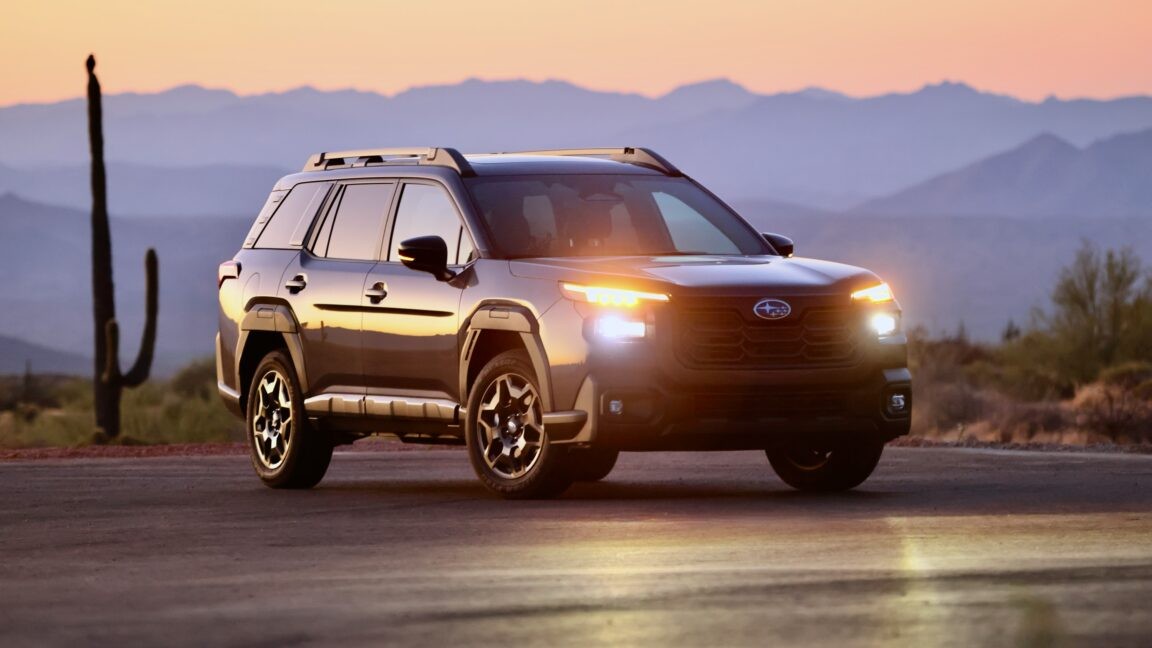
The newest Outback sticks to the script; that’s no bad thing if you like Outbacks.
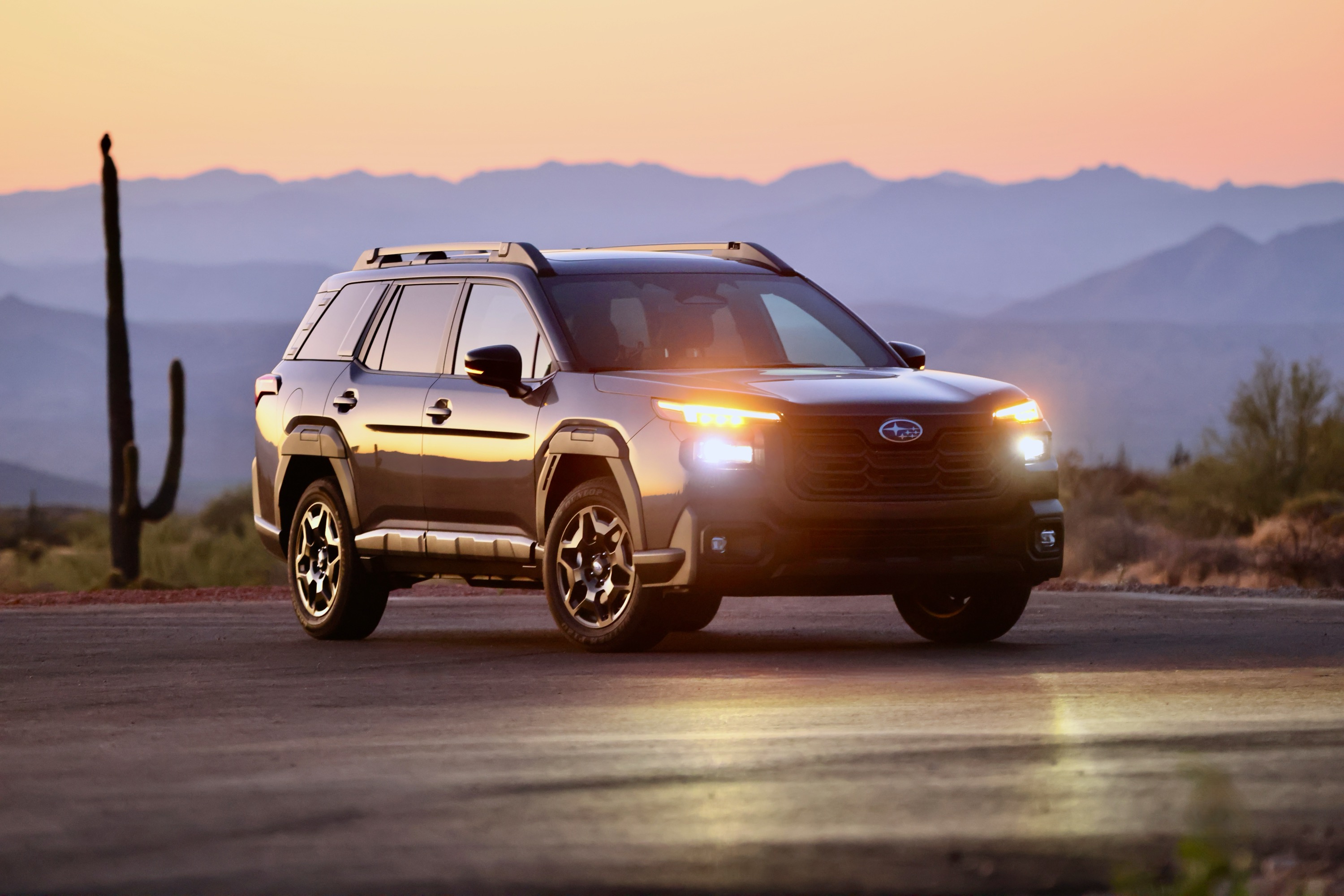
Subaru won many fans with previous Outbacks. Let's see how the new one does. Credit: Jim Resnick
Subaru won many fans with previous Outbacks. Let's see how the new one does. Credit: Jim Resnick
When station wagons headed for the same retirement home as the vinyl roof and the opera window, Subaru looked at its sensible Legacy wagon and had a different idea. Raise it a few inches, wrap the lower body in plastic cladding, name it for the Australian bush, and suburban families would drive to soccer practice while imagining themselves fording streams and climbing sand dunes.
In giving birth to the Legacy Outback in 1995, Subaru more or less created the template for the modern, adventure-minded, off-road-themed crossover. By the 2000 model year, the Outback had graduated from trim level to standalone model, and it has been paying the bulk of Subaru’s bills ever since.
Today, the 2026 Outback marks a new era in the model’s history. The wagon silhouette that defined six generations has given way to a sharpened two-box shape that’s much more at home parked next to an upright Forester or Ascent. Tall, square, and profusely SUV-like, the new edition won’t win any beauty contests, but form follows function more than ever in the Outback.
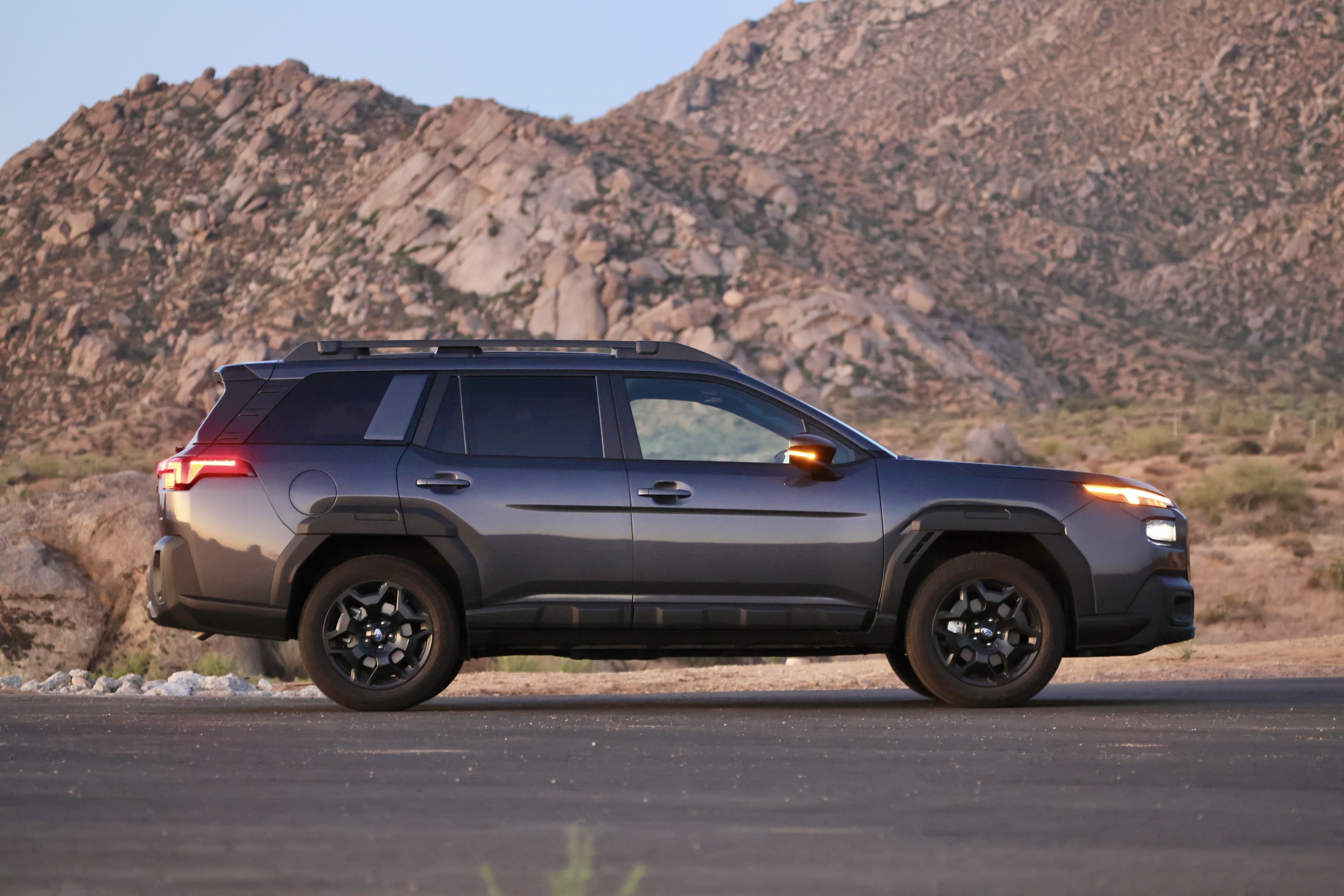
More crossover than wagon, the new Subaru Outback is not the best it has ever looked, at least as far as the exterior is concerned.
Credit: Jim Resnick
More crossover than wagon, the new Subaru Outback is not the best it has ever looked, at least as far as the exterior is concerned. Credit: Jim Resnick
Standard all-wheel drive across all six trim levels (starting at about $36,000 to just under $49,000, including the required $1,450 destination) ensures all Outbacks have similar poor-weather and poor-road ability, though the Wilderness version rides 0.8 inches (20 mm) higher off the ground and comes with more dedicated all-terrain tires. My Limited test vehicle stickered at $43,165.
Much improved interior
The new Outback isn’t pretty, but spend a week driving it, as I did, and you’ll quickly care less about the outer skin than the inner capability. The extra height over the 2025 version affords much improved passenger and cargo room. There’s one caveat, though: The new interior steps threateningly close to premium quality, and a new infotainment system and electronics package pull everyday usability and convenience up the ladder by a rung or two.
Climb in and close the door, and you’ll find the dashboard cleaner than before, with climate controls thankfully presented as tangible knobs and buttons rather than the sometimes-lethargic digital renderings of the prior Outback. The only demerit here is the mesh fabric covering the upper door panels and part of the dashboard. This material looks a bit cheap and can be pulled like a shirt, making the pattern askew.
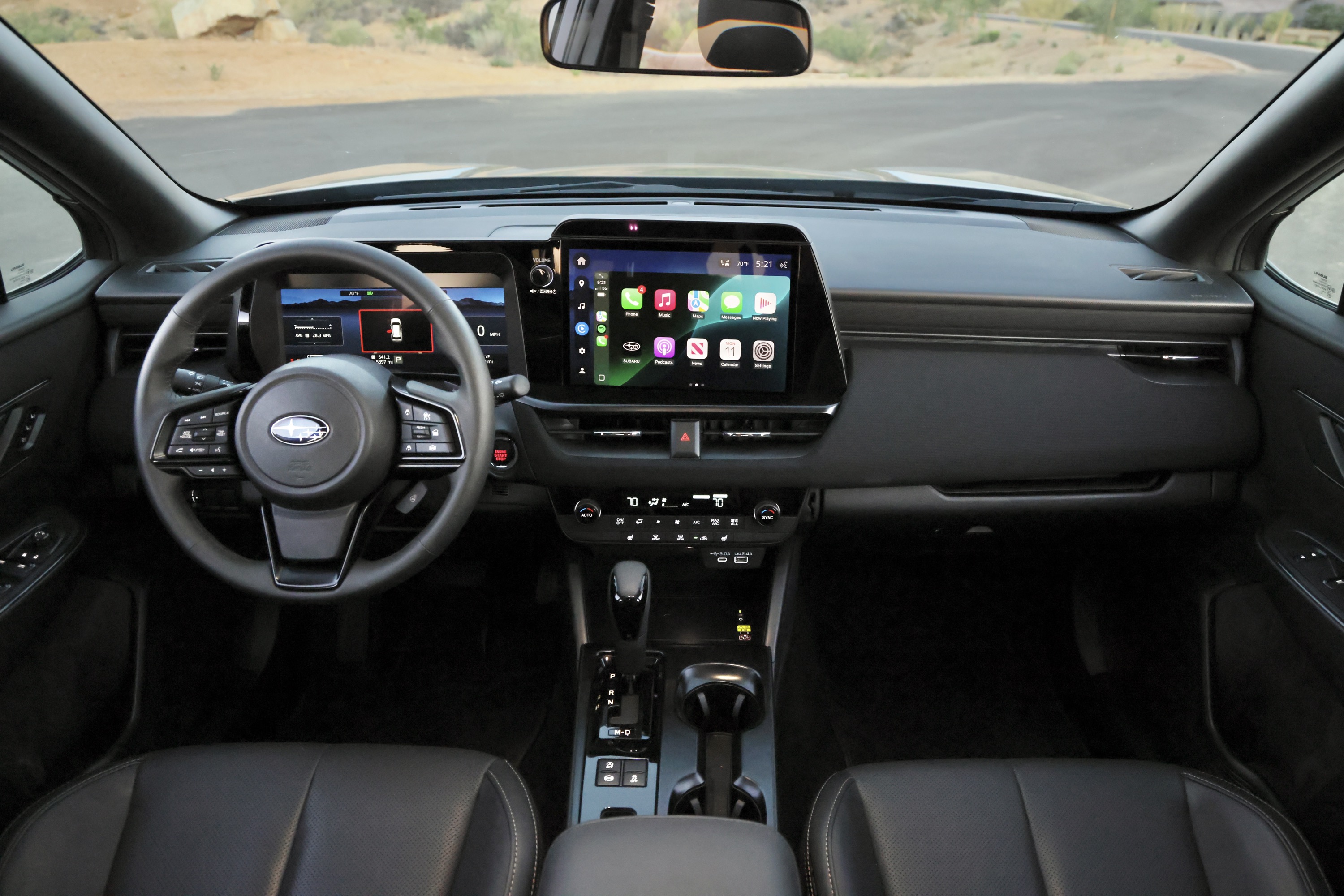
The new interior is an improvement.
Credit: Jim Resnick
The new interior is an improvement. Credit: Jim Resnick
While the front seats offer lots of legroom and adjustability and are very comfortable even on multi-hour drives, the rear seat offers even more space and shoulder room. But the seatbacks do not recline, as in many SUVs. Ingress and egress from both front and rear seats is also excellent. The Limited trim includes heated outboard rear seats. Thoughtful shopping bag hooks and tie-downs in the cargo area come standard, and there’s also meaningful under-floor storage back there, too.
On the technology front, a new 12.1-inch infotainment system responds quicker and proves easier to navigate, with large, highly legible icons. You can also more easily read the new 12.3-inch, hi-res, and configurable digital instrument cluster. Several USB-A and USB-C ports come standard front and rear, and there’s wireless charging up front.
My Outback Limited’s Harman Kardon audio system (12 speakers, 576 watts) reproduced sound better than I anticipated, whether I was piping in Miles Davis, MC5, or Mahler. The top Touring trims include a hands-free highway driving system that bridges the adaptive cruise control and lane-centering already aboard the Limited test vehicle.
ADAS needs work
A few words about active driving assists. Though the generous list of standard lane-keeping, lane-centering, and adaptive cruise features worked well, it was hard to appreciate them because the DriverFocus Distraction Mitigation system’s functions were so overbearing. Look away from the road dead-ahead for more than a second—even to glance at the infotainment screen—and you get an electronic finger-wagging that you’re not paying attention.
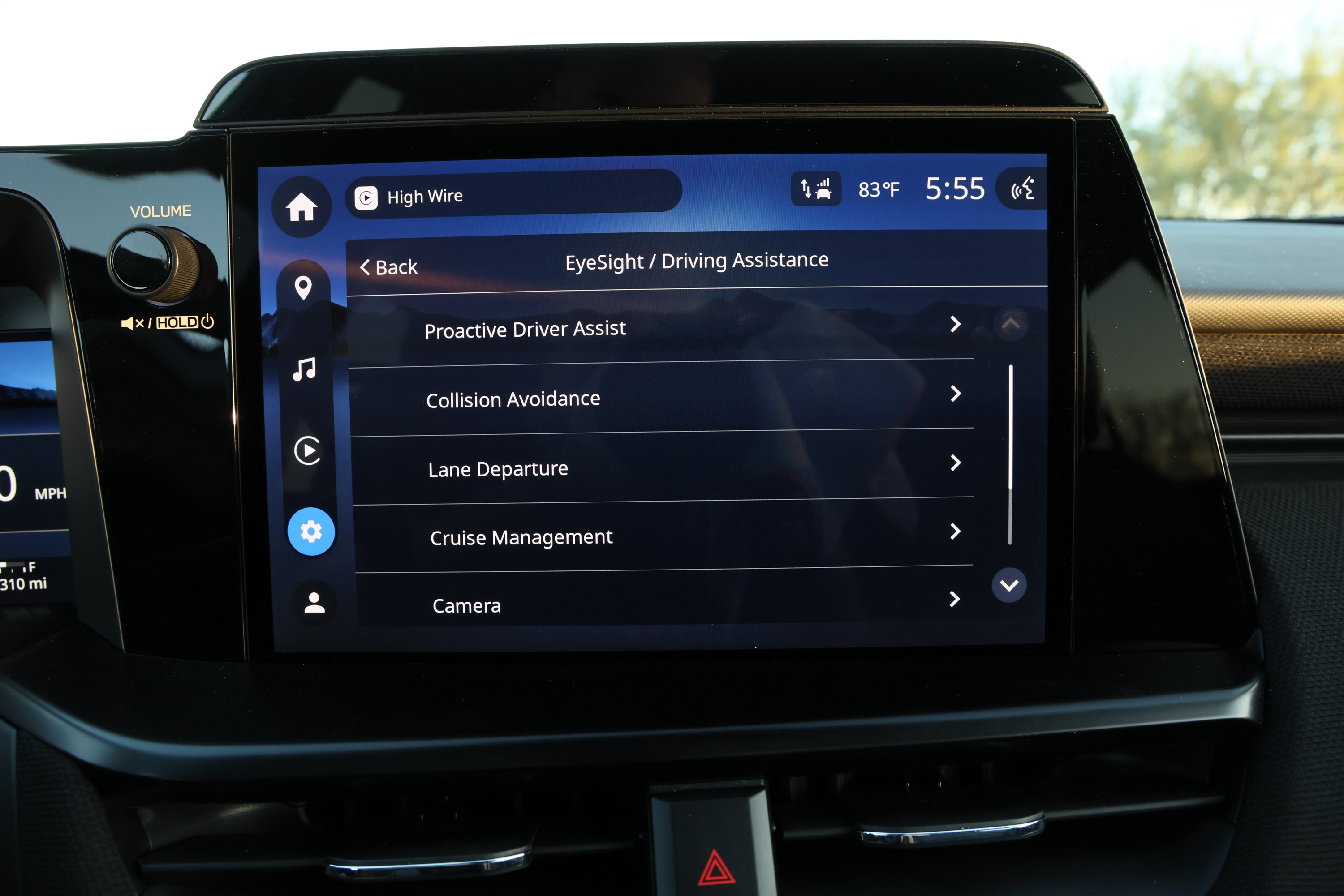
Go here to tweak the advanced driver assistance systems.
Credit: Jim Resnick
Go here to tweak the advanced driver assistance systems. Credit: Jim Resnick
With lane-centering and adaptive cruise engaged, the Outback repeatedly scolded me to put my hands on the steering wheel—when my hands were on the steering wheel. And then, when I intentionally let go to try to wake the system up and re-gripped the wheel with the firmness of a General Patton handshake, the system took about five seconds to register the re-grip.
Of course, you can disable the DriverFocus system, but you’d need to disable it on every restart of the car. Yes, Subaru laudably has put safety at the forefront, but I gave up driving with my mother 40 years ago.
Underneath the new boxy sheetmetal, Subaru avoids reinventing what already worked. The test Limited’s standard 2.5 L flat-four-cylinder engine develops 180 hp (134 kW) and 178 lb-ft (241 Nm) of torque. That’s adequate oomph, but it’s hardly brisk when toting around the Outback Limited’s 3,741 lbs (1,697 kg).
The turbocharged 2.4 L engine of the XT versions, making 260 hp (194 kW) and 277 lb-ft (376 Nm) of torque, offers power that the base engine can only dream of (if engines could dream). No hybrid version is available yet, but I suspect a hybrid Outback will arrive for 2027, likely with a version of the 194 hp (145 kW) drivetrain currently used in the Forester Hybrid. For those looking for something entirely electric, the new Subaru Trailseeker is marketed in other regions as the E-Outback and is close to, if not identical in, dimensions.
Both engines pair with Subaru’s continuously variable transmission, which performs adequately in sedate, everyday driving but lurches when pushed and can elicit some droning when climbing long freeway grades and accelerating hard.
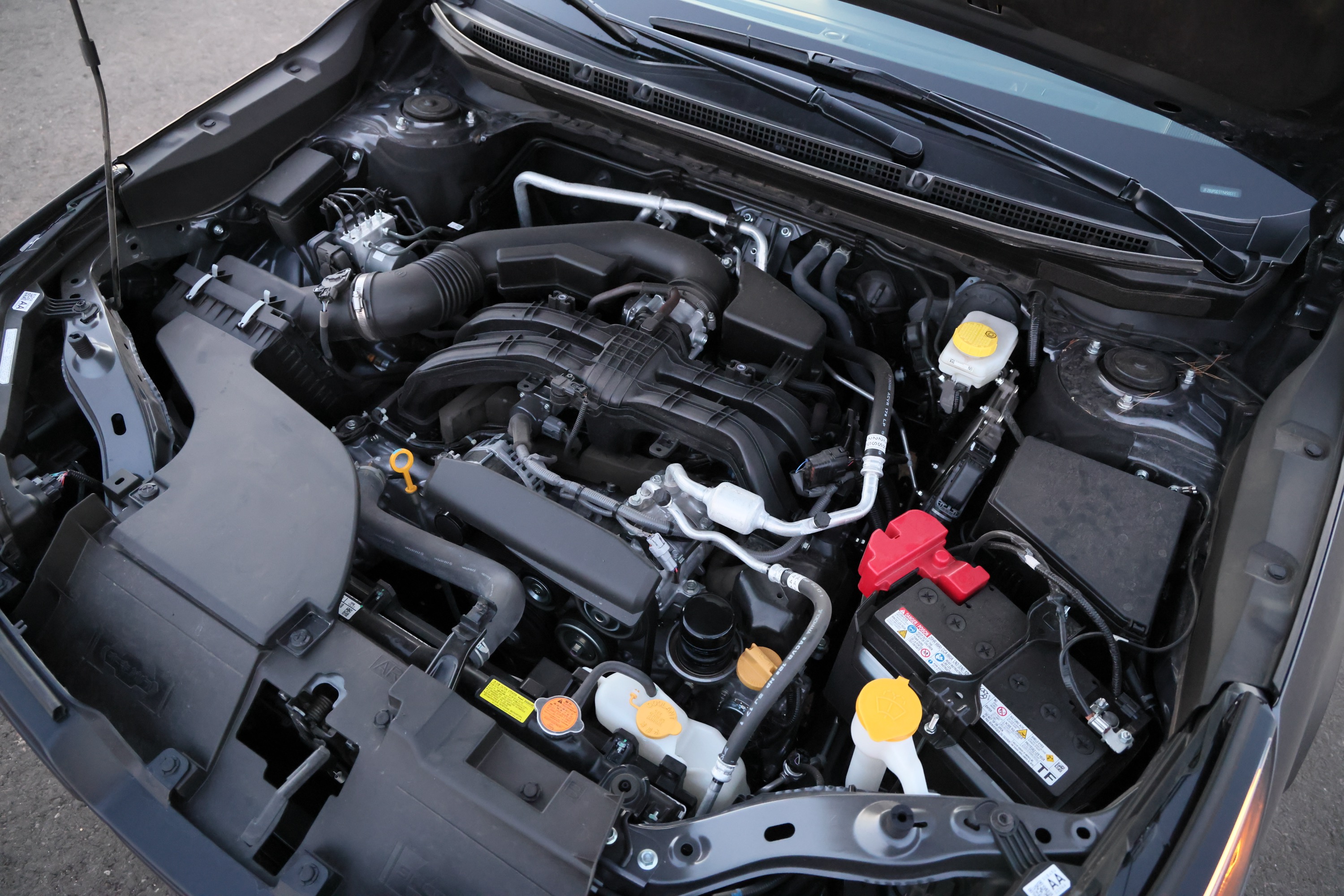
For now, there’s a choice of two engines.
Credit: Jim Resnick
For now, there’s a choice of two engines. Credit: Jim Resnick
Behind the wheel
More impressive is how much more refined the new Outback feels when not asked to perform like a sports car. The Outback hushes wind noise, smooths bumps and harshness on the freeway, and seems to dispatch dirt road roughness with nearly the same ease as it does on the highway. Twisty back roads are not really on the menu. I’d save that for the BR-Zs and WRXs of the world.
Though no off-road match for a Jeep Wrangler, the new Outback does everything the prior generation did when the road ends, meaning quite a lot given natural limitations. Both old and new Outbacks provide the same 8.7 inches (221 mm) of ground clearance (though the new Wilderness version yields 9.5 inches/241 mm).
Various traction-seeking features come standard on the Limited, like X-Mode Traction Management, which softens the throttle opening to avoid an initial loss of traction; variable torque split, which apportions more or less power to the wheels with more traction; and hill descent control, which regulates downhill speed so the driver can focus on steering on slippery downslopes. In addition to extra ground clearance and knobbier all-terrain tires, the Outback Wilderness adds selectable snow/dirt and deep snow/mud settings to the X-Mode system.
Thankfully, it’s not an all touchscreen interface. There are plenty of buttons. Jim Resnick
Regardless of traction-seeking software and hardware, I found the Outback Limited capable of handling anything I threw at it on the off-road trails I use in Arizona, within reason. Cliff-climbing and bouldering are clearly out of the question for the Outback, and like an athlete getting on in years, you have to be aware of your vehicle’s limitations before committing to off-road heroism. Your oil pan, ball joints, and differentials will thank you.
The Outback offers 34.6 cubic feet (980 L) of cargo space behind the rear seats and 80.5 cu. ft. (2,280 L) with rear seats folded. That’s a bit lower than class cargo leaders like the enormous way-back in Honda’s Passport, but the Outback is no slouch. Plus, the Outback benefits from a lower rear load-in height, so lugging heavy objects inside will prove easier.
There’s storage aplenty for small items, including carpeted space in each door pocket for a big 32-ounce water bottle, plus various little pockets around the interior for other trinkets. The center console isn’t huge, but it’s quite deep.
The EPA rates the Outback Limited’s fuel economy at 25/31/27 mpg in city/highway/combined driving (9.4/7.6/8.7 L/100 km). In my own mix of suburban and highway driving, I saw 28.4 mpg (8.3 L/100 km) over a week, discounting the off-roading session; that sort of driving is not comparable with normal driving or economy ratings. The Outback can also tow up to 3,500 lbs (1,588 kg), sufficient to pull a small trailer or boat.
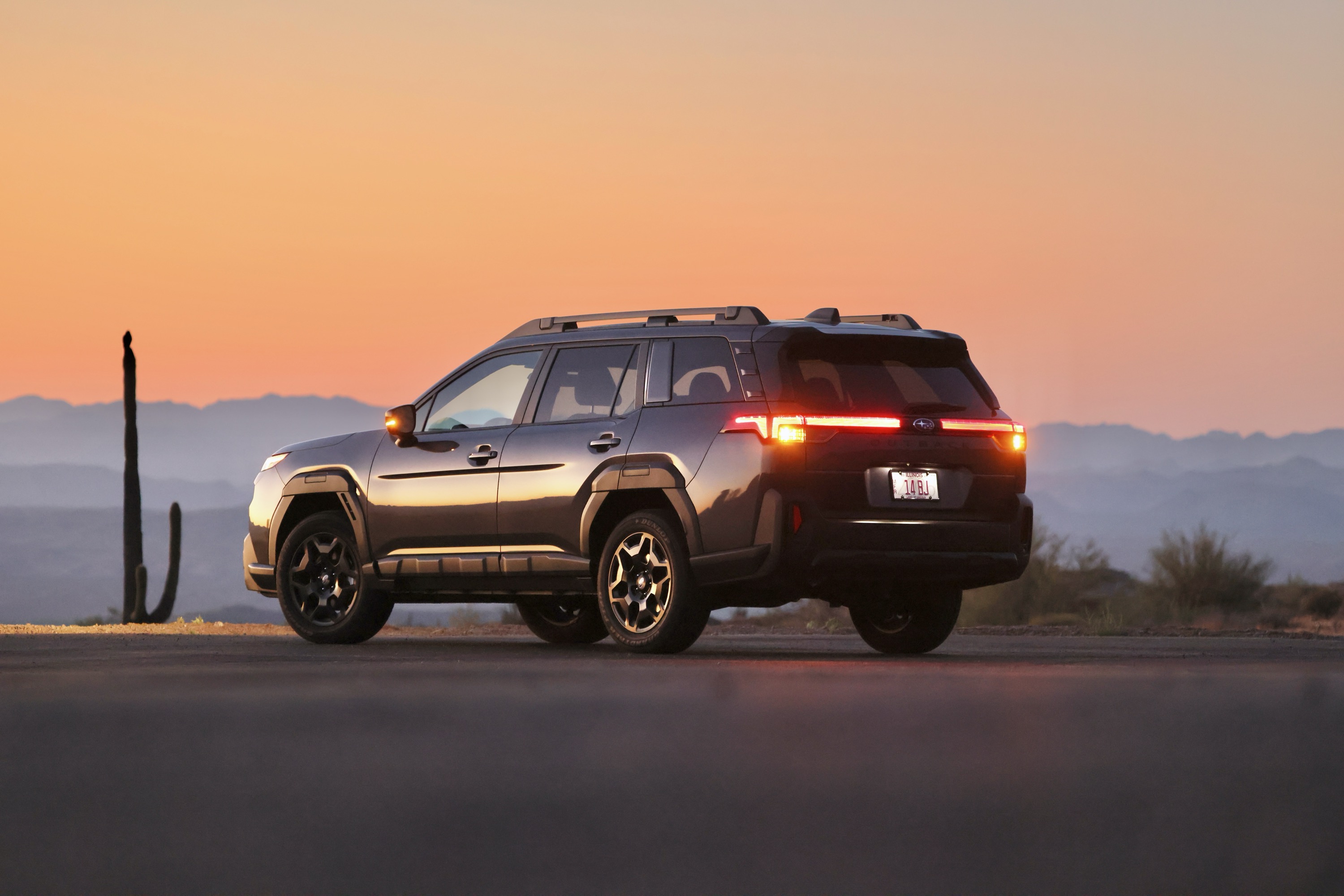
Still not a looker, though.
Credit: Jim Resnick
Still not a looker, though. Credit: Jim Resnick
While the new Outback’s styling will likely spark the loudest debates, after a week in the driver’s seat, it’s clear that Subaru has kept the vehicle’s mission intact. The latest Outback remains faithful to its well-established raison d’être as a tool for navigating your automotive life, be it in the carpool lane during rush hour or riding along the spine of the Continental Divide at sunrise.
A veteran of journalism, product planning and communications in the automotive and music space, Jim reports, critiques and lectures on autos, music and culture.
What's Your Reaction?
 Like
0
Like
0
 Dislike
0
Dislike
0
 Love
0
Love
0
 Funny
0
Funny
0
 Wow
0
Wow
0
 Sad
0
Sad
0
 Angry
0
Angry
0








Comments (0)