

36 years later, Akira's manga still has one of cyberpunk's best endings

Published Jun 29, 2026, 1:00 PM EDT
"There must be a future that we can choose for ourselves"
 Image: Kodansha
Every compelling cyberpunk story makes space for a glimmer of hope. No matter how bleak or depressing things get in a hellish dystopia, stories like Psycho-Pass or Ghost in the Shell: Stand Alone Complex insist on the beauty of human resilience in the face of chaos. The most seminal cyberpunk manga of our time ends in a similar vein, setting its sights on a just future that doesn’t exploit the vulnerable.
Six years after the serialization of Katsuhiro Otomo’s Akira began in 1982, the acclaimed manga artist helmed a hugely influential anime adaptation of his yet-to-be-completed work. This 1988 film, Akira, would go on to become a cornerstone entry in the cyberpunk genre and inspire a global cult following like no other.
The legacy of Otomo’s film is unprecedented. Everything from Pokémon (1997) to Nope (2022) has referenced the iconic Akira slide, while its themes of post-war instability and youth alienation have become a staple for dystopian sci-fi ever since. As sharp and uncompromising as Akira is in its vision of a broken world, the film is significantly different from the manga, which finished official serialization on June 25, 1990.
Both versions of Akira work with the same core premise. In the post-World War III metropolis of Neo-Tokyo, a teen biker named Tetsuo Shima goes rogue after gaining inexplicable telekinetic abilities. His best friend, the biker gang leader Shotaro Kaneda, teams up with several allies to help prevent Tetsuo’s destructive rampage before it tears the city apart.
The source of such unimaginable power is Akira, a mysterious entity whom Tetsuo desperately seeks out while experiencing disorienting visions. As the 1988 film radically condensed the then-unfinished manga, these overlapping stories take disparate routes to arrive at similar, but tonally distinct conclusions. To understand why Otomo’s manga ends the way it does, one must look closer at the events that span its six hefty volumes.
Kaneda is indisputably set up as Tetsuo’s foil in the film, but the manga isn’t too preoccupied with putting him front and center. While the manga fleshes out Tetsuo and Kaneda’s sibling-like bond further, its meandering focus on a wide ensemble cast (which includes Resistance member Kei and high priestess Lady Miyako) justifies Kaneda’s absence from chunks of the story.
 Image: Kodansha
As for Tetsuo, who cuts a sympathetic figure in the 1988 film, he emerges as more complex and ruthless in Otomo’s manga. Apart from the simmering jealousy that contributes to his conflict with Kaneda, manga-Tetsuo feels embittered due to intense childhood trauma. The destruction he causes in Neo-Tokyo is also more devastating and arbitrary, exacerbated by his addiction to esper-suppressing drugs and other stimulants.
As the title indicates, all roads lead back to Akira, the child test subject whose uncontrolled telekinetic powers destroyed old Tokyo and triggered World War III decades earlier. In the film, Otomo portrays Akira as a looming threat that essentially functions as a MacGuffin, fueling Tetsuo’s obsession with finding Akira’s remains. The manga, however, awakens Akira from cryogenic sleep in Volume 3, which immediately jeopardizes the existence of such a highly coveted individual.
 Image: Kodansha
Otomo’s manga is also epic and sweeping in its scope. Neo-Tokyo is a convoluted web of factions, including the cult-like Great Tokyo Empire (with Akira as its mute godhead and Tetsuo as his vicious right-hand), the pacifist Temple of Lady Miyako, Colonel Shikishima's military forces, and the anti-government group called The Resistance. Akira’s awakening is further complicated by the corrupt Japanese government and the presence of international soldiers seeking to capitalize on Neo-Tokyo’s escalating instability.
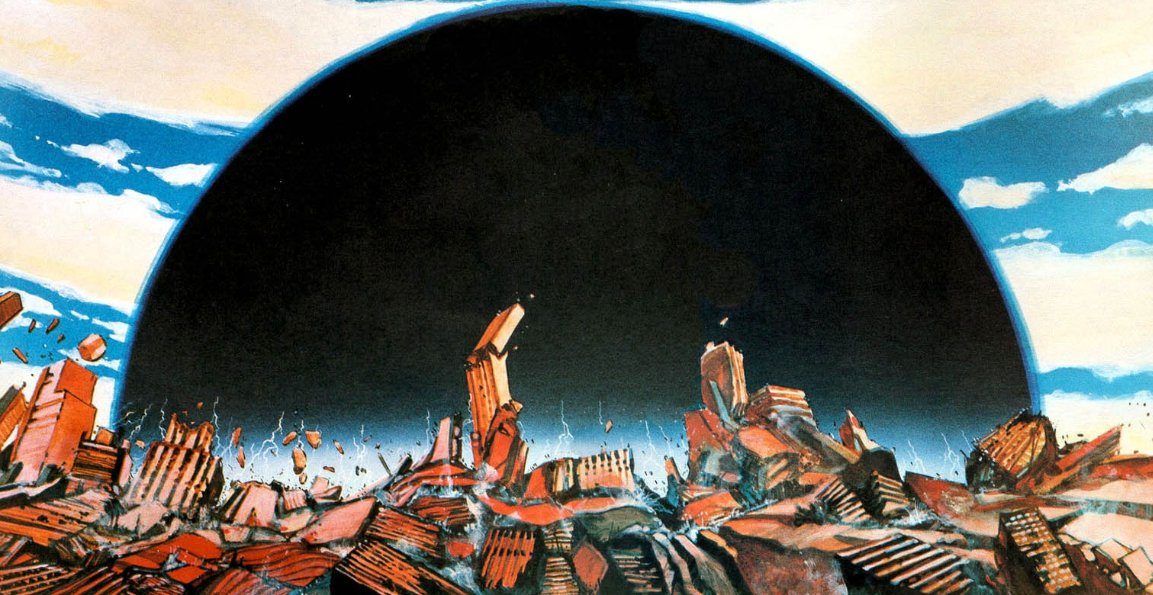
1988’s Akira had to dilute these nuances for dramatic purposes, ultimately streamlining the narrative to deliver a more thematically potent ending. Here, Tetsuo’s hunger for power causes him to rapidly mutate and take an evolutionary leap, which triggers a nuclear explosion in Neo-Tokyo. The impact is devastating, as we see Kaneda enter a new dimension created by Tetsuo, where he reflects on their shared, albeit traumatic, childhood with tender nostalgia.
 Image: Kodansha
This bittersweet moment puts the film’s themes into perspective — Otomo lays bare the tragic reality of orphans like Tetsuo and Kaneda, who indulge in a fleeting moment of innocence against the backdrop of blinding nuclear annihilation. The tone, however, is tentatively hopeful. The film’s silent final shots communicate a feeling of renewal, as these charred ruins can become the foundation for a new future.
The manga also maintains some semblance of optimism, but the implications are more ambiguous than its cinematic counterpart. Neo-Tokyo is destroyed a second time halfway through the manga, leading to the lawless rule of the Great Tokyo Empire, along with incessant conflict between Japanese and American forces. Tetsuo’s mutation reaches grotesque levels towards the end, but in this form, he is relentlessly attacked by Kaneda, the US military, and psychic-powered children known as Espers.
 Image: Kodansha
To cancel out Tetsuo’s attack, Akira emits an energy blast so intense that they’re both consumed by it. Kaneda ends up playing a more proactive role amid this chaos, rejecting corrupt government intervention and charting out a hopeful path ahead. A new version of the Great Tokyo Empire is established, but its ideological foundations remain shaky in the wake of city-wide destruction. Kaneda seeks the reclamation of Japanese identity, granting civilians the opportunity to rebuild society on their own terms.
This ending, however, feels like a double-edged sword. Although Kaneda and Kei’s final panels portray them as a hopeful pair driving off into the sunset, the uncertain fate of Neo-Tokyo raises uncomfortable questions. While Kaneda asserts his idealized vision of the future, systemic corruption and imperialistic intervention won’t vanish overnight, especially after a near-cataclysmic event. While Akira doesn’t look past these inevitabilities, Otomo chooses to celebrate the defiant nature of rebellion rather than let the darkness overwhelm us. After all, such a hard-earned reality can only be built on the most fiery brand of hope.
What's Your Reaction?
 Like
0
Like
0
 Dislike
0
Dislike
0
 Love
0
Love
0
 Funny
0
Funny
0
 Wow
0
Wow
0
 Sad
0
Sad
0
 Angry
0
Angry
0










Comments (0)