

5 Deepest Attack on Titan Characters

Published Jul 11, 2026, 11:58 PM EDT
Kolt Day is a tenured freelancer who has brought invigorating and provocative takes to Screen Rant and ComicBook, alongside loads of writing experience in other realms. Outside of media journalism, Kolt loves music production and philosophy (particularly Nietzsche, Derrida, and Foucault).
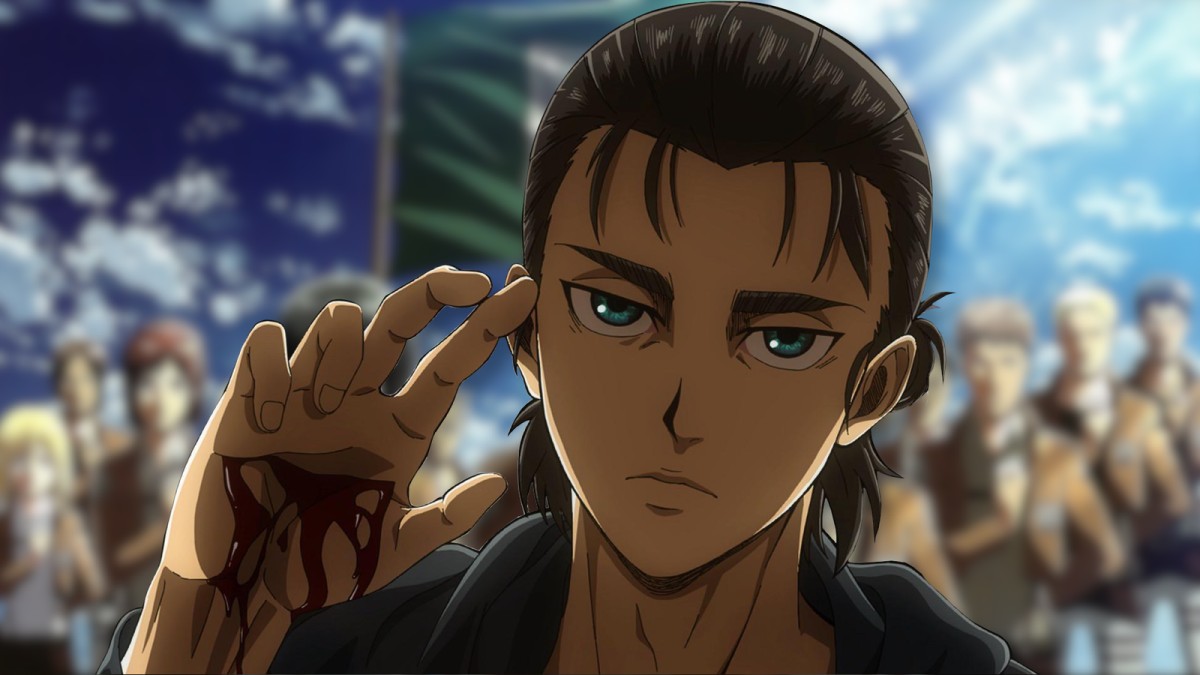
Attack on Titan is loaded with excellent characters, but a few characters show the series' profound depth more than others. Lauded as one of the greatest anime of all time thanks to the sheer depth of its story, the maturity of its themes, and its excellent writing, Hajime Isayama's Attack on Titan enchanted readers with a world of unparalleled magnitude over the course of its nearly 12-year manga run.
Discussions of Attack on Titan's best characters often focus on qualities like strength, leadership, or overall plot impact. Obviously, characters like Eren, Armin, and Mikasa tend to make the top of those lists. But those characters don't fully show how Attack on Titan became such a deeply beloved title.
Many characters do subtler work in bringing Attack on Titan to life, demonstrating how profound its ideas are and how deeply its stakes run. Whether it's by showing new corners of the world or through showing the tensions of its politics, the series has countless personalities who only grow richer the more they're considered.
Jean Kirstein

Jean is a relatively straightforward character, but he was also Isayama's favorite Attack on Titan character for a time, precisely because of his humanity and simplicity. Compared to the triumphant goals, lofty ideals, and superhuman abilities many other main characters carry, Jean feels strangely relatable: he's simply somebody caught up in something much bigger than himself. His story starts out as such: he's brash, even unlikable, and jealous, but enlists as a cadet with the hopes of eventually having an easy domestic life.
Later, when his closest friend Marco dies in front of him, Jean has major character development. Through the pain, he resolves to become as strong as he can in order to save those around him as much as to solidify his own ideal life. He never quite sacrifices his own ideals, but he realizes that his humble goals are inseparable from the safety and welfare of those around him.
In the process, he uses his personal pain to foster a sense of humility, a turn which pushes him to grow into one of the series' most dedicated and responsible characters. Above all, the strength of his writing lies in the fact that, in a world of extraordinary people, he creates his own sense of being extraordinary out of the very fact that he's deeply ordinary: trying his absolute hardest to become good enough, and strong enough, to protect his dreams and those he loves.
Floch Forster

Floch serves almost as a direct foil to Jean. While Jean's narrative sees his circle of empathy expand, Floch's dramatically contracts. One of Attack on Titan's greatest accomplishments is the sleight of hand that makes both of these seem just as understandable and human. By Attack on Titan's final arc and the height of the Yeagerists, Floch has taken on a decidedly villainous role, representing an unshakable resolve to whatever means—however violent and morbid—will ensure the security of the Eldians of Paradis in his eyes.
Much like Jean, Floch's response is born out of tragedy, but the way the two respond to tragedy is completely different. Fans will remember that he was the only survivor of Erwin's suicide mission and ended up having to be the person to carry Erwin's body back, leading to his emotional pleads for Erwin's revival over Armin. Seeing his comrades taken out and the last breaths of the leader to whom he had entrusted his life and future would be the inciting incidents for Floch's development into a character soured on sacrifice and heroism.
Afterward, he becomes ultimately obsessed with survival in a world he perceives as inherently hostile, at any cost. For Floch, the only conclusion is to become a devil. Floch's natural growth into a violent extremist isn't accidental, but is one of the ways Attack on Titan humanizes myriad ideologies and political responses. In this sense, while the series doesn't endorse Floch's position by any means, it does provoke questions about why someone could develop it, and place it in a natural context with the other motivations in the series.
Levi Ackerman

Levi Ackerman is beloved and has even been called Attack on Titan's true hero. However, while many assessments of Levi focus on his heroism, leadership, and combat prowess, he's an incredibly compelling character in terms of what he adds to Attack on Titan's world.
The simple fact is that, for the most part, the underground city where Levi grew up isn't really discussed. It only really appears in a handful of episodes throughout the anime's run, and often only with a glancing view; most of its description comes from Levi's OVA, A Choice with No Regrets: Part One. Nonetheless, the squalor of the underground is incredibly apparent in every aspect of Levi's personality.
Levi's pragmatism and motto of having to adapt while committing to one's decisions are both heavily ingrained in the conditions Levi faced in the underground; discovered as an orphan following his mother's death, Kenny takes in Levi until he can fend for himself. In the underground, that meant adaptability at every level.
In fact, the underground opens up a dimension of Paradis that usually remains unexplored: the socially downtrodden, marginalized, and criminal classes. It's not always obvious, but Levi's later resistance to moralizing his choices or letting ideals win over adaptability was born out of this environment: the need to connect with, and fend against, all kinds of people in order to survive.
Levi's dedication to the underground's people, and its massive imprint on his personality, can be found early in Historia's reign when he emphatically supports her initiative to relocate its children and the needy to the surface. The same senses of cool and adaptable resolve that make Levi so distinctive are grounded in a personality that never pitied its origins, but used them as a means to grow stronger.
Reiner Braun

Reiner is an interesting character because he's split to the core, and his personality sees immense development throughout the series as a result. Like many Eldians living in Marley who wish to become Honorary Marleyans, Reiner's primary motivations are his family's security and gaining esteem among Marleyans.
That is to say that Reiner's concerns were hardly ideological to begin with. The Paradis Island Operation, which carried him and the other Warriors to Paradis, saw them deeply embedded with Paradis' cadets, growing and learning alongside them. As time carried on, this would splinter Reiner's perception of Eldians, and of himself as one: he was playing a critical role in a mission explicitly intended to recover the Founding Titan and secure Paradis' resources.
Most major characters in Attack on Titan have the opportunity to see both sides of the conflict, serving to break down the binary between "good" and "bad" people. Nobody better represents that than Reiner, but most people don't get why: it's not because of his sense of guilt as an Honorary Marleyan, nor is it about his suffering from his eventually-split allegiances.
It's the way that Reiner becomes a franchise-long case study on the slippery nature of identity: how institutions, political machinations, and personal motivations become as much a source of suffering as hope when they coalesce into an idea of what it means to embody an identity. His ability to resolve that tension in the end makes him on of Attack on Titan's most inspiring characters.
Zeke Yeager

Zeke Yeager is Attack on Titan's most misunderstood character, and the nuances of his writing tend to be missed. Much like Floch can be contrasted with Jean as examples of how Attack on Titan shows characters reacting to grave trauma, Zeke can be contrasted with Reiner to show the complex psychology behind Honorary Marleyans. While Reiner's initial ambitions were practical, Zeke's ambitions were always deeply ideological.
The prime point of this contrast is in how, in the end, each relates to Eldians. For Reiner, humanization of the Eldians was always possible because his problem was never deeply ideological to begin with. For Zeke, Eldians never needed to be humanized; their humanity was always the problem—the ability to rebel and revolt, to suffer in victory and in defeat, to love and leave unloved. Eldians' humanity was inherent to their seemingly incessant subjugation, while their inhumanity was strangely inherent to the conditions of their humanity.
Zeke, above all, personifies the uncomfortable reality of two ways of telling the truth coming into conflict: his father's vision, which was disseminated to Paradis, and the stories of Eldian atrocities relayed to him by every level of Marleyan society. He internalized Marley's view of what it means to be Eldian, while simultaneously being aware of—and resenting—his Eldian Restorationist parents' views of what it means.
In his collision of the two systems, Zeke extracted one key truth to call his own: to be Eldian means to suffer. Viewing Zeke in that light adds a world of depth to his character development, and makes his eventual Euthanasia plan a much more satisfying—if ill-founded—endgame for his writing. In his efforts to reject the two sets of truths that defined him, he could only commit to an ideology that conceded to both. In that sense, Zeke is a perfect example of the layered writing that makes Attack on Titan's characters so rich.
Cast Yûki Kaji, Yui Ishikawa, Marina Inoue, Hiroshi Kamiya, Daisuke Ono, Romi Park, Kazuhiro Yamaji, Takehito Koyasu, Yoshimasa Hosoya
Video Game(s) Attack on Titan, Attack on Titan 2: Final Battle
First Film Attack on Titan: The Crimson Bow and Arrow
Created by Hajime Isayama
What's Your Reaction?
 Like
0
Like
0
 Dislike
0
Dislike
0
 Love
0
Love
0
 Funny
0
Funny
0
 Wow
0
Wow
0
 Sad
0
Sad
0
 Angry
0
Angry
0








Comments (0)