

8 Gilmore Girls Episodes That Don't Hold Up Today
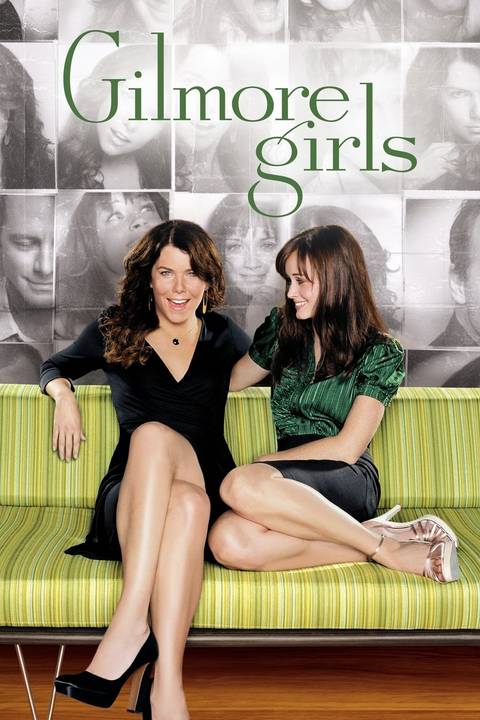
Though it ended nearly 20 years ago, Gilmore Girls remains one of the most rewatchable shows in television history. In fact, yearly rewatches are a time-honored tradition amongst many fans, with most occurring in the Gilmore Girls-friendly season of fall.
Gilmore Girls' genius lies in its perfect blend of timelessness and nostalgia. Neither Lorelai and Rory's inimitable, caffeine-fueled banter nor the small-town coziness of Stars Hollow ever goes out of style or feels dated, while the series' pop culture references and peak 2000s fashion make it a fun blast from the past.
However, one of the harsh realities of being a Gilmore Girls fan is that the show is very much a product of its time in some pretty uncomfortable ways. While most of its humor is witty and fresh, Gilmore Girls also leaned on the mean-spirited humor that defined the decade it aired, particularly regarding fatphobia. Several of Gilmore Girls' romantic relationships and the show's approach to classism have also aged poorly when viewed through a contemporary lens.
Though these faux pas often occur in some of Gilmore Girls' worst and most skippable episodes, they also pop up in some fan favorites as well. This doesn't mean these episodes should be tossed out of rewatches or no longer remembered for their merits, just that their problematic elements are too glaring to ignore.
"That Damn Donna Reed"
Season 1, Episode 14

Team Dean advocates tend to be in the minority when it comes to the ongoing debates surrounding Rory Gilmore's best romantic partner. However, Gilmore Girls' early days portrayed Rory's relationship with boy-next-door Dean Forester as wholesome and sweet, even when it came to their first quarrel, which occurred in season 1's "That Damn Donna Reed".
When Lorelai and Rory invite Dean to partake in their time-honored ritual of mocking the 1950s traditionalism of The Donna Reed Show, he reveals himself to be a staunch supporter of the nuclear family, and embraces the idea of a wife staying home to care for her husband and children. Rory feels that Dean is being patriarchal, and she decides to dress up like Donna Reed and make him a home-cooked meal to show him how ridiculous his ideals are.
However, that's not exactly how the night plays out. Instead, Rory gets upset for forgetting to make dinner rolls, while Dean ends up taking out the trash, and the episode ultimately reinforces the gender norms it initially set out to pillory. "That Damn Donna Reed" is also dark foreshadowing of Dean's possessiveness and his horrible behavior as an actual husband in his marriage to Lindsay, making the episode's tone more disturbing than the cute whimsicality it aims for.
"A-Tisket, A-Tasket"
Season 2, Episode 13

Stars Hollow is full of quirky festivals that Gilmore Girls fans would love to attend if given the chance, but the town's annual Bid on a Basket fundraiser is outdated and just plain creepy. Modeled after actual "box socials" of the early 1900s, the idea is that women not only labor over preparing elaborate picnic baskets for men to bid on in the town square, but are forced to share their prepared meal with the winning bidder, and thus, they themselves are auctioned off like property.
"A-Tisket, A-Tasket" is hardly the most egregious Gilmore Girls episode, especially because the women all seem happy to participate, but the behavior of several male characters is enough to give viewers the ick. First, Jackson passive-aggressively refuses to bid on Sookie's basket because she said he should renew his lease on his bachelor pad rather than inviting him to move in with her — only to propose to her in that same episode. The show frames this as sweet, but the move will prove to be just one of Jackson's many red flags.
Second, there's the Rory-Dean-Jess love triangle that crystallizes when Jess outbids Dean for Rory's basket. It's great drama and a big win for Team Jess fans, but the boys' caveman-like fighting over Rory and her insistence on being treated like paid-for property because of the fundraiser's rules is incredibly uncomfortable to watch.
"Here Comes The Son"
Season 3, Episode 21

Unlike Gilmore Girls' other episodes that have aged poorly, "Here Comes the Son" doesn't feature mean-spirited jokes or toxic romantic storylines. In fact, half of the episode is standard Gilmore Girls fare, with Rory stressing over her final Chilton exams and Lorelai feuding with Emily while worrying about a major snag when it comes to paying Rory's Yale tuition.
However, the other half sees Jess skip Stars Hollow and travel west to see his father, Jimmy, in Venice Beach, California. Jess immediately feels unwelcome, leading to tension with Jimmy. Their conflict is bland yet overwrought, and feels tonally out of place with Gilmore Girls' typical nuanced, heartfelt drama.
This is because "Here Comes the Son" was serving as a potential backdoor pilot for a Gilmore Girls spinoff titled Windward Circle that would follow Jess's adventures in California as he attempts to turn his life around and reconnect with Jimmy. Windward Circle never came to fruition, and it's easy to see why, as Jess and Jimmy's relationship isn't nearly as deep and compelling as Rory and Lorelai's, and only serves as an unwelcome distraction from Rory's impending graduation.
"Die, Jerk"
Season 4, Episode 8

Lorelai and Rory are considered to be two of TV's funniest female characters, and while their banter is indeed bar none, much of their humor is downright cruel and comes at the expense of others. This is never on more blatant display than in "Die, Jerk," in which the Gilmore girls attend a student ballet that Rory is tasked with reviewing for the Yale Daily News.
Mother and daughter make merry sport out of trash-talking the lead ballerina, which is bad enough, but Rory actually includes these comments in her review, turning it into a fat-shaming hit piece rather than a thoughtful critique. When the ballerina angrily — and publicly — confronts Rory, the episode treats the encounter with a degree of humor, with Rory awkwardly defending her journalistic integrity rather than admitting that she crossed a line.
Afterward, Rory is chastened, but again, this isn't because she sees the error in her ways but because she has lived her entire life being treated as the golden child and can't stand being disliked. If anything, the ballerina episode foreshadows Rory's downfall when Mitchum tells her she doesn't have what it takes to be a serious journalist, but in "Die, Jerk," she's rewarded for her unprofessional review when Doyle gives her the opportunity to write another. "Die, Jerk" is Gilmore Girls embracing the absolute worst of the 2000s.
"Girls In Bikinis, Boys Doin' The Twist"
Season 4, Episode 17

"Girls In Bikinis, Boys Doin' The Twist" is a divisive installment in the Gilmore Girls fandom. On the plus side, it has some hilarious fish-out-of-water humor as the studious Rory and Paris head south to Florida in an attempt to enjoy a traditional college spring break.
However, their behavior is also extremely cringeworthy as they both embrace the "I'm not like other girls" trope to the hilt, with Paris in particular belittling their roommate Janet for her thinness, fitness enthusiasm, and enjoyment of basic college pleasures. That is, until Rory and Paris have a change of heart and happily bum a ride with Janet's friend.
The 2000s were also shamelessly misogynistic when it came to bashing any woman society deemed vapid, whether it was Paris Hilton, Britney Spears, or Gilmore Girls' own Madeline and Louise, who make their only post-Chilton appearance in the episode. Rather than young women spiritedly enjoying their college years, "Girls in Bikinis" treats the characters as butt-of-the-joke bimbos, whom Rory and Paris thoroughly exploit for their own whims. Throw in the dated trend of girls kissing for male attention and Rory's drunken phone call to Dean, which leads to their ultimate affair, and this episode is a low point for Gilmore Girls.
"You Jump, I Jump, Jack"
Season 5, Episode 7

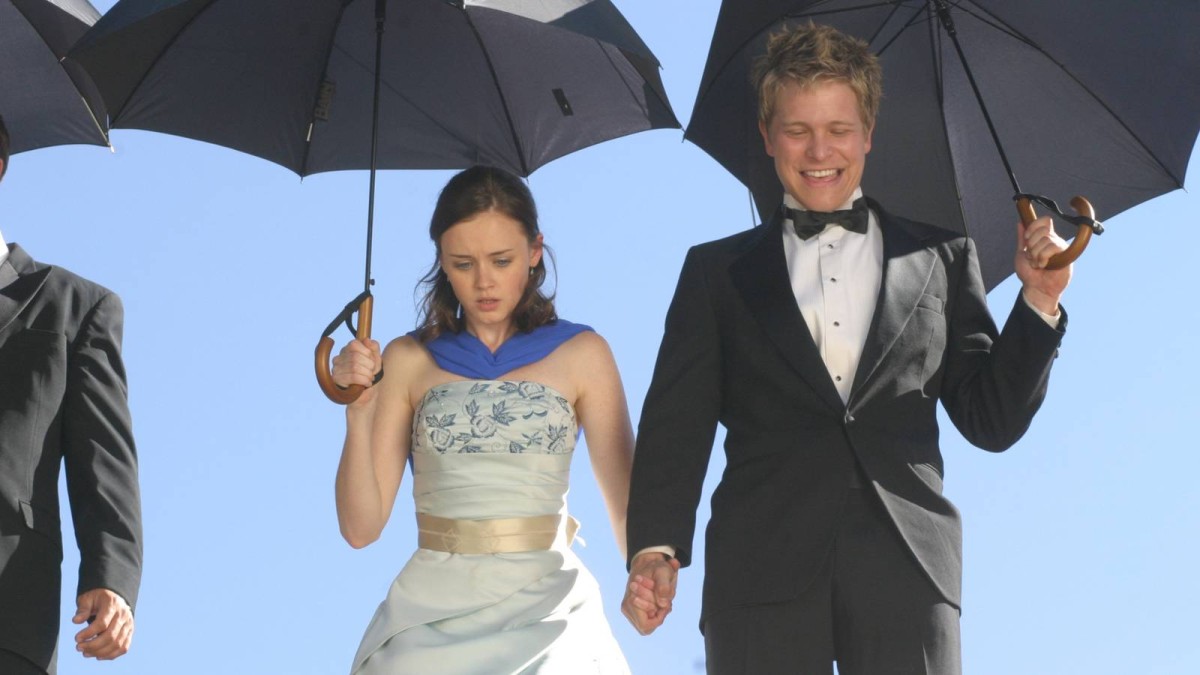
A Gilmore Girls fan-favorite episode, especially for Team Logan devotees, "You Jump, I Jump, Jack" sees Rory not only going all in on Logan but also his privileged lifestyle after some elitist hijinks with the Life and Death Brigade. After being assigned to report on the secret society for the Yale Daily News, Rory is blindfolded and transported to a forest where she swills expensive champagne and witnesses the Life & Death Brigade engage in pretentious activities such as conversing without using the letter "E."
The climax of the secret event sees six members of the society jumping from a great height, which Logan invites Rory to partake in. Not only does "You Jump, I Jump, Jack" portray this as a positive example of Rory stepping outside her comfort zone, but it also glamorizes the Life and Death Brigade as captivating bon vivantes, as opposed to the shallow, reckless elitists that they are. While Lorelai may disavow her upper-crust roots, Gilmore Girls often revels in them, and this episode is one of the worst offenders.
"That's What You Get, Folks, For Makin' Whoopee"
Season 7, Episode 2

Don't let the whimsical title fool you — "That's What You Get, Folks, For Makin' Whoopee" is one of Gilmore Girls' darkest episodes. The second entry in the maligned Gilmore Girls season 7 was the official nail in the coffin for Lane's character. The show had already given her a downward trajectory by having her inexplicably marry the immature, inferior Zack, but they doubled down on Lane's misery by having her return from her miserable honeymoon pregnant with twins after her very first sexual encounter.
This is frustrating because, after seasons of treating Lane as nothing more than Rory's obsequious sidekick, Gilmore Girls finally allowed her to have some agency by allowing her to pursue her rock-and-roll dreams only to scuttle them with this episode. It's a bizarre double standard that Rory is allowed to make mistakes and have adventures while Lane is punished for daring to have a fraction of those life experiences.
Gilmore Girls season 7 feels like such a departure from the previous seasons because it's the only one without series creator Amy Sherman-Palladino at the helm.
If that's not all bad enough, "Makin' Whoopee" also sees Lorelai attempting to lift Rory's spirits after her trip to Asia gets canceled by giving her a culturally insensitive experience of Asia complete with kimonos and hair tied up with chopsticks. Gilmore Girl season 7 as a whole is a low point for the series, but this episode is the lowest.
"Summer"
Gilmore Girls: A Year In The Life, Episode 3

You'd think that a revival released almost a decade after the series finale would have freshened up the stale, out-of-touch elements of Gilmore Girls' humor, but A Year in the Life proves that the franchise isn't ready to let go of its fatphobia. The opening scene of "Summer," the third episode of Gilmore Girls: A Year in the Life, is one of the cruelest in Gilmore Girls' entirety.
In it, Lorelai and Rory sit by Stars Hollow's municipal pool, harrumphing the season and insulting the bodies of anyone and everyone who has the misfortune of passing by. For a show that features several full-figured women in meaningful roles, it's especially odd that males with larger bodies are fair game for the Gilmore girls' acid-tongued barbs. Another scene features more of this color commentary, complete with Lorelai and Rory treating two local boys as servants, and Rory accidentally calling one of the men "fat" instead of Pat.
The episode also heavily features the divisive Stars Hollow musical, which is essentially nothing more than Broadway star-studded filler that takes away from the actual plot involving the main characters — though any time spent away from Lorelai and Rory's poolside takedowns is a welcome distraction. If this is Gilmore Girls' summer, there's a reason why it's a fall show.
Release Date 2000 - 2007-00-00
Directors Jamie Babbit, Amy Sherman-Palladino, Lee Shallat Chemel, Kenny Ortega, Michael Katleman, Matthew Diamond, Michael Zinberg, Gail Mancuso, Lesli Linka Glatter, Steve Clancy, Bethany Rooney, Jackson Douglas, Robert Berlinger, Steven Robman, Alan Myerson, Lev L. Spiro, Rodman Flender, Adam Nimoy, Arlene Sanford, Bruce Seth Green, Danny Leiner, David Paymer, David Petrarca, Eric Laneuville
Writers Rebecca Rand Kirshner, David S. Rosenthal, Sheila R. Lawrence, Jennie Snyder Urman, Joan Binder Weiss, David Babcock, Bill Prady, Gayle Abrams, Gina Fattore, Jane Espenson, Jenji Kohan, Keith Eisner, James Berg, Stan Zimmerman, Allan Heinberg, Jed Seidel, Jessica Queller, Lisa Randolph, David Grae, Rina Mimoun, Jordon Nardino, Scott Kaufer, Joanne Waters
What's Your Reaction?
 Like
0
Like
0
 Dislike
0
Dislike
0
 Love
0
Love
0
 Funny
0
Funny
0
 Wow
0
Wow
0
 Sad
0
Sad
0
 Angry
0
Angry
0




Comments (0)