

Against all odds, SpaceX finally tugs Starship into port after 24 days at sea
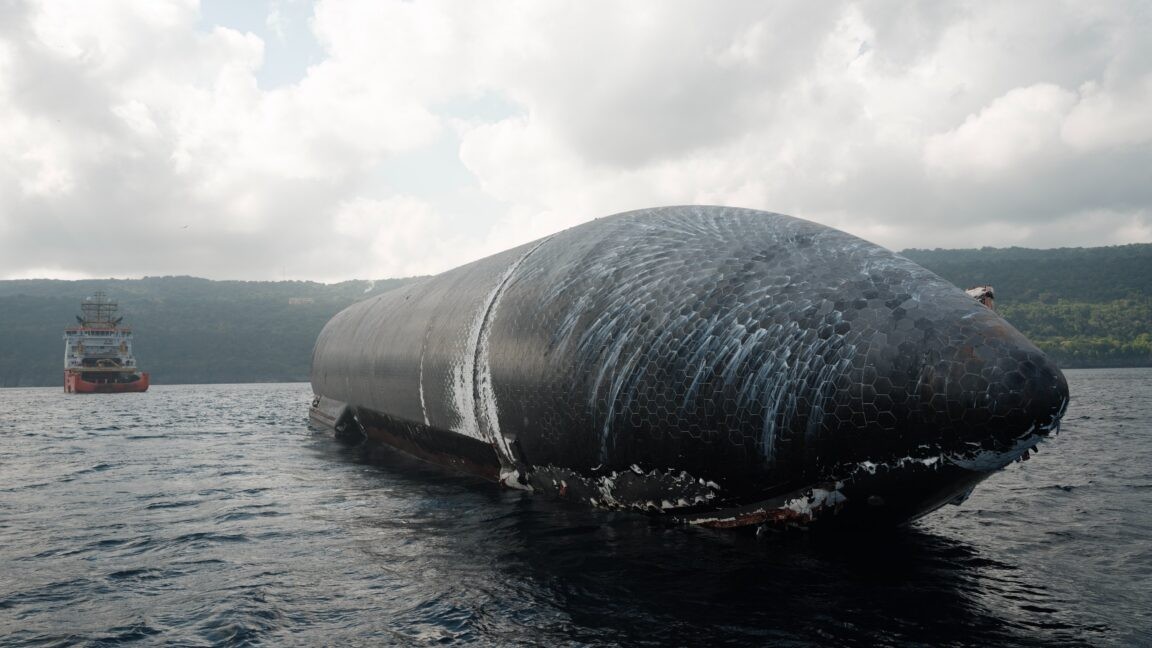
The company intends to recover future Starships directly at the launch site, using mechanical arms on the launch tower to catch the vehicle during final descent. That will help SpaceX expedite reuse of the vehicle. This one won’t be reused. Splashing down in the ocean exposes the spacecraft’s engines, stainless steel structure, and sensitive electronics to the corrosive effects of salt water. The vehicle also sustained damage during the tip-over after splashdown.
Successfully bringing Starship to Christmas Island was perhaps just as unexpected as the vehicle ending its test flight intact. At one point last week, Elon Musk, SpaceX’s CEO, said that recovering the ship was “not looking good.” He said teams in the Indian Ocean were able to obtain close-up photos of the heat shield and engines “for future upgrades.” The recovery crew kept Starship afloat in rough seas by attaching air-filled Yokohama fenders around the vehicle.
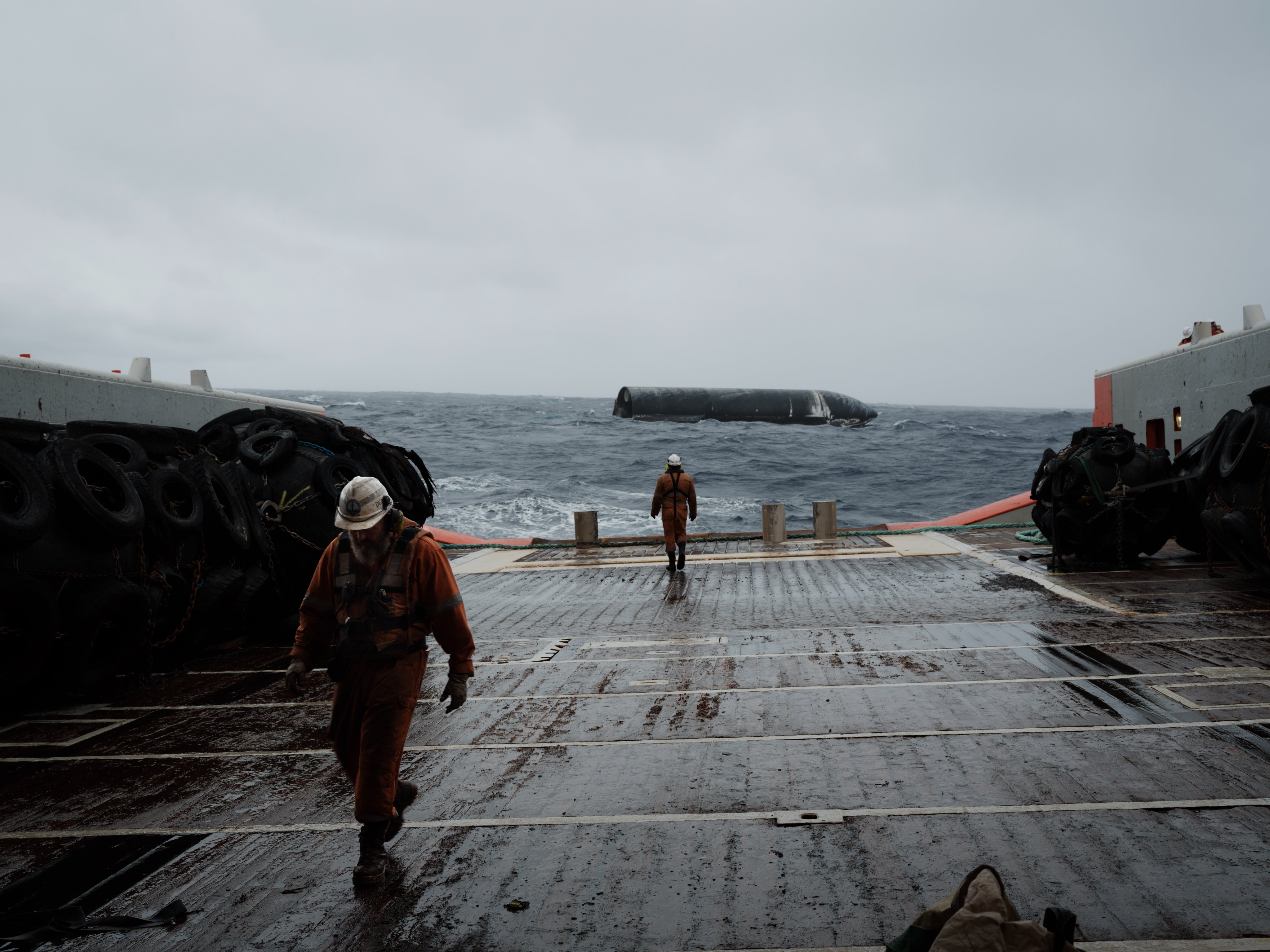
Starship floats off the stern of a recovery ship in the Indian Ocean.
Credit: SpaceX
Starship floats off the stern of a recovery ship in the Indian Ocean. Credit: SpaceX
Starship’s heat shield, made of approximately 18,000 ceramic tiles, is key to SpaceX’s goal of making the vehicle fully and rapidly reusable. NASA’s Space Shuttles used similar tiles for protection during atmospheric reentry, but they required replacement and extensive touch-ups between every flight. SpaceX would like to eliminate tile replacements, and even detailed inspections, to turn around its future fleet of Starships multiple times per day.
Musk has long identified the heat shield as the company’s most pressing unsolved problem with Starship. During SpaceX’s first quarterly earnings call on August 4, Musk said he considered the heat shield problem “solved.”
Other industry experts are not so sure. It is true that the vehicle’s heat shield seemed to be in better condition after last month’s flight than it was following previous reentries. The tiles are clearly good enough to bring Starship back to Earth safely, but can they withstand the high flight rate SpaceX foresees to build and maintain bases on the Moon and Mars or large constellations of orbital data centers?
Getting Starship’s heat shield back, and then putting the recovered tiles through tests in the laboratory or even on future Starship flights, might help answer this question.
What's Your Reaction?
 Like
0
Like
0
 Dislike
0
Dislike
0
 Love
0
Love
0
 Funny
0
Funny
0
 Wow
0
Wow
0
 Sad
0
Sad
0
 Angry
0
Angry
0









Comments (0)