

AI Scandal Around $2.4 Million Novel Kills Its Movie Deal & Spells Trouble For Future Adaptations

Published Aug 3, 2026, 8:46 PM EDT
Dani Kessel Odom (they/them) is an autistic lead writer and TV critic who covers sci-fi shows like Doctor Who and Pluribus, fantasy shows like The Magicians and Percy Jackson, and horror of all kinds. They also cover Marvel and DC TV shows and movies, with a robust knowledge of comic books. Their TV reviews can be found on Rotten Tomatoes.
Dani is also part of ScreenRant's books team, using their fiction writing and literature studies as the backbone for their book analyses.
They have covered events, such as the Denver Fan Expo. Professionals in the field, such as Damien Leone and Lucy Hale, have shared their articles. Their review of Ponies was quoted in the show's TV trailer.
In university, they majored in English Writing with a minor in psychology. They have always had a passion for analyzing TV and movies, even taking filmography and scriptwriting classes in university. They also studied and participated in onstage and onscreen acting extensively from the ages of 7 to 18.
Aside from working at Screen Rant, Dani has worked as a freelance editor and writer over the past decade, often in a ghostwriting capacity.
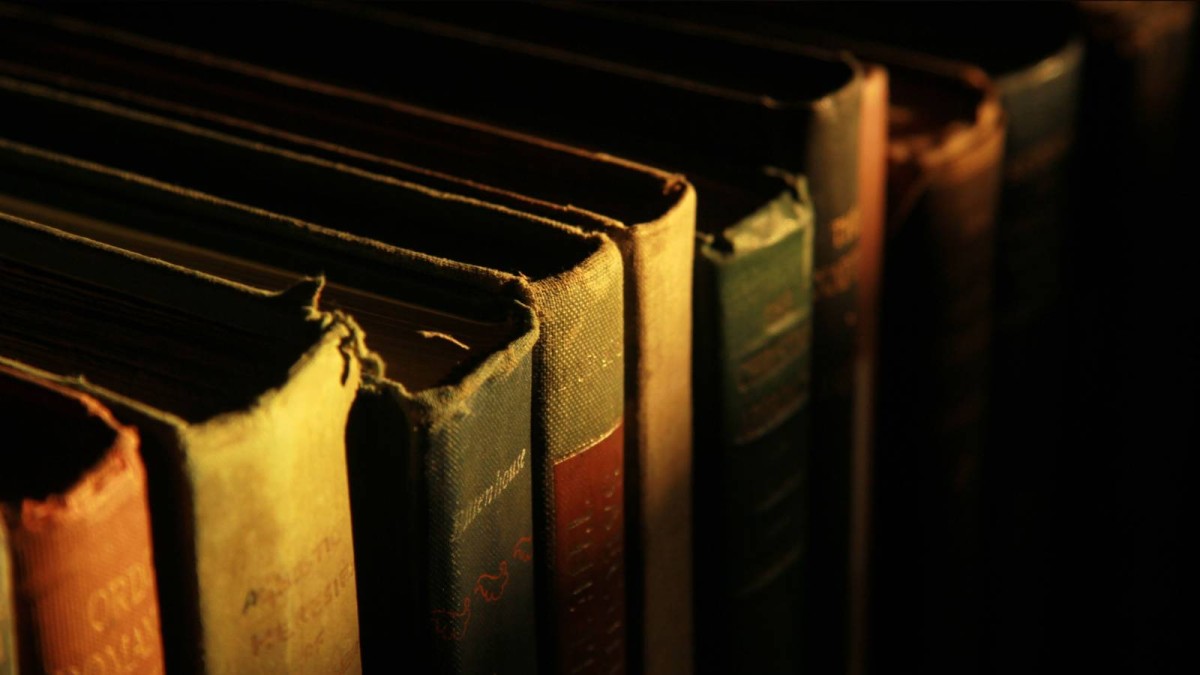
The latest AI scandal has killed a $2.4 million book deal and a potential movie adaptation, which has major implications for future book adaptations. Six and seven-figure book advances are exceptionally rare. However, debut author Jerry Falade managed to land a $2.4 million offer from Minotaur, an imprint of Macmillan US, for the exciting crime book Call Me, I’ll Hide the Body and a second novel after a 14-way bidding war. The book was also in talks for a major Hollywood adaptation, according to Deadline. However, everything fell apart.
Marc Gerald from Europa Content withdrew the book because of concerns about potential AI usage. According to Publishers Lunch, rumors spread that it contained AI signals such as negative parallelism, strange metaphors, and flat prose. According to Gerald, an editor also raised concerns about possible AI use, leading to a phone call where the agent alleges that the author admitted to using AI for light research. Afterward, the agents decided to pull the book, saying they couldn’t substantiate whether AI was used in the actual writing.
The agents didn’t run the manuscript through AI detectors. However, Publishers Lunch inserted it into Pangram, and the book came back as 99% AI. That said, multiple studies have found that AI detectors are extremely unreliable and inaccurate (via Pardee Legal Research Center). Additionally, the author has denied usage to Publishers Lunch, The Guardian, and The Bookseller.
He told The Bookseller that all the writing came from him, and he has documentation to prove it. He also pointed out to The Guardian that “first readers, second readers, editors, and acquisitions teams at numerous publishing houses” read the book, yet none of them brought up AI usage. If Falade is telling the truth, this is an incredible tragedy and a smear on his reputation. No matter whether the book was written with AI, the scandal has serious implications for publishers and Hollywood.
AI Creates Copyright Issues For Publishers & Hollywood

Much of the hesitance surrounding authors using AI, even minimally, comes down to copyright. Copyright is critical in both the worlds of publishing and Hollywood. Professional publishers will require authors to prove that they own the rights to a book that they want to print. This is critical because severe legal and financial consequences can come from printing a book without the copyright owner’s permission.
Similarly, there are many copyright considerations, outlined by DLA Piper, when it comes to adapting a book for the screen, including who gets paid, who can give permission for a screen adaptation, and who has creative control. Needless to say, very little can be done with a manuscript without proof of copyright.
AI muddies the waters because the person who prompted AI to create the manuscript doesn’t own the copyright. While laws vary from country to country, RAND confirms that the US, European Union, Japan, and South Korea all uphold the principle that human authorship is required for copyright. Writing created by AI is not protected, and putting a prompt into a machine doesn’t constitute human authorship.
In the United States, AI materials can be considered for protection if they are substantially changed, edited, or arranged. However, any parts generated by the AI aren’t protected under copyright, creating a situation where part of a manuscript is copyrighted, and other parts aren’t. Making the situation more murky, AI is trained with copyrighted materials without the permission of the owner, which is legal as long as they buy the book and destroy it. As such, AI could output copyrighted material as well.
All of this becomes important in the Call Me, I’ll Hide the Body situation because the amount of AI used, if any, isn’t clear, at least to the public. It’s entirely possible that the book used no AI. However, without definitive proof, agents, Hollywood reps, and publishers aren’t going to want to risk their reputation, let alone getting in legal trouble. After this scandal, I wouldn't be surprised if fewer books are optioned for onscreen adaptation before their publication. Hollywood is bound to be extra cautious about making deals.
Caution Surrounding AI Creates As Many Problems As It Solves

The overabundance of caution about AI seems like a good thing at face value. Those of us in the creative sphere don’t want our hard work stolen and regurgitated by an AI for someone else to use. Many writers, myself included, have had their work ripped off. Additionally, writers don’t want the trad publishing industry to start putting out more AI slop instead of human-written stories. Plus, readers don’t want to consume a bunch of AI slop. The problem is that the caution is directly harming writers, especially those in minority communities.
For starters, writers now have to track every single step of the writing process, definitively proving that they created every word on a page. Anyone who is even suspected of using AI, like Falade, is going to suffer even when there’s zero substantial proof that they used AI. Authors, journalists, and students are having their good names smeared by the idea that they use AI.
On top of all that, AI accusers and AI-detectors are inherently biased. A 2023 Stanford University study found that non-Native English speakers were more likely to have their writing incorrectly flagged as AI. Similarly, A 2025 Teaching in Higher Education narrative review found that AI disproportionately flagged writing from neurodivergent students with communication differences, especially autistic people. It’s also worth noting that three separate Black authors have had their major book deals pulled and hit pieces written this year for suspicion of AI usage. Of course, correlation doesn’t equal causation, but it’s certainly worth paying attention to. However, the inherent bias could negatively influence the representation and minority voices we get to see on the big screen.
Ultimately, the idea of keeping AI out of the publishing industry and Hollywood is great in theory. However, at this point in time, the only resources we have to detect that are human suspicion or extremely flawed AI detectors. As such, suspicion of misdeeds should not be treated as definitive proof that someone is using AI. Book agents, book publishers, and Hollywood should do their due diligence, but theoretical accusations shouldn't be treated as the final word.
What's Your Reaction?
 Like
0
Like
0
 Dislike
0
Dislike
0
 Love
0
Love
0
 Funny
0
Funny
0
 Wow
0
Wow
0
 Sad
0
Sad
0
 Angry
0
Angry
0





Comments (0)