

Ancestral Visions of the Future review – visceral cine-memoir is a haunting return to Lesotho
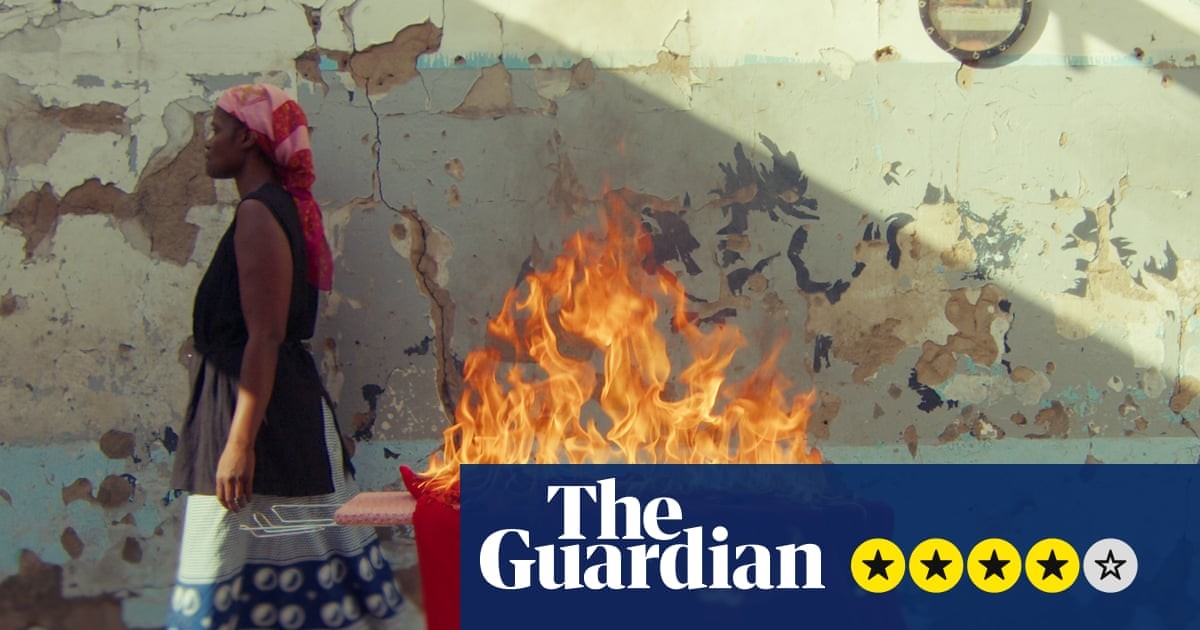
Here is a captivating stream of consciousness film about exile, roots and identity by Lemohang Jeremiah Mosese, director of the lauded 2019 activism story This Is Not a Burial, It’s a Resurrection. It’s ostensibly a cine-memoir looking back from the vantage point of present-day Berlin to his upbringing in Lesotho, narrated by Mosese’s dense, literary-grade voiceover. But there’s something propulsive and prophetic about the accompanying hyper-vivid images from rural and urban life. This is something more than memory.
The title screen dedication is ambiguous: “This film is an ode to cinema, an eternal no to my mother.” Reneging on the title of another 2019 work, Mother, I Am Suffocating. This Is My Last Film About You, she is central to Mosese’s attempt to return to the source. Her aspirations are to keep her family well-dressed and out of poverty, carry them away from the grind of rural fields that “ask not for rain, but for blood”, and see them installed in an ever-expanding house in the city (presumably Maseru).
Ancestral Visions of the Future touches peripherally on colonialism, the hand that shaped this landscape. Perhaps the roll of red fabric that extends down the hillsides is meant to evoke the scalpel that carved up the country “like meat on the map”. Instead of a linear perspective, Mosese proposes an African conception of time as a cycle – and lets it erupt in bursts of ecstatic and pained mysticism. After a sequence of endless toil on the furrows, an old farmer plucks out his own eyes and plants them. The young boy alongside him harvests the crop, “allowing him to see everything”.
Mosese’s vision clouds in the face of cyclical urban forces. He recounts his failed career as a street switchblade thug, then the tragedy of a woman burned alive by a lynch mob when her baby unknowingly “shoplifted” an item. Seen baying like a wildcat in front of invisible foes, she appears to be another sacrificial victim in an eternally recurring drama of violence and victimisation. More inspirational is the example of Sobo, a martial artist, herbalist and puppeteer he meets in Maseru in later life, who can see “not the city as it is, but the city as it is becoming”.
Mosese seems to be seeking the same visionary capacity – and maybe something more: perhaps redemption, for Lesotho, or himself? Or even, guided by the unfiltered energies here, direction towards a kind of rejuvenation. Whatever the exact meaning, this intense homecoming leaves a scorched trail in its wake.
What's Your Reaction?
 Like
0
Like
0
 Dislike
0
Dislike
0
 Love
0
Love
0
 Funny
0
Funny
0
 Wow
0
Wow
0
 Sad
0
Sad
0
 Angry
0
Angry
0








Comments (0)