

'Avatar' Seven Havens' Finally Fixes 'The Last Airbender's Biggest Mistake
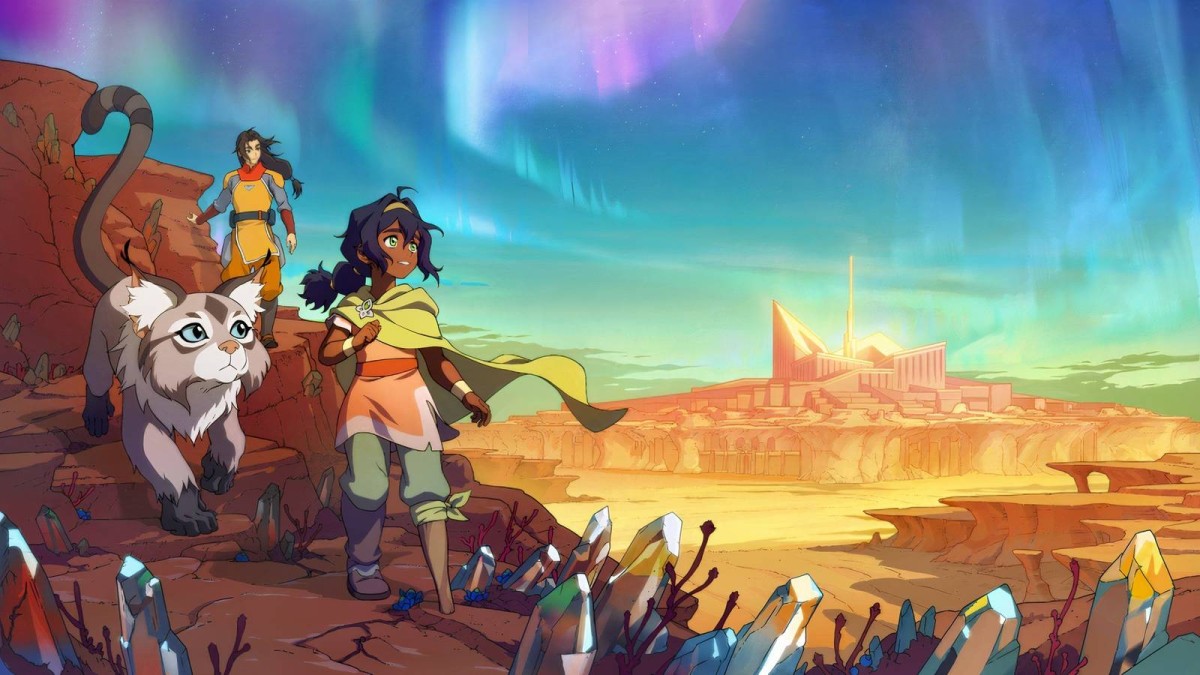
With Avatar: Seven Havens, the world of bending is entering an unfamiliar era. Set amidst the ruins of a civilization reshaped by a mysterious catastrophe, the new series expands the franchise's visual scope while bringing South Asian cultural influences further to the foreground. The result is a fantasy world that feels both distinctly Avatar and unlike anything we've seen before. But if you're worried that Avatar: Seven Havens doesn't resemble the world you fell in love with in Avatar: The Last Airbender or The Legend of Korra, you can rest easy.
“It's more just adding to the world than taking anything from the other parts,” series co-creator Michael Dante DiMartino told Polygon at NYCC 2026. “As we go into the other Havens, we're gonna see all the different cultures represented.”
Polygon caught up with the creative team behind Avatar: Seven Havens at NYCC, speaking with executive producers Ethan Spaulding, Sehaj Sethi, Bryan Konietzko, and DiMartino to delve into all the new creative and cultural influences underscoring the show’s characters and settings.
Expanding the world of Avatar

Set in the aftermath of a cataclysm that has left the world in ruins, Seven Havens follows Pavi (Saheli Khan) and Nisha (Aishu Devan), twin sisters who discover they share the mantle of the Avatar in a world where civilization has been reshaped by disaster. As they navigate the seven surviving Havens, the sisters must grapple with a fractured world, the legacy of past Avatars, and the mysteries surrounding their extraordinary familial connection.
The series' post-apocalyptic setting allowed the creative team to rethink what the world of bending might look like after civilization had been cataclysmically reshaped. Concept art reveals a landscape of craggy orange mountains, sprawling deserts, and green storms gathering on the horizon. In one particularly striking image, a massive white structure covered in moss initially resembles a natural rock formation, until closer inspection reveals the skeletonized remains of an ancient creature. It feels both fantastical and deeply unsettling, as though the landscape itself has become a canvas filled with nothing but the discarded remnants of the world that came before.
 Image: Avatar Studios
Such immense devastation and imagery involving constant green storms inevitably invites comparisons to climate change, though co-creator Konietzko stressed this wasn't the original motivation behind the show's premise.
“It wasn't like a ripped out of the headlines, let's do this. We actually had this kind of post-apocalyptic idea right after the original series,” Konietzko said. “So the seeds of this series were from 2008, but obviously, you know, climate change was already in discussion even back then, but early, early days.”
“So while it was not the kind of creative impetus, those parallels are impossible to ignore. It's hard to do something like that without it reflecting what's going on in our world.”

Konietzko acknowledged that the show's post-apocalyptic setting also carries real-world resonance. While the team didn’t explicitly set out to create a direct climate-change allegory, the showrunners welcome those comparisons.
“I think it is a worthwhile thing to look at. You can't take society and civilization for granted, and you can't take your environment for granted,” he said. “And choices that humanity makes could have a really irreversible impact on your world. We all need to be thinking about those things and talking about them and acting on them.”
Putting a new spin on the Avatar(s)

Beyond its fractured landscape, the most radical evolution in Seven Havens lies in its core premise. For the very first time in the franchise, the mantle of the Avatar is split between two people, Pavi and Nisha. It’s an unprecedented pivot, yet co-creator DiMartino notes that this dual concept was actually one of the creative team's earliest foundational sparks.
“When we initially came up with the show, that was kind of one of the first big hooks of, you know, why this would be different than the past series,” DiMartino said.
The team also wanted to distinguish Seven Havens through a leap forward in time and a dramatically different environment. As DiMartino explained, the network wanted to know “how is this different than what you guys did before?” The answer: “The idea of jumping ahead in time, new environment, new seven havens, the new landscape, and the idea of these sisters being twin avatars.”

Rather than simply presenting the Avatar as a hero who arrives to restore balance, Seven Havens begins in a world where the consequences of the past are already impossible to ignore. Long accustomed to exploring the friction between humanity and its environment, this franchise finds a natural home for those anxieties in Seven Havens. Yet, the stakes here transcend generational blunders or localized skirmishes. Pavi and Nisha inherit a world already shaped by catastrophe, and understanding how it came to be that way may be just as important as figuring out what the Avatar can do to change it.
Bridging South Asian culture into the world of bending
 Image: Avatar Studios
Avatar's visual reinvention mirrors the series' broader thematic shifts, particularly its transition toward deep-rooted South Asian architectural and cultural inspirations. Konietzko explained that while past series drew from diverse indigenous, Arctic, and East Asian traditions, he felt they "didn't do enough" with South Asian representation, “especially with the Avatar word and concept coming from South Asia.”
"That was one of the earliest decisions: Pavi is going to be South Asian coded," Konietzko said, describing how the new protagonist allowed them to naturally expand their world. “And we're gonna go to a corner of the map that we haven't spent a lot of time in other stories. The Avatar world is very big, and the Earth Kingdom's huge. So it gave us a cool opportunity to dig into that stuff more.”
Sethi echoed this sentiment, emphasizing the joy of drawing from her own background and noting that, because chakras were such a massive part of Aang's journey in The Last Airbender, that culture naturally deserved a more robust spotlight.
“That was a really big part of Aang’s journey and that’s a South Asian concept," she said. "If we’re going to have that be a big part of Avatar lore, that culture really needs to be brought in as well.”

Sethi also added how architectural and historical real-world roots anchor the series' artistic inspirations. For instance, Ellora, the main haven where both Pavi and Nisha are first introduced, directly draws from ancient South Asian history.
"The name Ellora is actually from an ancient Indian underground city that has temples from Buddhist, Hindu, and Jainist influences," Sethi said, referring to the real-world Ellora Caves carved into the basalt cliffs of the Charanandri Hills in Maharashtra, India. "I wanted to honor ancient Indian culture, but also the fact that Ellora — and all the other havens — are melting pots of bending philosophies that used to be separated by the nations."
The name Ellora is actually from an ancient Indian underground city.
Seven Havens is doing more than introducing a new landscape or expanding the franchise's cultural influences. By bringing together a broader visual vocabulary and traditions that have always been part of Avatar's mythology, the series is reimagining what this world can look like after everything has changed. Its ruined environments and newly blended philosophies suggest a civilization forced to rebuild itself from the remnants of the past, creating something unfamiliar without entirely abandoning what came before. For a franchise built around the relationship between people, their cultures, and the world they inhabit, that feels like a natural next step in the world of bending.
As for Avatar Aang and his potential appearance in Seven Havens, DiMartino simply said with a wry smile: "You gotta keep watching for that one."
Avatar: Seven Havens is streaming on Paramount Plus
What's Your Reaction?
 Like
0
Like
0
 Dislike
0
Dislike
0
 Love
0
Love
0
 Funny
0
Funny
0
 Wow
0
Wow
0
 Sad
0
Sad
0
 Angry
0
Angry
0







Comments (0)