

Blackstone-owned QTS abandons planned world’s largest data center campus after years of lawsuits — 2,100-acre Virginia Digital Gateway project dies over a newspaper-notice technicality
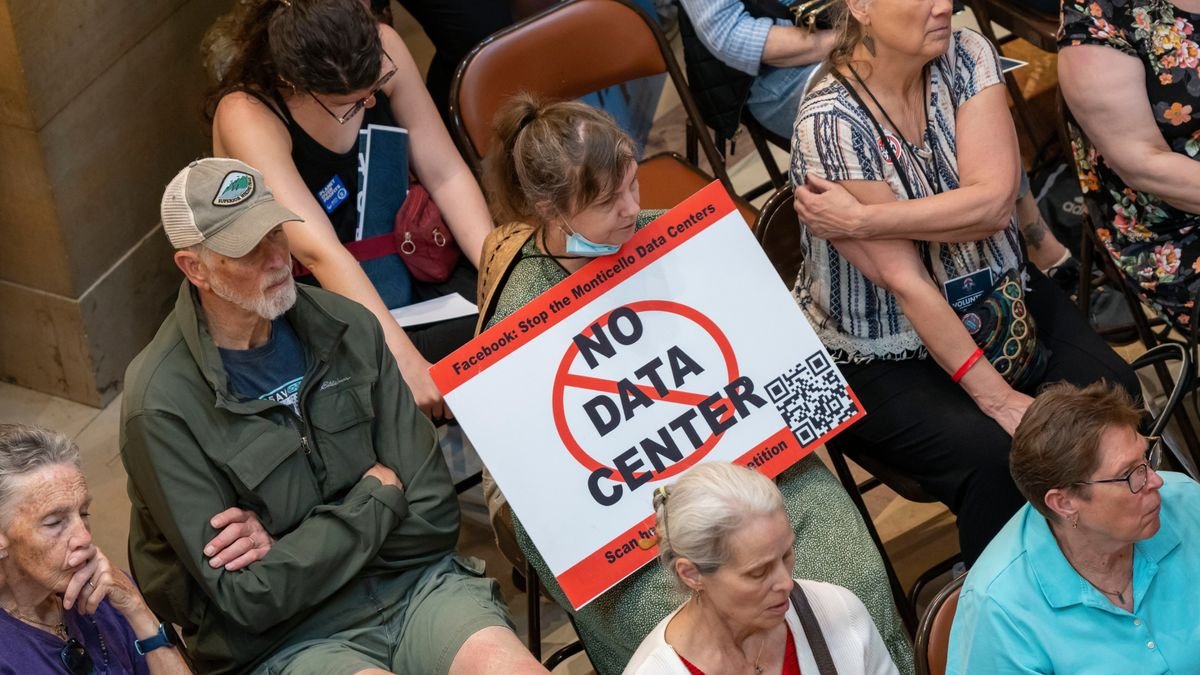
Data center developer QTS has officially terminated plans to build a portion of the planned 2,100-acre “Digital Gateway” data center campus in Virginia, following years of legal battles with local residents and historic preservation groups. According to a Bloomberg report, the Blackstone-owned company formally submitted a written filing to the Virginia Supreme Court on July 2, explicitly stating it was withdrawing its last remaining appeal “after careful consideration”.
QTS’s withdrawal marked the official end of the project, as other stakeholders had earlier pulled out due to prolonged litigation. In a major win for opponents of the data center, the proposed land — situated at the edge of the Manassas National Battlefield Park, a historic Civil War battlefield — will now remain under its original rural zoning restrictions.
Digital Gateway was a planned massive 22-million-square-foot, gigawatt-scale data center complex in Prince William County, Virginia, that would have been the world's largest. QTS was responsible for 800+ of the 2,100 acres, while a second developer, Compass Datacenters, controlled roughly 800-1,000 acres. The rest of the designated 2,100-acre "Digital Gateway" zone consisted of local roadways, environmental buffer zones, and parcels belonging to individual homeowners who had agreed to sell.
Initially approved by the Prince William Board of County Supervisors to capitalize on the soaring demand for AI and cloud computing, the project immediately faced fierce opposition from residents, despite the promise of tens of billions of dollars in capital investment and substantial local tax revenue. Opponents argued that the facility's location adjacent to the Manassas National Battlefield Park posed severe threats to the area's environmental, historical, and residential landscape, a common refrain in growing anti-data-center sentiment.
Several lawsuits followed, with the one that appears to have eventually collapsed the massive project hinging on an ironically small detail. The landmark mega project — roughly double New York’s Central Park’s size with city-sized power needs — collapsed in a domino effect after Virginia courts voided the county’s initial rezoning approval due to improper public notices. The newspaper notices publicizing the hearing at which the project was approved weren’t separated by at least 6 days, as mandated by state and local codes at that time, thereby invalidating the hearing and the resulting approval.
Virginia courts upheld the invalidity of the zoning approvals in March this year. Following the ruling, Prince William County gave up first, refusing to spend additional public funds to defend the project in court. Compass Data Center, a co-developer of the project, withdrew from the project the next month, with the company president stating, “While we still believe this project offered significant benefits for the region and our neighbors, recent legal actions and compounding regulatory hurdles have effectively closed a viable path forward.”
Only QTS remained, filing an appeal with the Virginia Supreme Court. It has now withdrawn that appeal, leaving the entire Digital Gateway project completely dead. The company says it will now “work on a responsible and orderly wind-down of development efforts”.
Get Tom's Hardware's best news and in-depth reviews, straight to your inbox.
The “Digital gateway” case is the latest win for anti-data-center proponents and the latest blow for those on the other side of the fence. We recently covered a report that more than 75 data center build-outs worth $130 billion have been successfully blocked in the first Q1 2026, although several others have moved forward. While data centers are needed to power AI’s exponential growth, their development often raises valid concerns about water use, noise pollution, and spikes in electricity bills for nearby residential areas. There has been an uptick in protests against data centers and a corresponding rise in companies pursuing innovative solutions to the problem. SpaceX is currently building an 11-million-square-foot Gigasat factory to manufacture orbital data centers, while several companies are deploying offshore data centers. On the other hand, there are reports that China may be artificially stoking opposition to data centers in the U.S., even as Trump's administration is pushing for AI development.

Follow Tom's Hardware on Google News, or add us as a preferred source, to get our latest news, analysis, & reviews in your feeds.
Etiido Uko is a news contributor for Tom's Hardware covering the latest updates in big tech and the PC industry. He is a mechanical engineer and senior technical writer with over nine years of experience in documentation and reporting. He is deeply passionate about all things engineering and technology, and is an expert in gadgets, manufacturing, robotics, automotive, and aerospace.
What's Your Reaction?
 Like
0
Like
0
 Dislike
0
Dislike
0
 Love
0
Love
0
 Funny
0
Funny
0
 Wow
0
Wow
0
 Sad
0
Sad
0
 Angry
0
Angry
0












Comments (0)