

Can a Single Prime Lens Really Cover a Whole Trip?
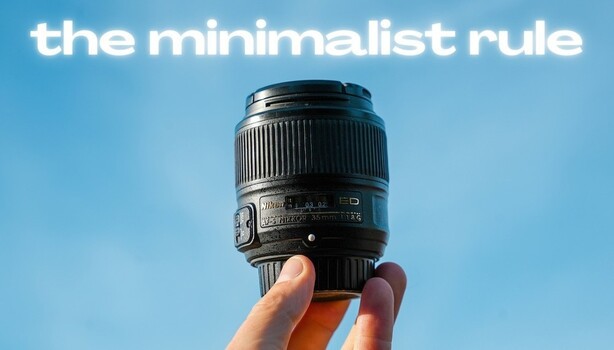
Packing for a trip usually turns into a negotiation between the 35mm, the 50mm, and the zoom, and plenty of people settle it by bringing all three. Whether that extra glass earns its place in the bag affects how you shoot, how much you carry, and how many moments you actually catch.
Max Kent faced that exact choice before his first big trip abroad, packed everything, and then noticed he was reaching for the same lens almost every time. That lens was his Nikon 35mm f/1.8, though he's clear that the model itself isn't the lesson. What stuck with him was how differently he worked once the other two lenses stopped mattering. He doesn't claim one lens handles every job. If you're photographing birds from far away, you need a long telephoto, and working professionals often have good reasons to carry a full kit. His argument is aimed at everyone else, the people who pack options out of habit and rarely touch them.
The first benefit he points to is consistency of look. Open a photo book by someone whose work you admire, and you'll often find the same focal length showing up page after page. One celebrated New York color photographer leaned on long lenses for most of his career, while a large share of street shooters live somewhere between 35mm and 50mm. Kent is careful on this point. A focal length doesn't create a style by itself. It feeds into one, and viewers sense it even when they can't say why a set of images feels unified.
Camera makers have been building products around this idea for years. The Fujifilm X100VI, Ricoh GR III, and Leica Q3 all have fixed lenses, so the focal length decision is made at the moment of purchase. Demand for the X100VI after its 2024 launch outran supply for months, and a lot of buyers already owned interchangeable-lens systems. Some of that appeal comes from size. Much of it comes from having nothing to choose between. You can try the same discipline without spending anything. Pick a prime you already own and use it exclusively for a month, or set a zoom to one focal length and put a strip of gaffer tape across the ring. Expect the first week to feel restrictive. After that, you'll likely catch yourself framing scenes at that angle of view before the camera reaches your eye, and you'll start walking closer or stepping back without thinking about it.
The second benefit Kent describes is fewer decisions. He compares a bag full of lenses to pulling into a parking lot with dozens of open spaces and circling because you can't settle on one. Every second you spend weighing which lens suits a scene is a second you aren't watching the scene. Those hesitations are small, but he describes how they compound, pulling attention away from light, timing, and the person in front of you until they cost you shots you won't get back. Committing to a single lens before you leave the house removes that choice entirely. There's no wondering whether a frame would have worked better wider or tighter, since there's nothing else in the bag to switch to.
Kent's thoughts on carrying less gear and on the belief that every genre needs its own lens are waiting in the video above.
What's Your Reaction?
 Like
0
Like
0
 Dislike
0
Dislike
0
 Love
0
Love
0
 Funny
0
Funny
0
 Wow
0
Wow
0
 Sad
0
Sad
0
 Angry
0
Angry
0







Comments (0)