

Canon, Nikon, Sony, and Fujifilm All See Photography’s Future Differently
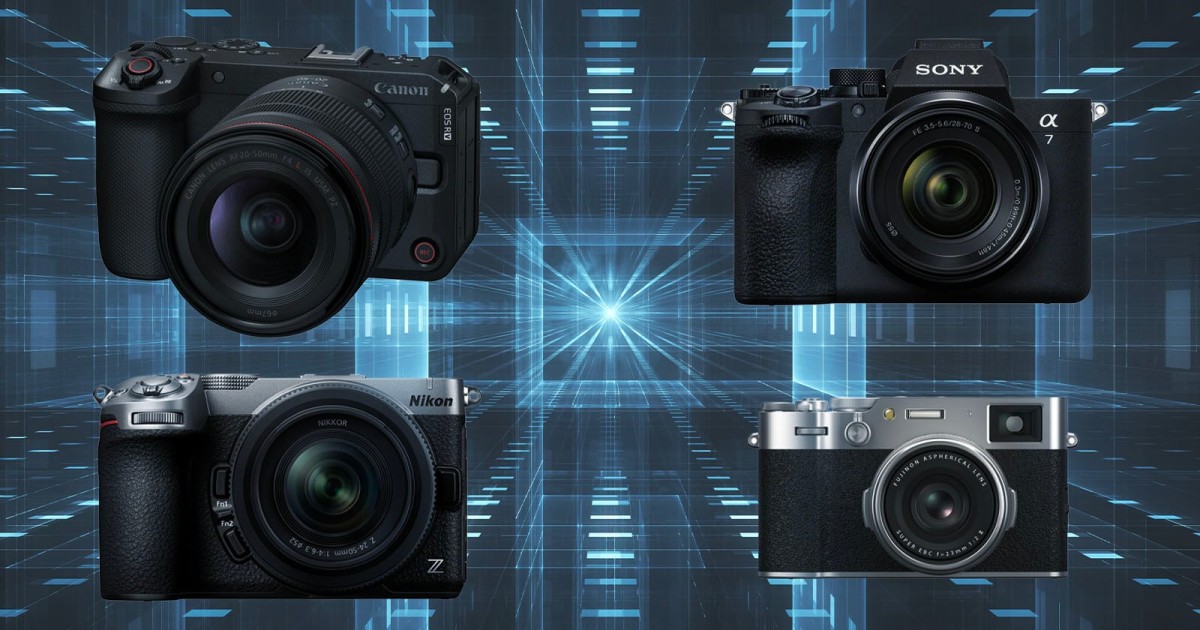
Last month, Japanese publication Nikkei published a story that featured interviews with executives from the top camera makers: Canon, Nikon, Sony, and Fujifilm.
As spotted by Photo Rumors, the story was published on Nikkei and features a few names that might be familiar to PetaPixel readers: Canon’s Go Tokura, Nikon’s Hiroyuki Ikegami, Sony’s Kenji Tanaka, and Fujifilm’s Koji Matsumoto. All were asked questions about their respective company’s vision for the future, especially with the existence of AI, improved video performance, and the reproduction of film photography looks and textures.
“Young people are driving the current growth of compact digital cameras. They certainly aren’t buying them just because of high performance or image quality; they enjoy the shooting experience itself, even if it comes with some minor inconveniences,” Canon’s Tokura says.
“Up until now, our lineup was structured primarily around performance and price, but now we need to weave in elements of style and feel [such as the shooting experience]. Individuals have their own unique sense of self they want to express, and diverse ways of enjoying photography are spreading across society.”
Speaking of the more immediate future, Tokura says that Canon wants to continue to expand its video-oriented cameras.
“We want to expand the video-oriented ‘V Series’ lineup based on customer demand. We also need to enrich our video-oriented lens selection further. It’s crucial that lenses can capture both video and stills, ensuring that lenses made for video can shoot stills without any issues.”
Nikon agrees with some of Canon’s points, but are taking a slightly different approach.
“It is taking a bit of time to cascade the features of our flagship Z9 down to lower-end models. Completing a lineup from high-end to low-end drops the average selling price. Currently, we are concentrating investments on next-generation image processing engines, sensors, and video cameras. We are right in the middle of laying those foundations,” Nikon’s Ikegami says.
“As smartphones become increasingly sophisticated, there is a demand for dedicated cameras as a ‘smartphone + 1’ device that preserves smartphone battery life. We are developing products that younger demographics will want to pick up.”
By comparison, Sony seems to be interested in focusing the business entirely differently. Specifically, Tanaka sees “Spatial AI” as the future of its Alphas series cameras.
“[Spatial AI] involves capturing the physical world using image sensors to create a digital twin, wherein we can make reality more attractive or simulate different ways of presenting it. That simulation is then turned into content for people to experience back in the physical world,” he explains.
“The term originated from the idea that AI should be used not just for operational efficiency or labor savings, but to expand the world of entertainment. Ultimately, we want to reach a point where we can generate content tailored optimally for each individual. Spatial recognition and subject tracking technologies can definitely be leveraged. With Alpha, physical space can be reproduced digitally. At first glance, ‘Alpha’ appears to be a standalone camera business, but its essence lies in creating value for creators and content consumers.”
Basically, Sony sees its Alpha division as a part of its overarching entertainment goals, not as a standalone business that props itself up through its own initiatives. As a result, Sony sees “creators” as not just photographers and filmmakers.
“Anyone who creates something and inspires emotion is a creator. This includes not only photographers and film directors, but also dancers, musicians, and athletes. We want to utilize Spatial AI to enhance and expand their creativity.”
Finally, Fujifilm reiterated what it has said to PetaPixel in the past: photography needs to be fun.
“The spread of smartphones democratized photography. Through social media, people developed a more discerning eye for photos. The demand for cameras among people who care deeply about self-expression has grown, leading to our strong performance. We deploy marketing strategies that allow people to feel the ‘joy of photography’ that smartphones cannot deliver by having them try cameras hands-on at shooting events and retail stores,” he explains.
“This relies on a foundation of technology cultivated over many years. Finding affection in the tactile, analog feel of turning dials or enjoying the distinct color tones of film photography is only possible thanks to our accumulated camera technology… AI can generate images, but only humans possess the subjective sense of feeling, ‘This is real.'”
Image creditsElements of header photo licensed via Depositphotos.com.
Affiliate Disclosure PetaPixel articles may include affiliate links; we may earn a commission if you buy through one.
What's Your Reaction?
 Like
0
Like
0
 Dislike
0
Dislike
0
 Love
0
Love
0
 Funny
0
Funny
0
 Wow
0
Wow
0
 Sad
0
Sad
0
 Angry
0
Angry
0












Comments (0)