

‘Charlie Bit My Finger’ Video Officially Preserved by British Film Institute
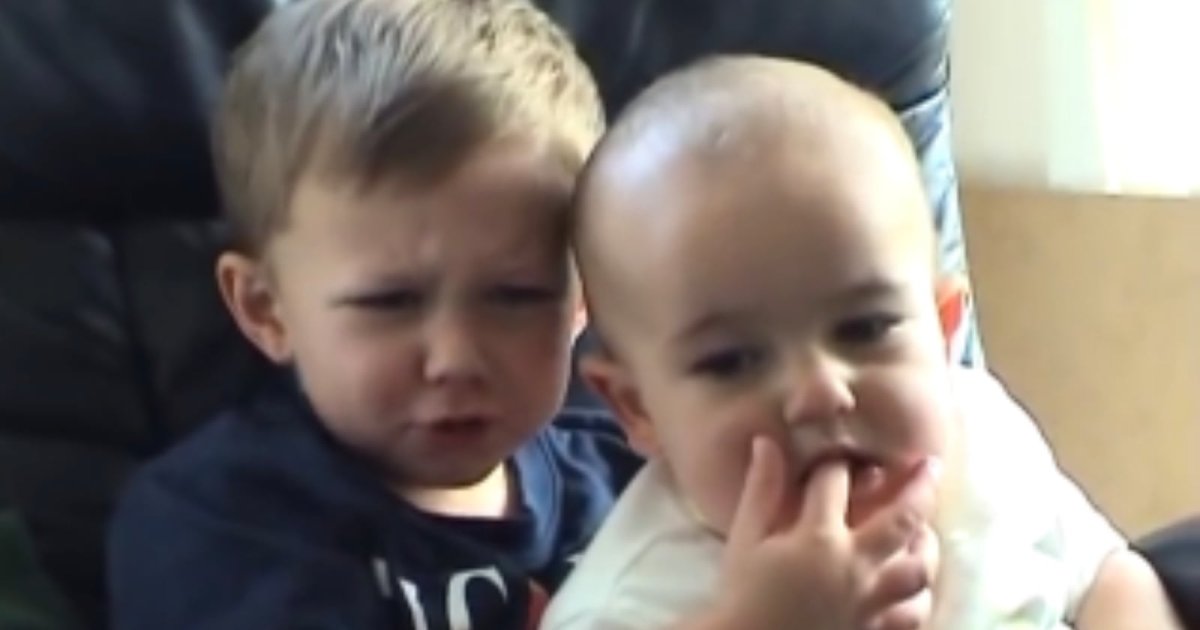
“Charlie Bit My Finger” — a private family video which unexpectedly became one of the earliest global viral videos on YouTube — has been officially preserved by the British Film Institute (BFI).
The BFI has preserved around 430 online viral videos, including “Charlie Bit My Finger,” as part of a new collection designed to protect notable internet videos from the past three decades.
The U.K. film body says that our culture is now in what it describes as a “third age” of the moving image, following cinema and television, shaped by the rise of online video. According to the BFI, this new era presents a particular challenge due to its vast scale: in just over three decades, the amount of video produced online has grown to such an extent that it now far exceeds the total output of film and television from the century before it, making the moving image landscape overwhelmingly large and difficult to fully comprehend or catalogue.
As a result, the BFI National Archive has been updating its collections for the 21st century by acquiring viral and culturally significant online videos, ranging from early livestream experiments to memes and videos from platforms such as YouTube and TikTok that have become widely recognized in everyday internet culture.
In a video, Kristina Tarasova, Assistant Curator of the BFI National Archive, says the film body are “building towards the archive of the future.”
Tarasova adds: “One of the universally recognized acquisitions that we got is ‘Charlie Bit My Finger.’ This is part of early viral history from the beginnings of YouTube when a simple family moment ended up connecting with millions of people online.”
How a Private Family Video Became a Global Phenomenon
Uploaded to YouTube in 2007, “Charlie Bit My Finger” began as a private home recording filmed by the boys’ father, Howard Davies-Carr, and was originally shared only so the children’s godfather in the United States could see it. Because the file was too large to email, Davies-Carr uploaded the clip to YouTube and initially set it to private, expecting it to be viewed only by close friends and family. The short video shows a toddler called Harry putting his finger into his baby brother Charlie’s mouth, after which Charlie bites down — prompting a surprised reaction from his older brother.
As more relatives requested access to the clip of the two brothers, the family later made the video public on YouTube for convenience. That small, practical decision allowed the clip to spread far beyond its intended audience and reach millions of viewers. In the early, largely experimental days of YouTube, the unscripted moment between the two brothers quickly gained global attention. Its candid nature helped it become one of the platform’s earliest viral successes, and by 2009, it was YouTube’s most-viewed video. As of 2026, it has close to 900 million views.
The video’s cultural impact continued long after its initial viral spread. In 2021, it was sold as an NFT for $760,999, adding an unusual digital-era extension to its history. What began as a simple family recording not intended for public release became a widely cited example of how private moments shared online can take on long-term cultural significance.
Among other materials preserved by the BFI is the “Trojan Room Coffee Pot,” an early example of livestreaming in which researchers at the University of Cambridge installed a camera pointed at a shared coffee pot so they could check remotely whether it was full. The archive also includes the 2003 “Badger Badger Badger” animation, a low-budget internet video showing a series of dancing badgers set to an extremely catchy song.
To preserve a video such as “Badger Badger Badger”, the BFI first contacts the creator to obtain the original file. Once received, the archive team creates metadata and reviews technical specifications to determine the appropriate preservation method. The files are then stored using a data storage system that Swinburne describes as “two robot-operated tape libraries.” A duplicate copy is also stored approximately 50 miles away for disaster recovery purposes.
The U.K. is not the only country archiving viral internet videos. In March, PetaPixel reported that the National Film and Sound Archive of Australia preserved the “Democracy Manifest” video, which shows police detaining a confused Jack Karlson while he was eating at a Chinese restaurant in Brisbane. Although filmed in 1991, the footage was not widely known until 2009, when it was rediscovered by an archivist and uploaded to YouTube.
What's Your Reaction?
 Like
0
Like
0
 Dislike
0
Dislike
0
 Love
0
Love
0
 Funny
0
Funny
0
 Wow
0
Wow
0
 Sad
0
Sad
0
 Angry
0
Angry
0








Comments (0)