

Scientists Capture First-Ever Photos of the Elusive ‘Cozumel Dwarf Fox’
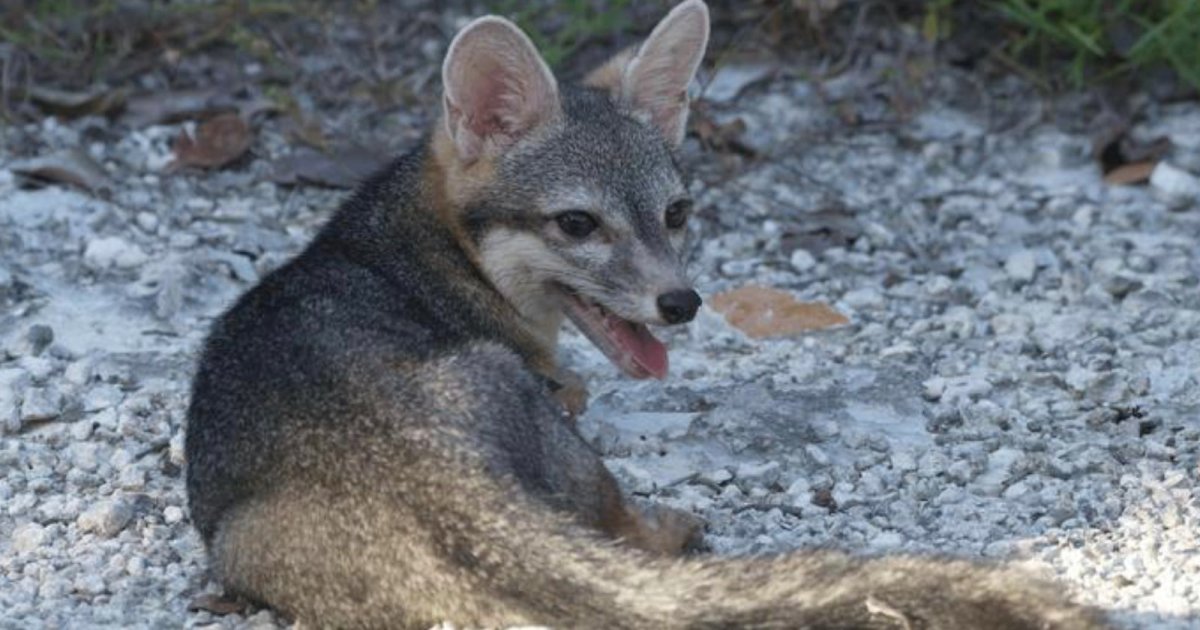
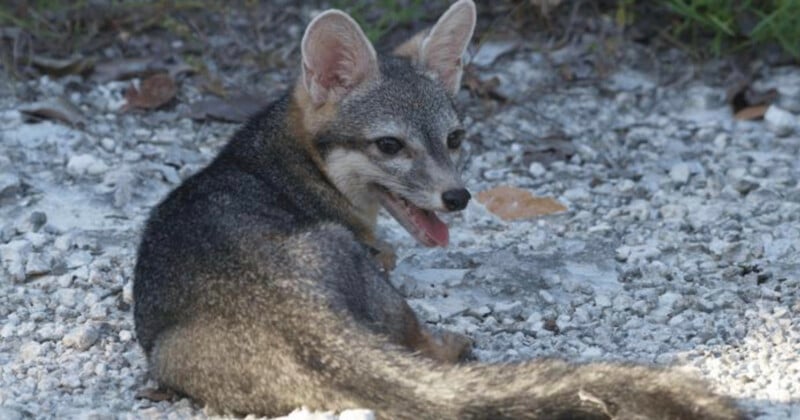 First-ever photograph of a Cozumel dwarf fox taken on September 17, 2023 | Image credit: Rafael Chacón
The Cozumel dwarf fox, a tiny animal so elusive that scientists were unsure whether it even existed, has been photographed for the first time.
Last month, researchers published the first-ever photographs and confirmed sighting of the Cozumel dwarf fox in more than 20 years in the journal Neotropical Biology and Conservation. The images show the adult male dwarf fox on the island of Cozumel, Mexico.
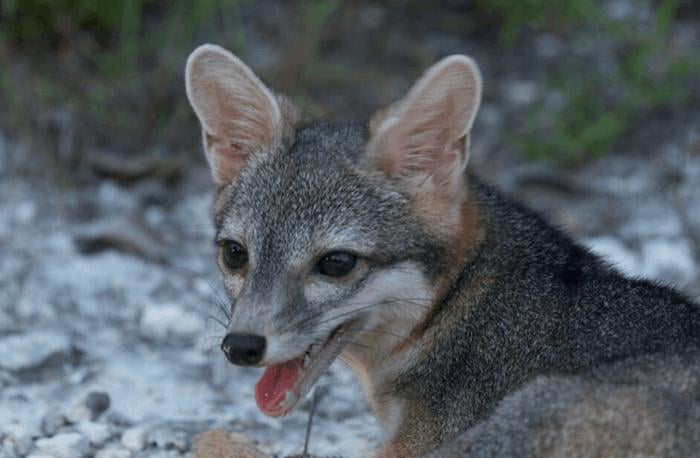 Close up of the Cozumel dwarf fox | Image credit: Rafael Chacón
While the images were only made public recently, the photographs date back to September 2023, when scientists located and safely recovered the Cozumel dwarf fox following online reports of a disoriented animal near the coastal highway on the island’s eastern side. After being held under observation and receiving a full health assessment, it was released into the Laguna Colombia State Reserve in Cozumel, a protected area chosen for its suitability and distance from road hazards.
Although the Cozumel dwarf fox was recovered, released into a protected reserve, and photographed, scientists say little is known about the species.
“The biggest challenge facing the Cozumel dwarf fox is that we still know almost nothing about it, including its remaining population size, distribution, or ecology,” Travis Bayer of Pathos Wildlife says in a statement. “That uncertainty alone is dangerous, because it makes effective conservation extremely difficult”.
A Tiny Animal That is Likely on the Brink of Extinction
The Cozumel dwarf fox is one of the rarest canine animals on the planet and represents a unique population that has inhabited the island of Cozumel for millennia, with subfossil remains suggesting its presence may predate early Mayan settlement.
This extensive period of isolation led to rapid evolutionary divergence and “insular dwarfism.” The Cozumel dwarf fox is estimated to be 60 to 80% the size of its mainland relative, the gray fox. Prior to this rediscovery, physical evidence of the Cozumel dwarf fox was entirely limited to these subfossil remains, and the last second-hand sighting had been reported in 2001.
Despite its long history on the island, the Cozumel dwarf fox has never been formally described or designated as taxonomically unique. Because its habitats in the southern portion of the island are increasingly threatened by land-use change, development, invasive species, and natural disasters, the scientific community considers the dwarf fox to be critically endangered and likely on the brink of extinction.
“One of the most important takeaways from this research is that species can quietly disappear without the world even realizing they are gone,” Bayer explains. “We often think extinction is something dramatic and obvious, but in reality, it can happen gradually and silently, especially for rare species living in remote or understudied habitats.”
Bayer adds: “The rediscovery of the fox is not a conservation success story yet, but it represents a second chance.”
What's Your Reaction?
 Like
0
Like
0
 Dislike
0
Dislike
0
 Love
0
Love
0
 Funny
0
Funny
0
 Wow
0
Wow
0
 Sad
0
Sad
0
 Angry
0
Angry
0











Comments (0)